
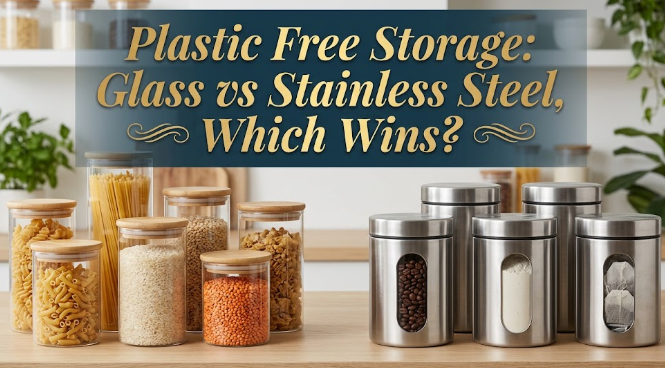
Plastic Free Storage: Glass vs Stainless Steel, Which Wins?
There’s a assumption that shows up in almost every plastic-free forum and comment section: glass is the “real” plastic-free choice, and stainless steel is the compromise you settle for when glass feels impractical. It’s not true, and treating it as true is probably why half the containers in your cupboard are the wrong shape for the job you keep asking them to do.
Glass and stainless steel solve different problems. Once you stop asking “which one is better” and start asking “which one is better for this,” the whole plastic-free kitchen gets easier to manage.
1. What Glass Actually Gets Right (and Where It Falls Short)
Glass wins on transparency, chemical inertness, and being genuinely microwave and oven safe without any asterisks. You can see what’s inside without opening it, which sounds minor until you’ve dug through four identical opaque containers looking for the leftover soup. Nothing leaches into acidic foods like tomato sauce or citrus, and there’s no metallic aftertaste with vinegar-based marinades.
The failure point is obvious to anyone who’s dropped a jar on tile: it breaks. Not eventually, immediately, and usually at the worst time. Glass is also heavier than most people expect once you’re carrying a full lunch bag or hauling groceries home, and it doesn’t do well in a freezer unless it’s specifically rated for temperature shock. Standard mason jars filled too close to the lid and frozen solid will crack, and that’s one of the most common mistakes people make in their first few months of going plastic free. They assume any glass jar can go straight from pantry to freezer to microwave, and then they’re cleaning up shattered glass and frozen soup off the kitchen floor.
2. Where Stainless Steel Pulls Ahead
Stainless steel is close to indestructible for daily use. You can drop it, stack it, throw it in a backpack, and it’ll outlast almost everything else in your kitchen. It’s lighter than glass for its size, doesn’t hold onto smells the way plastic does, and handles the freezer without complaint.
The trade-off is that you lose visibility, and food photographers hate this, but everyone else eventually gets used to labeling. It’s also not microwave safe under any circumstance, full stop. That trips people up constantly, because the instinct to just “pop it in for a minute” doesn’t go away just because the container changed. And acidic or heavily salted foods left in stainless steel for extended periods can occasionally pick up a faint metallic edge, though good quality 18/8 stainless mostly avoids this.
3. The Comparison Nobody Talks About: Cost Over Time
Most comparisons stop at price tag, which is genuinely the wrong number to look at. A stainless steel container that costs more upfront but lasts a decade without cracking is cheaper per year than a glass set you’re replacing every eighteen months because someone in the household treats the fridge shelf like a basketball hoop.
| Factor | Glass | Stainless Steel |
|---|---|---|
| Upfront cost | Lower to moderate | Moderate to higher |
| Typical lifespan | 2-6 years (breakage-dependent) | 10+ years |
| Weight | Heavier | Lighter |
| Microwave safe | Yes | No |
| Freezer safe | Only if rated | Yes |
| See contents | Yes | No |
| Best for | Reheating, marinating, storing sauces | Travel, lunches, freezer stock, kids’ bags |
If you’re just getting started and trying to figure out where your money should go first, this is worth reading before you buy a full set of either: plastic-free swaps every beginner should try first.
4. Where People Usually Go Wrong
The mistake isn’t picking the “wrong” material. It’s picking one material and trying to force it to do everything. A household that goes all-in on glass ends up frustrated by the weight and the breakage. A household that goes all-in on stainless steel ends up annoyed they can’t reheat lunch at the office microwave. Both groups eventually cave and buy plastic again, not because plastic is better, but because they set themselves up with a system that couldn’t flex.
This is one of the patterns that shows up again and again in the plastic-free living mistakes most beginners make in month one, and it’s an easy one to sidestep once you see it coming.
The other quiet mistake is assuming durability means invincibility. Stainless steel dents. Enough dents around the rim and the lid seal stops working properly, which nobody notices until soup leaks in a bag. Treat the lid seal as the part that wears out, not the body of the container.
5. A Simple System: Matching Container to Task
Here’s roughly how it shakes out in a working plastic-free kitchen, and it’s close to what I’d tell anyone standing in the aisle trying to decide between the two:
- Reheatable lunches, sauces, marinades, anything going in a microwave: glass
- Travel, kids’ bags, hiking, anything at risk of being dropped: stainless steel
- Freezer stock, soups, batch-cooked meals for long-term storage: stainless steel, or freezer-rated glass specifically
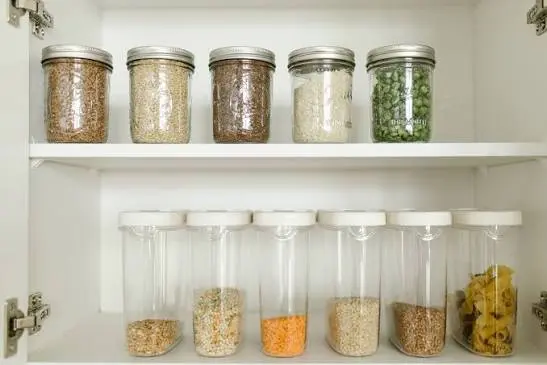
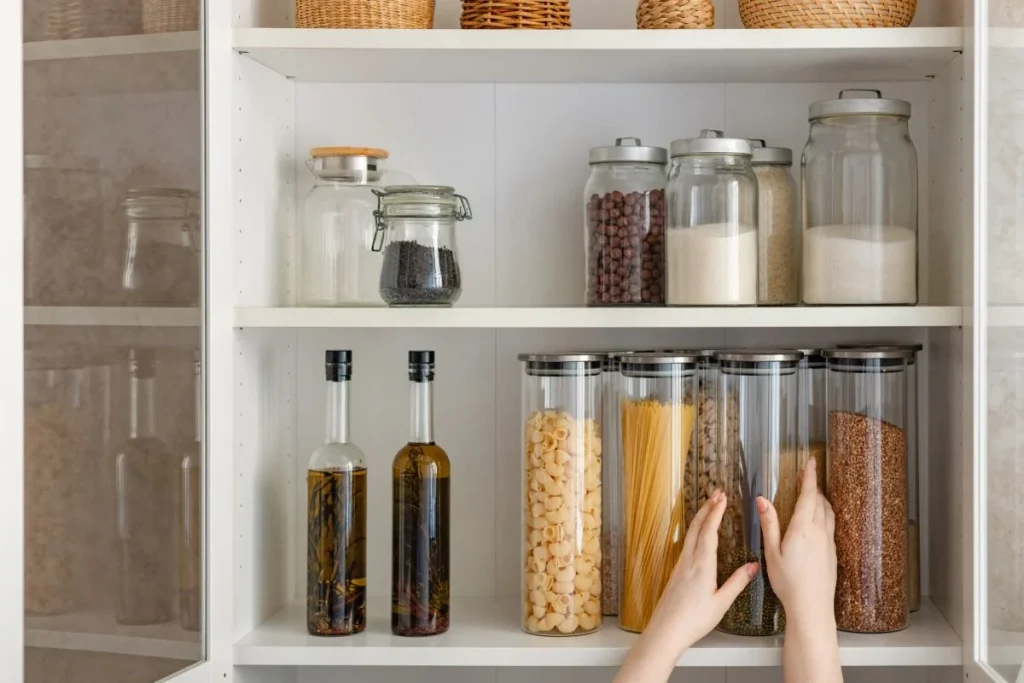
- Dry pantry goods like grains, flour, pasta: either works, glass if you want to see what’s running low
None of this requires buying two full sets of everything. Most kitchens do fine with a handful of stainless containers for the rough stuff and a smaller set of glass for reheating and serving. That’s a more realistic version of plastic-free than trying to replace every single plastic item in one weekend, and it holds up better long term.
If you’re weighing whether these two even beat other so-called eco materials on the market, it’s also worth checking whether the popular “natural” alternative actually holds up: is bamboo really plastic-free.
And if the cost of switching everything at once is the thing holding you back, this is genuinely worth a read before you write off the whole idea: can you go plastic-free on a tight budget.
Frequently Asked Questions
Is stainless steel actually plastic-free, or does it have a plastic lining? Most quality stainless steel containers are food-grade 18/8 stainless with no plastic lining on the food-contact surface. The lid itself is sometimes a mix of steel and a silicone or plastic gasket for the seal, so it’s worth checking the product listing if a fully plastic-free lid matters to you.
Can I put a hot pan of food straight into a glass container? Not unless it’s specifically labeled for thermal shock resistance. Sudden temperature changes are what cause most glass container cracks, more so than dropping them. Let food cool for a few minutes first.
Why does my stainless steel container taste weird after storing tomato sauce? This usually happens with lower-grade stainless or containers that have been scratched internally. Switching to 18/8 or 18/10 stainless generally resolves it, and avoiding metal utensils inside the container helps too.
Which one is better for the freezer, glass or stainless steel? Stainless steel, without much competition, unless you’ve specifically bought freezer-rated glass and you’re leaving headspace for expansion. Regular glass jars filled to the top and frozen are one of the most common breakage causes.
Do I need to replace all my plastic containers at once? No, and trying to is usually what causes people to give up. A gradual swap, glass first for the containers you reheat most, stainless second for the ones that travel, works better than an overnight overhaul.
If you’re mapping out the wider swap-by-swap plan rather than just this one decision, the beginner hub on plasticfreeliving.online lays out where to start and in what order: plastic-free living, where to start.