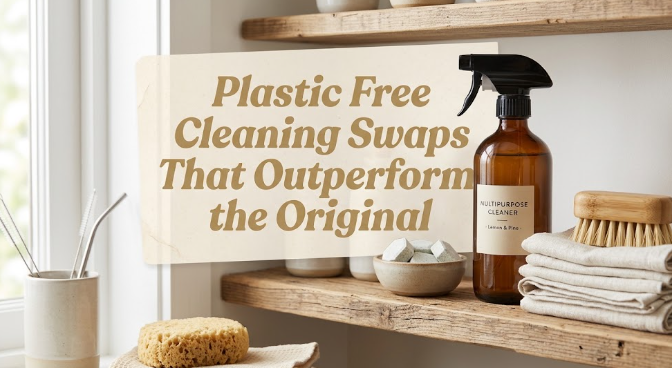
Plastic Free Cleaning Swaps That Outperform the Original
The first plastic-free cleaning swap I ever tried was a bar of soap for washing dishes, and I hated it. It slid around the sink, it didn’t lather the way liquid soap did, and I was convinced I’d made my kitchen worse in the name of doing better. Three weeks later I couldn’t figure out why my dish sponge smelled less like a wet gym sock than it used to. Turns out the bar was cutting grease just as well, I’d just been holding it wrong.
That’s the part nobody tells you about swapping out plastic cleaning products. A few of them are a straight downgrade you learn to tolerate. But a surprising number actually work better than what they replaced, once you get past the first clumsy week. This isn’t a list of feel-good swaps you make because plastic is bad. It’s a list of the ones that changed how I clean, full stop.
1. Dish Soap Bars Instead of Bottled Liquid
Liquid dish soap is mostly water. You’re paying to ship water in a plastic bottle, and most of it gets diluted further the second it hits your sponge. A solid dish soap bar is concentrated, and a little goes further than people expect. Wet the sponge, rub it against the bar for two seconds, and you’ve got more suds than a full pump of the bottled stuff.
The trick that fixed my early frustration was using a soap dish with drainage instead of leaving the bar flat on the counter. Left in a puddle, any bar soap turns to mush. Propped up so it can dry between uses, a dish soap bar easily lasts as long as two bottles of liquid soap, sometimes longer depending on how much you cook.
If you’re just getting into swaps like this, it’s worth reading through plastic-free swaps every beginner should try first before you overhaul your whole kitchen at once. Dish soap is a good starting point precisely because the failure mode is cheap. You lose a few dollars if you don’t like it, not a whole cabinet of products.
2. Wool Dryer Balls Instead of Dryer Sheets
Dryer sheets are single-use plastic-coated sheets that leave a waxy residue on your dryer’s lint trap and, over time, on your clothes. Wool dryer balls do the same job of reducing static and speeding up drying, but they last for years, not one load.
Here’s the part that actually surprised me: clothes come out of the dryer softer with wool balls than they ever did with sheets, because the balls physically separate the fabric as it tumbles, letting hot air circulate instead of your laundry clumping into a damp knot. Drying time drops by roughly ten to fifteen percent in my experience, which matters if you’re paying for a shared laundry room by the cycle.
Add two or three drops of essential oil to the balls if you miss the scent from sheets. Skip it entirely if you or anyone in your house has sensitive skin. Either way, you’re not buying a box of sheets every month, which is one less thing to remember at the store.
3. Reusable Cleaning Cloths Instead of Paper Towels and Wipes
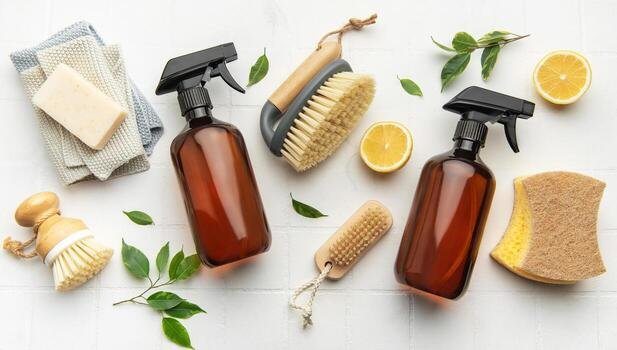
This is the swap people resist the longest, and it’s usually because they picture doing extra laundry. In practice, a stack of ten to twelve microfiber or cotton cloths handles what a roll of paper towels used to, and you wash them with your regular towels once a week.
The performance difference is real, not just environmental. Microfiber cloths pick up grease and grime mechanically, through the fiber structure, rather than relying on the cloth just soaking up liquid the way paper does. Streaky windows and greasy stovetops both come clean faster with a good microfiber cloth than with a paper towel, and you’re not tearing through a roll doing it.
Keep a separate color of cloth for bathroom cleaning versus kitchen counters. It sounds fussy until the first time you accidentally wipe your countertop with the same rag you used on the toilet rim.
| Old Product | Plastic-Free Swap | Approx. Lifespan | Extra Cost Upfront |
|---|---|---|---|
| Bottled dish soap | Solid dish soap bar | 6–10 weeks per bar | Low |
| Dryer sheets | Wool dryer balls | 2–5 years | Moderate |
| Paper towels | Microfiber cloths | 1–2 years with regular washing | Moderate |
| Plastic scrub brush | Wooden brush, swappable head | 1–3 years | Low |
| Spray bottle cleaners | Concentrate tablets + reusable bottle | Bottle lasts indefinitely | Low to moderate |
4. Baking Soda and Vinegar Instead of Multi-Surface Sprays
I was skeptical about this one too, mostly because so many blogs oversell it as a miracle fix for everything. It isn’t. Vinegar shouldn’t go near natural stone counters, and baking soda alone won’t cut through baked-on grease. But for the everyday jobs, wiping counters, deodorizing a fridge, scrubbing a bathtub ring, the combination does the job without a cocktail of unlisted fragrance chemicals.
Mix one part white vinegar to one part water in a reusable spray bottle for general surface cleaning. Keep a small open box of baking soda in the fridge and a separate container by the sink for scrubbing. That’s genuinely most of what a household needs, and it costs a fraction of what name-brand sprays run per ounce.
Where people usually go wrong here is assuming stronger means better. Undiluted vinegar isn’t more effective, it’s just more likely to irritate your hands and leave a sharper smell in a closed bathroom. Dilution isn’t a compromise, it’s the actual recipe.
5. Bar Laundry Soap or Soap Nuts Instead of Plastic Jug Detergent
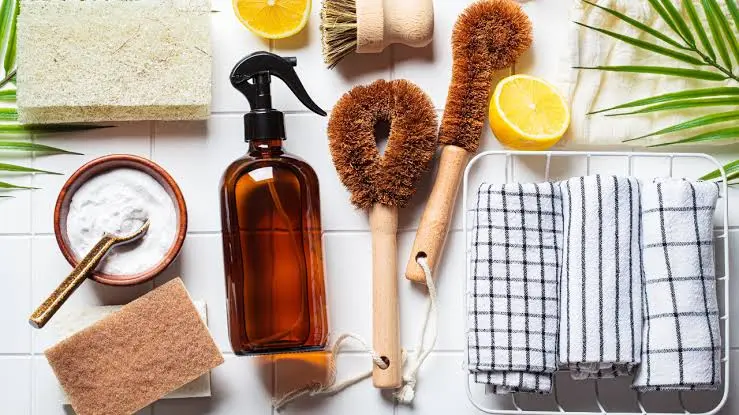
Laundry detergent jugs are some of the bulkiest plastic waste a household produces, and most people don’t realize how little detergent an average load actually needs. A bar of laundry soap, grated or rubbed directly onto stains before a wash, handles the same job as liquid detergent for most fabrics.
Soap nuts, the dried shells of the sapindus fruit, are a stranger but genuinely effective option for lighter loads. A small mesh bag of five or six shells lasts three to four washes before you need to replace them. They won’t out-clean detergent on heavily soiled workwear, but for everyday laundry they’re quietly one of the better swaps on this list.
If budget is the thing holding you back from trying any of this, it’s worth reading can you go plastic-free on a tight budget, because laundry is usually where the cost math works most in your favor. You’re not buying specialty products, you’re buying less, less often.
And if you’re not sure which swaps are legitimate versus which are just marketing dressed up as sustainability, it’s worth checking whether the “eco” material itself holds up. Not everything labeled sustainable actually is. Is bamboo really plastic-free is a good place to start if you want to get skeptical about the swaps you’re being sold, not just the ones you’re giving up.
Common Mistakes People Make With These Swaps
The biggest one, by far, is switching everything at once and burning out in a week. A dish soap bar that slides around the sink feels like a minor annoyance. Five new products failing to behave the way you expected, all in the same week, feels like proof that none of it works. It isn’t proof of that. It’s proof that habits take longer to build than a single grocery trip.
The second mistake is assuming a natural-sounding product is automatically gentler or more effective. Vinegar is acidic enough to etch stone. Baking soda is abrasive enough to scratch certain finishes. Read what you’re putting your hands and surfaces up against, plastic-free or not.
If you’re early in this process generally, plastic-free living mistakes most beginners make in month one covers a wider set of pitfalls beyond just cleaning, and it’s worth a read before you get too far into any single category of swap.
At Plastic Free Living, the swaps we keep coming back to recommending are the ones that survived actual daily use, not the ones that photographed well for a single blog post. Cleaning products get used constantly, which means they’re also where bad advice gets exposed fastest. If something doesn’t work by the third use, it’s not going to work by the tenth.
Most of these changes paid for themselves within a couple of months, and a few of them, the wool dryer balls especially, ended up being flat-out better than what I was using before. That’s really the bar worth aiming for. Not less plastic for its own sake, but a cleaning routine you’d keep even if nobody was watching.
Frequently Asked Questions
Do plastic-free cleaning swaps actually save money long term? Most of them do, though not immediately. Dish soap bars and laundry bars cost more per unit upfront but last significantly longer than their liquid counterparts, so the savings show up over two or three months rather than the first purchase.
Is it safe to mix vinegar and baking soda for cleaning? You can use them together, but know that combining them creates a fizzing reaction that neutralizes both, so for most jobs it’s more effective to use them separately depending on the surface and the type of mess.
Will wool dryer balls work in a gas dryer? Yes, they work the same regardless of whether your dryer is gas or electric, since they function through tumbling and airflow rather than heat source.
What’s the biggest beginner mistake with reusable cleaning cloths? Not washing them often enough. A cloth that sits damp in a bucket for days starts to smell and can spread bacteria rather than remove it, so a weekly wash cycle matters more than people expect.
Can I use soap nuts on heavily soiled clothing like workwear? Not reliably. Soap nuts are better suited to everyday, lightly soiled laundry. For grease-heavy or heavily stained items, a bar laundry soap applied directly to the stain beforehand will get better results.