
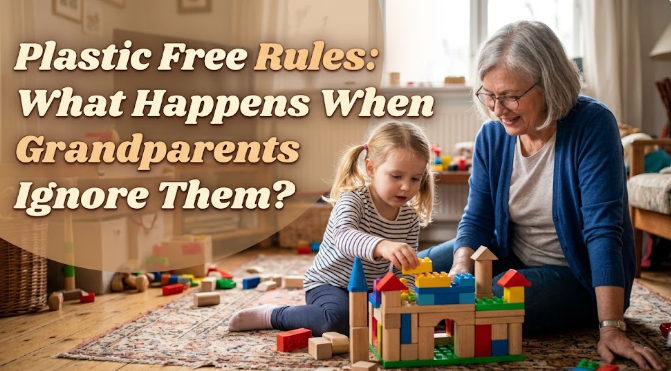
Plastic Free Rules: What Happens When Grandparents Ignore Them?
By the Plastic Free Living editorial team
Grandma still wraps sandwiches in cling film. Grandpa still asks for a plastic bag at the checkout even when there’s a canvas one folded in his coat pocket. It happens in almost every household that’s trying to cut plastic out, and it rarely goes the way people expect.
Most families picture a straightforward conversation. You explain the new rules, everyone nods, and the house quietly becomes plastic free. In practice, older relatives often keep doing things the old way, not out of stubbornness, but because decades of habit don’t reset because someone printed a checklist and stuck it to the fridge.
1. Why Grandparents Break the Rules Without Meaning To
The plastic-free habits many households are adopting now weren’t around for most of a grandparent’s adult life. Cling film, single-use bags, and pre-packaged everything were sold to their generation as progress. Convenient. Modern. Safer than the alternatives, even. Undoing that isn’t a matter of willpower, it’s unlearning a set of reflexes built over fifty or sixty years.
There’s also a practical layer people miss. Many older adults live with mobility limits, smaller grocery budgets, or routines built around what’s easiest to carry and store. A glass container is heavier than a plastic one. A bulk bin requires a trip most people don’t make anymore. When a grandparent reaches for the plastic option, it’s frequently the path of least resistance, not defiance.
And here’s where people usually go wrong: they assume the ignoring is intentional. It rarely is. It’s autopilot.
2. What Actually Happens When The Rules Get Ignored
The plastic sneaks back in slowly. A bag of frozen vegetables here, a six-pack of yogurt cups there, wrapped birthday presents in shiny plastic film nobody asked for. Within a few weeks, the bin that was supposed to be nearly empty looks the same as it did before the household started trying.
This is where a lot of families give up, and that’s the real cost. Not the plastic itself, but the discouragement that follows watching progress undone by someone who wasn’t trying to undo anything. One bag of frozen peas doesn’t ruin months of effort. But it feels like it does, and that feeling is what causes people to quit.
There’s also a quieter effect worth naming. Kids in the house notice the inconsistency. If one adult carries a reusable produce bag and another hands over three plastic ones without a second thought, children pick up on the mixed signal faster than either adult realizes. Consistency matters more for what it teaches than for the plastic saved in any single week.
3. The Habits That Cause The Most Friction
Some habits cause more tension than others. A few come up constantly across plastic-free households:
| Old Habit | Why It Sticks | Plastic-Free Swap That Usually Works |
|---|---|---|
| Cling film on leftovers | Fast, no cleanup, familiar | Beeswax wrap or a plate on top of the bowl |
| Plastic shopping bags | Store defaults to offering them | Keep a folded bag in every coat and the car |
| Bottled cordial or juice | Bulk stores feel inconvenient | Concentrate in glass, bought less often |
| Wrapping gifts in plastic film | It’s what’s in the cupboard | Fabric wrap or brown paper kept on hand |
| Pre-portioned snack packs | Seen as helpful for grandkids | Reusable snack pots filled at home |
Notice that almost none of these are about values. They’re about what’s within reach. That’s useful information, because it means the fix usually isn’t a conversation about the environment. It’s about making the plastic-free option the easy one.
Anyone who’s read through plastic-free swaps every beginner should try first will recognize most of the items on that list. The difference with an older relative is that the swap has to be sitting right where the old habit lives, not stored somewhere new that requires remembering.
4. How To Handle It Without Starting A Fight
Correcting a parent or grandparent on something they’ve done for decades rarely lands well when it sounds like correction. What tends to work better is removing the plastic option rather than pointing it out.
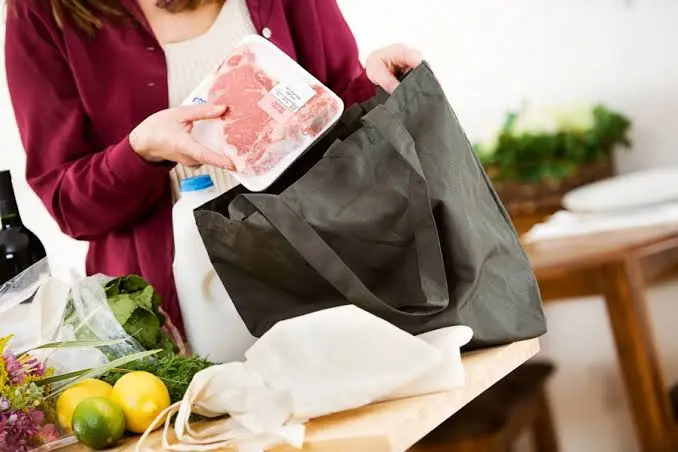
If cling film keeps appearing, don’t mention it again. Just don’t buy more, and leave a stack of reusable lids somewhere obvious. If plastic bags keep coming home from the shop, put a cloth bag directly in the trunk of their car, not in a drawer they’ll forget. People adapt to what’s available far more readily than they adapt to being told what they’re doing wrong.
Framing matters too. “This one’s actually easier once you get used to it” lands differently than “you’re not supposed to use that anymore.” One is an invitation. The other is a rule, and most adults, at any age, resist being handed rules by someone younger than them.
It also helps to pick battles. Not every plastic item needs to become a debate. A family that’s just getting started might find more useful guidance in plastic-free living mistakes most beginners make in month one, since overcorrecting everywhere at once is often what causes the whole household, grandparents included, to abandon the effort by week three.
5. Common Mistakes People Make When Trying To Fix This
The biggest mistake is treating it as a one-time conversation. It isn’t. Habits built over sixty years don’t move after a single chat, no matter how well the chat goes. Expect to have the same low-key redirect a dozen times before it sticks, and don’t read that repetition as failure.
The second mistake is cost framing. Suggesting expensive glass storage systems or bamboo everything to someone on a fixed income can shut the conversation down fast, even if that wasn’t the intent. Cheaper, low-effort swaps tend to succeed more often than the aspirational ones. Families working with tighter budgets might find it worth reading through can you go plastic-free on a tight budget, because a lot of the advice there applies just as well to an older relative as it does to a twenty-something starting out.
The third mistake, and probably the most common one, is expecting perfection. A household with a grandparent in it who still uses cling film twice a month is not failing at being plastic free. It’s a household in progress, and most plastic-free progress looks messier than the version people picture before they start. Anyone who’s been through it already knows this from plastic-free week one, why it feels harder than expected, where the gap between the plan and the reality tends to show up fastest.
None of this means giving up on consistency. It means measuring it over months instead of days, and over the whole household instead of any one person in it.
Where This Actually Lands
Plastic Free Living gets messages fairly often from people frustrated that a parent or grandparent “won’t get on board.” Most of the time, the person hasn’t refused anything. They’ve just kept doing what’s familiar because nobody made the new way easier than the old one. Swap the environment around them before assuming you need to swap their mind.
A few months in, most families notice the plastic use drops anyway, quietly, without the confrontation anyone was bracing for. It’s rarely dramatic. It’s a cupboard that slowly fills with jars instead of tubs, and nobody quite remembers when that happened.
FAQs
My grandmother says cloth bags are “too much fuss.” What actually works? Don’t argue the point. Put a folded cloth bag somewhere she already goes, like the bottom of her handbag or the passenger seat of her car, so it’s there before she needs to think about it.
Is it worth buying plastic-free products as gifts for older relatives? Sometimes, but pick things that replace something they already use daily rather than novelty items. A good produce bag beats a bamboo gadget they’ll never touch.
How do I bring this up without sounding like I’m lecturing? Talk about the swap, not the plastic. “I found a wrap that actually keeps bread fresher” works better than any sentence containing the words “you should.”
What if they live independently and I can’t control what they buy? Focus on visits and shared meals instead of their entire pantry. You won’t manage their household from a distance, and trying usually backfires.
Should kids be involved in encouraging grandparents to change habits? Often, yes. Grandparents tend to respond differently to a grandchild pointing out a reusable straw than to an adult child raising the same point. It reads as sweet instead of critical.
If any of this feels familiar and you’re still working out where to start with your own household, the beginner hub is a reasonable place to catch up on the basics before tackling anyone else’s habits.