Plastic-Free Baby Bottles: Why Brands Overpromise
Search “plastic-free baby bottle” and you’ll get a page of results that aren’t plastic-free at all. Silicone sleeves. Silicone nipples. Plastic caps sitting on top of glass. Somewhere along the way, “plastic-free” turned into a marketing category instead of an actual description, and new parents are the ones sorting through the gap.
That gap matters more with baby gear than almost anywhere else. A bottle gets heated, washed, sterilized, dropped, and reused daily for months. Whatever it’s made of gets tested constantly. So it’s worth being specific about what these products are actually made of, not what the packaging implies.
1. The Bottle Isn’t the Whole Product
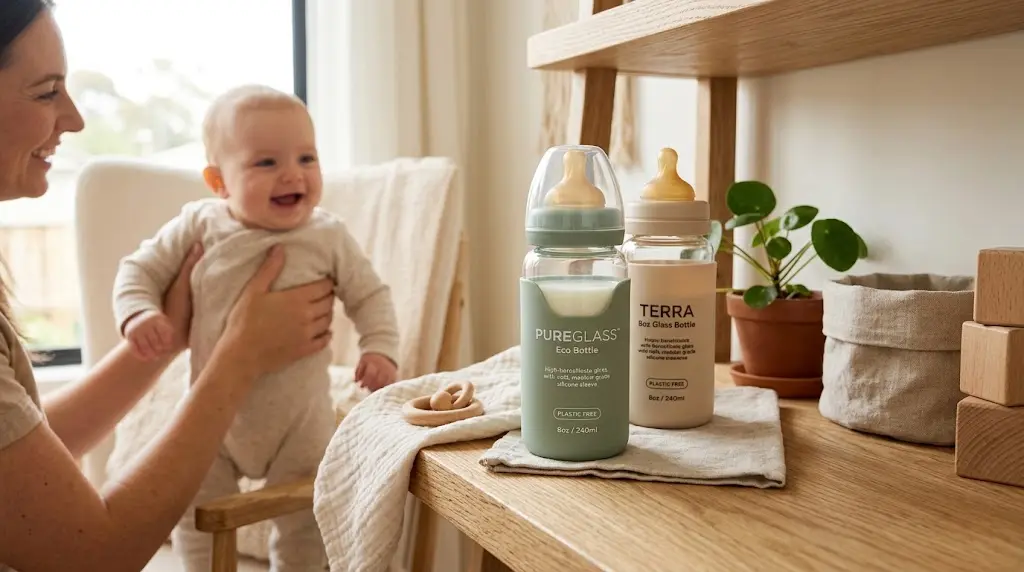
When a brand says “plastic-free bottle,” they usually mean the body of the bottle. Not the nipple. Not the collar that holds the nipple in place. Not the travel cap. A glass bottle with a silicone nipple and a polypropylene collar is still, by weight, a partly plastic product. That’s not necessarily a problem, silicone in particular behaves very differently from petroleum-based plastic, but it does mean the label is doing more work than the product is.
This is the same pattern we’ve flagged before in plastic packaging showing up on nearly everything: the visible, marketable part gets swapped out first, and the parts nobody photographs stay the same.
2. What “BPA-Free” Actually Promises (and What It Doesn’t)
BPA-free is not the same claim as plastic-free, and brands lean on that confusion constantly. The FDA banned BPA specifically from baby bottles and sippy cups back in 2012, and the EU had already restricted it in baby bottles the year before that. So at this point, BPA-free isn’t really a selling point on baby bottles sold through normal retail channels. It’s the baseline. It was already the law.
What gets left out is that many BPA-free plastics use replacement compounds like BPS or BPF, which early research suggests may behave similarly in the body to BPA itself. The research here is still developing and we’re not going to overstate it. But “BPA-free” doesn’t mean “free of every compound of concern.” It means one specific compound was swapped for a close chemical cousin, and the marketing stopped there.

3. Glass, Steel, and Silicone: What Each One Actually Solves
Each material solves a different problem, and none of them solves all of them.
| Material | Plastic-free? | Main advantage | Main tradeoff |
|---|---|---|---|
| Borosilicate glass | Yes, body only | No leaching at any temperature, easy to sterilize | Breaks, needs a sleeve for grip |
| Stainless steel | Yes, body only | Very durable, blocks light and heat well | Can’t see milk level or spot curdling |
| Food-grade silicone | Technically no, but low-concern | Flexible, shatterproof, handles heat well | Still synthetic, still needs regular replacement |
| PPSU plastic (marketed “medical grade”) | No | Lightweight, shatterproof | Still a plastic, still ages and microplasticizes over time |
Glass gets recommended the most, and for good reason. It’s inert. Heat doesn’t degrade it the way it degrades plastic, and it won’t shed microplastic particles into formula or breast milk during sterilizing or bottle warming. The tradeoff is real too, though: it breaks, and most parents end up buying a silicone sleeve anyway, which puts silicone back into the picture.
Stainless steel solves the shattering problem and the leaching problem at once. What it doesn’t solve is visibility. You can’t watch the milk level through a steel wall, and a lot of parents find that harder to adjust to than they expected.
4. Where Parents Usually Get Tripped Up
The mistake we see most often isn’t buying the wrong bottle. It’s assuming one plastic-free purchase resets the whole feeding setup. It doesn’t. Bottle brushes are often plastic. Drying racks are often plastic. Bottle warmers have plastic housings and sometimes plastic-lined water chambers. None of that gets mentioned on the box that says “eco-friendly” in green lettering.
And there’s a second, quieter mistake: buying glass bottles and then microwaving them with the silicone nipple attached, on high, for too long. Silicone tolerates heat well, but repeated high-heat cycling still breaks it down faster than the marketing suggests. If you’re going to sterilize, steam or boiling water does less damage over time than the microwave shortcut.
We covered a version of this same pattern in plastic-free living mistakes beginners make in month one, and baby gear is honestly one of the clearest examples of it. People swap the headline item and stop there.
5. What Actually Counts as a Meaningful Swap
If reducing plastic contact is the actual goal, not just the label, a few things move the needle more than the bottle material alone.
Skip anything marketed as “eco” or “natural” without a specific material named. Those words aren’t regulated the same way “BPA-free” is, and brands know it.
Check whether the nipple and collar are silicone or a soft plastic blend; silicone is the better of the two if you’re avoiding plastic contact with heated liquid.
Hand-wash instead of dishwasher-cycling plastic components, since repeated high-heat dishwasher cycles are one of the bigger contributors to microplastic shedding in kitchen items generally, bottles included.
Replace silicone nipples on the schedule the manufacturer actually recommends, not when they visibly wear out. Silicone degrades in ways that aren’t always visible before it starts shedding particles.
None of this requires buying an entirely new bottle system. Most of it is about paying attention to the parts of the product that don’t make it into the product photo. That’s a theme that shows up across almost every category we’ve written about, including in our piece on plastic-free swaps worth trying first, and baby bottles are just a higher-stakes version of it.
A quick aside, because it comes up constantly in comments: no, glass bottles don’t automatically mean a “cleaner” feeding routine in some broader sense. They just remove one specific variable, heat-related leaching, from the equation. That’s worth something. It’s not worth the guilt some parents put themselves through comparing bottle brands like it’s a referendum on how much they care.
If you’re weighing bottles against a tighter budget too, that calculus gets even more specific, and it’s worth reading through can you go plastic-free on a tight budget before assuming the premium glass set is the only responsible option. Sometimes it isn’t, and a well-maintained plastic bottle replaced on schedule beats a neglected glass one.
There isn’t a perfect bottle. There’s a bottle that matches how careful you’re actually going to be about replacement, cleaning, and heat exposure, and buying past that point mostly just buys peace of mind.
Frequently Asked Questions
Is silicone actually better than plastic for baby bottles? For heat exposure specifically, yes. Silicone holds up better under repeated sterilizing and doesn’t leach the same way standard plastics do. It’s still a synthetic material, though, so “better” doesn’t mean “free of any concern.”
Can I put a glass baby bottle straight into a steam sterilizer? Borosilicate glass handles steam sterilizing well. Check that the silicone nipple and any plastic collar are also rated for the sterilizer’s temperature, since those parts fail before the glass does.
Does BPA-free mean the bottle has no plastic-related chemicals at all? No. It means that one specific compound, BPA, isn’t present. Other bisphenol compounds may still be used as replacements, and current research on those is less settled.
Are stainless steel bottles microwave safe? No, and this trips people up constantly. Metal in a microwave is a fire risk. Warm steel bottles with warm water in a bowl or a bottle warmer instead.
Do plastic-free bottles actually reduce a baby’s microplastic exposure? They reduce exposure from the bottle itself, particularly during heating. They don’t eliminate exposure from formula packaging, water sources, or other feeding equipment, so they’re one piece of a larger picture rather than a complete fix.
For a broader look at where to start if this all feels like a lot at once, our guide on plastic-free living: where to start walks through the order that actually makes a difference.