Zero Plastic Waste Lessons Coral Reefs Teach Better Than Cities
The first time I surfaced from a dive with a plastic bottle cap wedged in my glove, I wasn’t thinking about landfills or recycling bins. I was thinking about how strange it was that this one small object had traveled further and lasted longer than almost anything else in the water around it. Everything else down there got used. The cap just sat.
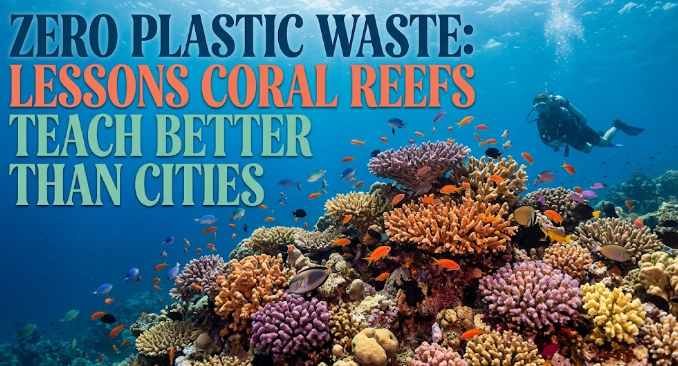
That contrast stuck with me longer than any zero-waste guide I’ve read since. Reefs don’t really produce waste in the way we understand the word. Almost everything that comes off one organism becomes food, shelter, or raw material for another, on a loop so tight that biologists sometimes describe healthy reef systems as running on borrowed nutrients, recycled again and again rather than replaced. Cities do the opposite. We pull material in, use it once, and push it out the other end as trash. Two systems, same planet, completely different logic.
- What Coral Reefs Actually Do With Waste
A reef is, structurally, a nutrient-poor environment. The water around most healthy reefs is closer to a desert than a soup, low in nitrogen and phosphorus compared to coastal zones near river mouths. And yet reefs support some of the densest concentrations of life on the planet. The only way that math works is through near-total reuse.
Fish waste feeds algae. Algae feeds grazers. Dead coral skeleton becomes the physical scaffolding that new coral polyps build on top of. Even the mucus layer that coral secretes, which looks like waste on the surface, gets consumed by bacteria and smaller reef organisms before it ever really leaves the system. Nothing sits around long enough to become a problem. It gets absorbed, reshaped, and put back to work.
That’s the part most articles about ocean plastic skip. They focus on the debris, which is real and worth talking about, but they miss that the reef itself is a working model of a closed loop, one that predates every zero-waste guide by a few hundred million years.
- Where Cities Break the Same Loop

Cities are linear. Raw material comes in from somewhere far away, gets manufactured into something, gets used once or a handful of times, and then leaves as garbage, usually to a landfill or an incinerator that’s also somewhere far away. There’s no local reabsorption happening. The system depends on constant new input rather than internal reuse, which is exactly the opposite of what makes a reef work.
I want to be fair here. Recycling programs exist because someone recognized this problem and tried to close the loop artificially. But recycling, as most cities run it, is a downstream fix bolted onto an upstream design flaw. A reef doesn’t need a separate collection truck for its nutrients. The reuse is built into the architecture from the start.
| Coral Reef System | Typical City Waste System | |
|---|---|---|
| Nutrient source | Internal, recycled continuously | External, imported constantly |
| “Waste” handling | Reabsorbed by another organism within hours or days | Collected, sorted, often shipped elsewhere |
| Material lifespan | Reused indefinitely within the system | Used once or a few times, then discarded |
| Failure point | Pollution or temperature stress breaks the loop | The loop was never closed to begin with |
| Recovery method | Self-repairing if stressors are removed | Requires deliberate infrastructure and policy |
Reading that table, it’s tempting to think the fix for a city is just “build better recycling.” That’s not quite it, and it’s the mistake I see beginners make constantly on this exact topic.
- The Mistake Almost Everyone Makes Here
People assume the lesson from reefs is about recycling harder. It isn’t. Recycling is still a linear-system patch, just a slower one. The actual lesson is closer to redesign. Reefs don’t sort their waste into bins after the fact, they built a system where very little ever becomes waste in the first place.
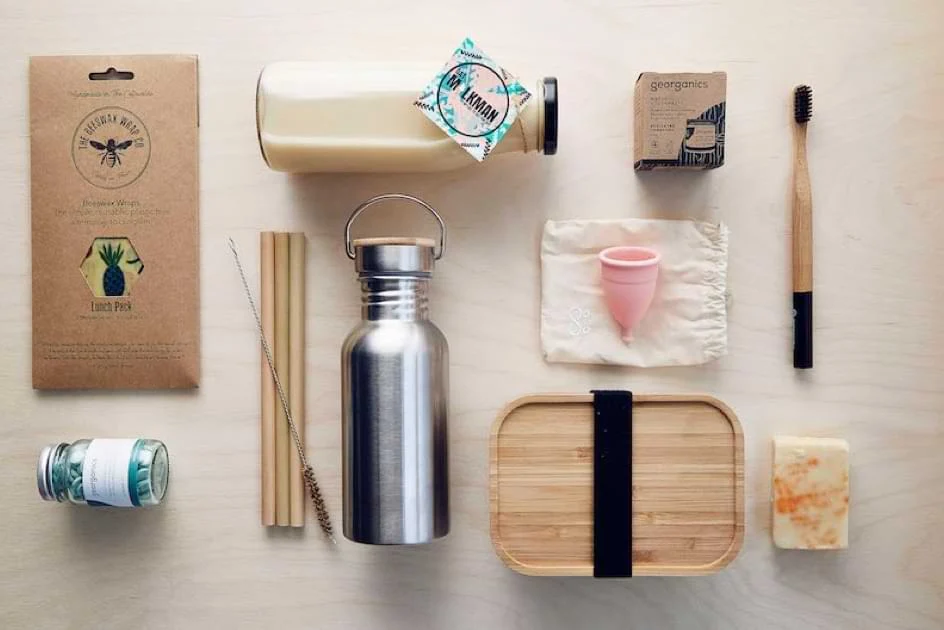
On a household level, that means the plastic-free habit that matters most isn’t the one that happens at the bin. It’s the one that happens at the point of purchase, before an item has any chance of becoming trash at all. I made this mistake myself for at least a year, feeling proud of a well-organized recycling shelf while still buying the same disposable packaging every week. The shelf was tidy. The loop was still open.
- Reef-Inspired Habits That Actually Transfer to a Kitchen
A few things from reef ecology translate surprisingly well to an ordinary kitchen, once you strip away the metaphor and look at the mechanism underneath.
Reuse before you replace. On a reef, almost nothing gets discarded until something else is ready to use it. At home, that looks like exhausting the life of a container before buying a new one. If you’re weighing glass against stainless for food storage, our piece on glass versus stainless steel storage goes through which one actually holds up over years of that kind of reuse.
Match material to lifespan, not to trend. Reefs don’t waste energy building structures that won’t last in their environment. Coral skeleton is built for exactly the conditions it lives in, nothing more, nothing less. Silicone gets marketed as the flexible, modern answer to plastic, but it’s worth knowing what it actually is before you build a kitchen around it. We looked at that directly in is silicone really plastic-free.
Start at the smallest, most repeated action. A reef’s efficiency comes from millions of tiny, constant exchanges, not one grand redesign. If you’re early in this and overwhelmed by where to begin, the swaps that matter most are the ones you repeat daily. That’s covered well in plastic-free swaps every beginner should try first, and once those stick, the kitchen-specific version in plastic-free kitchen swaps that actually stick is the natural next step.
None of this means your kitchen needs to function like a living ecosystem. But the underlying principle, close the loop before it opens rather than clean up after it does, holds up.
- Where the Comparison Actually Falls Apart
I should say plainly that this metaphor has limits, because I think articles like this one tend to oversell the parallel. A reef is a biological system with millions of years of evolutionary pressure behind its efficiency. A household is a handful of people making decisions under time pressure, on a budget, usually tired. You can’t out-evolve a Tuesday night when you’re just trying to get dinner on the table.
So I’m not telling you to run your kitchen like a coral reef. I’m telling you the reef proves something useful: a system with almost zero waste is possible, and it doesn’t run on guilt or better sorting. It runs on redesigning the point where things enter the system in the first place. That’s the transferable part. The rest is just a nice story from a dive log.
If there’s one thing this site keeps coming back to, on the beginner hub and in the kitchen guides both, it’s that plastic-free living works better as a design change than as a discipline problem. Plastic Free Living has said that a dozen different ways across a dozen different rooms of the house, and the reef is just the clearest version of the same idea I’ve found.
Frequently Asked Questions
Do coral reefs actually get harmed by plastic waste, or is that overstated? It’s not overstated. Plastic debris on reefs is linked to increased disease transmission in coral, mostly because plastic surfaces carry pathogens and abrade the coral’s protective tissue layer when they make contact. It’s a real and documented stressor, separate from the nutrient-cycling point made above.
Is “zero waste” actually achievable at home the way it is on a reef? Not literally zero, no. A reef has millions of years of specialization working in its favor. A realistic household goal is closer to minimizing single-use entry points and reusing what you already have for as long as it holds up, not hitting a literal zero.
What’s the single best place to start if this all feels too big? Pick one recurring purchase, the thing you buy weekly without thinking about it, and redesign just that one. Trying to overhaul the whole kitchen at once is usually what causes people to quit within a month.
Does recycling more count as closing the loop? Partially, but it’s a downstream fix. It matters, but it doesn’t replace reducing what enters your kitchen as disposable packaging to begin with. Both is better than either alone.
Are reef-safe cleaning products actually different from regular ones? Some are, particularly around sunscreen chemicals like oxybenzone, which is the main ingredient most reef-safe labeling is responding to. For general household cleaners, the plastic-free angle usually matters more than the reef-safe label does.
I still have that bottle cap. It sits on a windowsill, not as a trophy, just as a reminder that the object that lasts the longest in a system built to waste nothing is always the one that was never designed to break down. You can read more of how we translate that idea room by room over at plasticfreeliving.online/plastic-free-home-room-by-room/.