
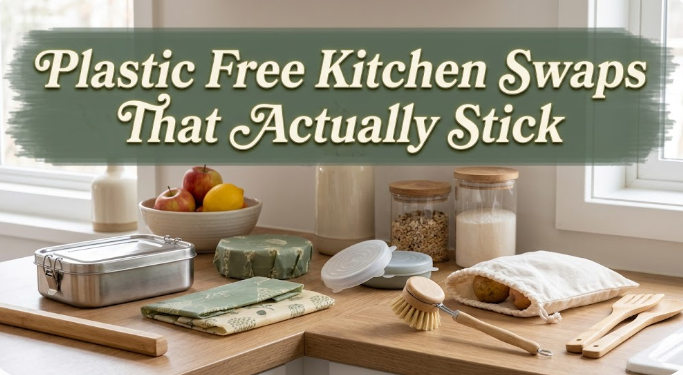
Most plastic-free kitchen swaps fail within six weeks. Not because people lose motivation, but because they buy the wrong things in the wrong order and end up right back at the shelf of cling film, annoyed and out sixty dollars.
I’ve watched this happen enough times, in my own kitchen and in messages from readers, that I stopped believing the problem was willpower. It’s sequencing. You swap the flashy stuff first (the bamboo everything, the matching glass jar set) and skip the boring items that actually get used every single day. Then the boring plastic sticks around because nothing ever replaced it properly.
This isn’t a list of forty products. It’s the dozen or so swaps that survived contact with a real, busy kitchen, plus a few that I tried and quietly gave up on, because that’s useful information too.
1. Start With What You Touch Daily, Not What Looks Good on a Shelf
Before buying anything, spend three days just noticing what plastic you actually pick up. Not what’s in your cupboard gathering dust. What you touch.
For most households that’s cling film, sandwich bags, the plastic chopping board, and whatever container holds leftovers in the fridge. Those four items get more daily use than almost anything else in the kitchen, which means they’re also where a swap either pays off fast or gets abandoned fast.
If you’ve read where to start with plastic-free living, you already know the general principle: high-frequency items first. It applies doubly in the kitchen because food touches these things multiple times a day, every day, without exception.
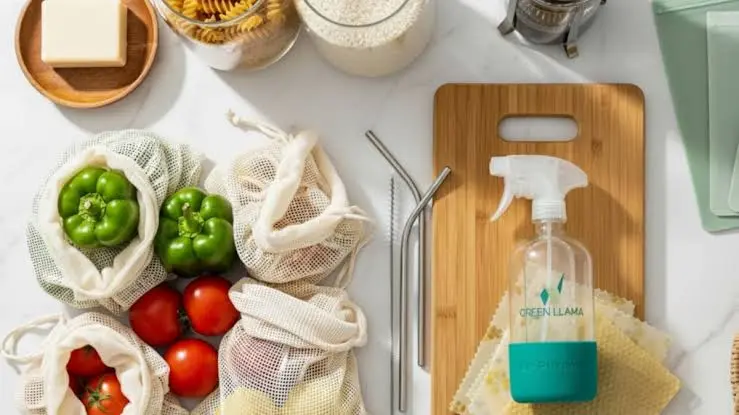
2. The Swaps Worth Making First
Here’s the order I’d actually recommend, based on cost-per-use rather than upfront price, which is where most people go wrong.
| Plastic Item | Swap | Upfront Cost | Realistic Lifespan | Worth It? |
|---|---|---|---|---|
| Cling film | Beeswax wraps or a plate over the bowl | $12–20 for a set | 6–12 months per wrap | Yes, but wraps degrade faster than sellers admit |
| Sandwich bags | Cloth bags or reused jars | $10–15 | Years | Yes, high daily payoff |
| Plastic chopping board | Wooden board, oiled monthly | $25–40 | 5+ years | Yes, if you actually oil it |
| Plastic food storage | Glass containers with steel lids | $30–60 for a set | Decades | Yes, slow payoff but permanent |
| Dish sponge | Loofah or wooden-handled brush | $4–8 | 4–6 weeks (sponge), longer (brush) | Yes, cheapest swap on this list |
| Plastic kettle | Stainless steel kettle | $40–70 | 10+ years | Only if yours is actually failing |
The kettle is on there because people ask about it constantly, and my honest answer is: don’t replace a working kettle just because it’s plastic. Replace it when it dies. That’s not a popular thing to say in this space, but it’s true, and a kitchen isn’t more plastic-free because you threw out something that still worked.
3. Where People Actually Go Wrong
The single most common mistake is buying the beautiful glass jar set before dealing with cling film and sandwich bags. Jars are satisfying to buy. They photograph well. But if the film and bags aren’t handled, the plastic use barely drops, because those are the two items generating the most single-use waste week to week.
The second mistake is treating beeswax wraps as a permanent, one-time purchase. They aren’t. A wrap that’s washed daily and used for wrapping cheese or bread starts losing its tack somewhere around month six to nine. You can refresh a wrap with a bit of extra wax and a warm iron, and it’s worth doing once before buying new ones, but eventually they wear out. Nobody selling them tells you that upfront.
And a smaller one: wooden chopping boards need oil. Mineral oil, food-grade, once a month if you’re using it daily. Skip that step and the board cracks within a year, and then someone declares “wood boards don’t work” and goes back to plastic. The board wasn’t the problem.
If you tripped over any of these in your first month, you’re not behind; this is basically what most beginners run into in month one.
4. The Order That Actually Sticks
Do it in this sequence and the whole thing costs less and lasts longer:
First, sort out food storage with whatever glass jars you already own from pasta sauce or jam. Free, and it solves half the leftover-container problem before you spend a cent.
Second, get one good wooden chopping board and commit to oiling it. This is the highest-friction habit change, so do it early while your motivation is still high.
Third, replace sandwich bags with two or three cloth ones. Cheap, immediate, and you’ll notice the difference within a week because you use them constantly.
Fourth, try one beeswax wrap before buying a full set. See if you actually use it before committing to six of them sitting in a drawer.
Fifth, and only once the above feels normal, look at the dish brush, the kettle, and anything else that’s still working fine. There’s no rush here.
This mirrors what a lot of us find works for the first swaps every beginner should try, though kitchens vary enough that your specific order might shift depending on what you cook and how often.
5. What I’d Skip, At Least For Now
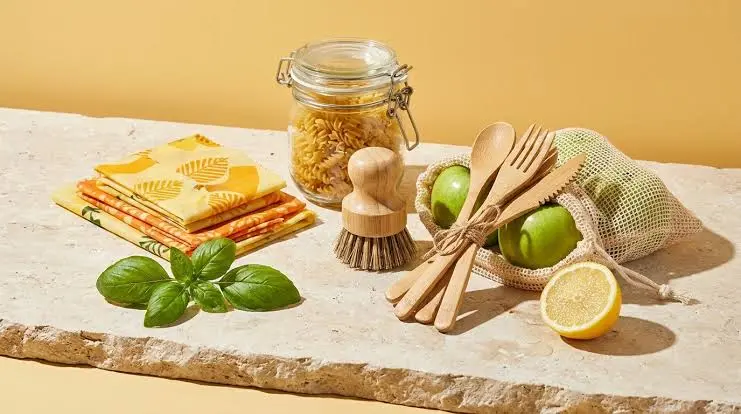
Reusable produce bags are genuinely useful if your grocery store lets you weigh your own produce in them. Mine doesn’t, so I bought six and use maybe two.
Silicone food covers, the stretchy ones that go over bowls, sound great in theory. In practice a plate does the same job for free, and I say that as someone who owns four of the silicone ones.
Compostable plastic-look bin liners are a separate conversation entirely, closer to zero waste territory than strictly plastic-free, and worth reading up on before buying, because “compostable” on a label means different things depending on whether your council actually processes it that way.
Plastic Free Living gets asked about bulk-buying jars and dispensers a lot too, and the honest short version is: only worth it if you have a refill store nearby. Without one, you’re just buying more glass than you need.
Common Questions
Do beeswax wraps actually work for meat and raw fish? Not well. Beeswax wraps are better for cheese, bread, cut vegetables, and covering bowls. For raw meat, a reusable container with a tight lid is the safer and more practical choice, both for the wrap’s longevity and for hygiene.
Is bamboo cutlery actually plastic-free? Mostly, but check the binding. Some bamboo items use a resin or glue that includes melamine or plastic compounds to hold fibers together, particularly cheaper pressed-bamboo products. It’s worth looking closer at whether bamboo is really plastic-free before assuming every bamboo label means what it implies.
How much money does this actually save over a year? It depends heavily on your household size, but most people I’ve talked to break even within four to eight months once you factor in not repurchasing cling film, sandwich bags, and sponges every few weeks. The upfront cost is the part that stings, not the ongoing cost.
What’s the one swap I should do this week if I do nothing else? Sandwich bags to cloth, or reusing jars for storage. Both cost close to nothing if you already have the materials at home, and both address genuinely high-frequency plastic use.
Do I need to replace everything plastic in my kitchen at once? No, and trying to will probably make you quit. A kitchen with three solid swaps that actually get used beats a kitchen with twelve swaps that got tried once and abandoned.
None of this requires an overhaul in a weekend. It requires picking the two or three things you touch most often, dealing with those properly, and letting the rest happen slowly. If you want a broader starting point before narrowing in on the kitchen specifically, the beginner’s hub lays out where most people begin and why.