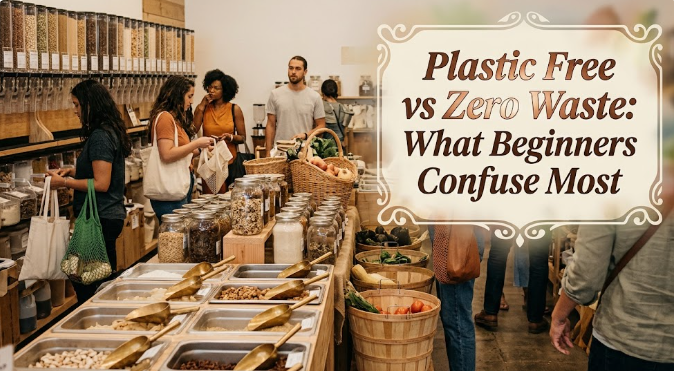
Plastic Free vs Zero Waste: What Beginners Confuse Most
A reader messaged us last month asking for a “zero waste starter kit that’s also plastic free.” Fair enough question. Except those two goals don’t always point in the same direction, and nobody tells beginners that until they’ve already bought three products that solved the wrong problem.
This mix-up shows up constantly in the plastic-free and zero-waste world. People treat the terms as interchangeable, build a routine around one, then feel like they’ve failed when it doesn’t satisfy the other. It’s not failure. It’s just two different projects wearing similar outfits.
1. What Plastic Free Actually Means
Plastic free is a material question. It asks: is plastic involved in this product, this packaging, this purchase? Swap a plastic toothbrush for a bamboo one, and you’ve made a plastic-free choice, full stop. It doesn’t matter whether the bamboo toothbrush came wrapped in cardboard that gets landfilled, or whether the packaging traveled from three countries away.
That’s not a criticism of the goal. Reducing plastic specifically matters because plastic doesn’t break down the way other materials do, and it’s the piece of the waste stream tied most directly to ocean pollution and microplastic exposure. If your main concern is plastic in particular, plastic free is a clean, focused target. You can measure it. You can point at a shelf and know instantly whether something qualifies.
2. What Zero Waste Actually Means
Zero waste is a systems question, and it’s a lot messier to define. The goal isn’t “avoid this one material.” It’s “avoid sending anything to landfill or incineration at all.” That includes plastic, sure, but it also includes paper, glass, food scraps, and anything else that would otherwise end up in a bin.
A genuinely zero-waste household composts. It buys in bulk with reusable containers. It repairs instead of replacing. And here’s the part that trips people up: sometimes a zero-waste choice involves plastic on purpose. A durable plastic container you’ll reuse for fifteen years produces less overall waste than replacing a “natural” glass jar every time it breaks. Zero waste cares about the whole lifecycle, not the material itself.
3. Where the Two Goals Overlap, and Where They Split
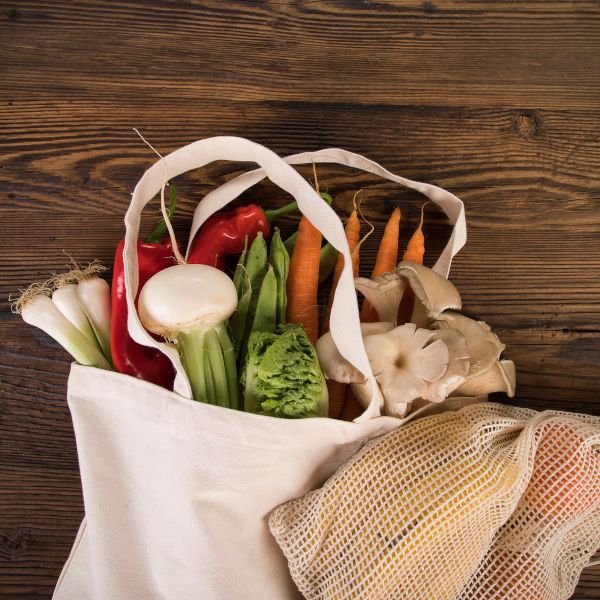
Most of the time, plastic-free and zero-waste choices line up fine. Buying loose vegetables instead of shrink-wrapped ones checks both boxes. But the split becomes obvious in a few common categories.
| Situation | Plastic-Free Choice | Zero-Waste Choice | Do They Match? |
|---|---|---|---|
| Storing leftovers | Glass containers only | Whatever you already own, used until it breaks | Sometimes |
| Buying a water bottle | Stainless steel or glass | The one you’ll actually keep using for years, any material | Usually |
| Grocery packaging | Avoid all plastic wrap | Buy in bulk, bring your own bag or jar | Usually |
| Cleaning products | Bar soap, no plastic bottle | Refillable bottle, even if it’s plastic | Sometimes |
| Replacing broken items | Buy a plastic-free replacement immediately | Repair first, replace only when repair isn’t possible | Rarely at first |
That last row is where most beginners lose the thread. Plastic-free thinking says “get rid of the plastic thing.” Zero-waste thinking says “keep using what you have, plastic or not, until it’s actually done.” Those instructions contradict each other in the short term.
4. The Mistake Beginners Keep Making
Here’s where people usually go wrong, and it’s almost always the same pattern. Someone commits to “living plastic free,” gets excited, and replaces a dozen perfectly functional plastic items with new plastic-free versions in the first month. New bamboo utensils. New metal straws. New glass containers to replace the plastic ones still sitting in the cupboard, unbroken.
That’s not plastic free and it’s definitely not zero waste. It’s just… more consumption, wearing a green label. The old plastic items still get thrown out, which is the opposite of reducing waste. A genuinely useful first move is usually the boring one: finish using what you already have, and only replace it with something better when it actually wears out.
We see the same mistake in the Family Plastic Free Living section of this site, where parents ask if they need to throw out plastic lunch containers and buy stainless steel ones right away. Almost never. Use the container until the lid cracks. Then replace it with intention.
5. Picking a Starting Point That Won’t Burn You Out
If you’re newer to this, don’t try to run both goals at full speed. Pick one lens for the first three months.
- If ocean plastic and microplastics are what bother you most, start with the plastic-free lens. Our guides in the Beginner Plastic Free Living category walk through kitchen swaps that don’t require buying anything new right away.
- If landfill volume and overall consumption bother you more, start with zero waste. Composting food scraps alone can cut a typical household’s bin weight by a third, and it has nothing to do with plastic.
- If you genuinely want both, sequence them. Plastic first, because it’s easier to measure and gives quicker wins. Layer in composting, bulk buying, and repair habits once the plastic swaps feel automatic.
There’s no prize for doing it all simultaneously, and trying to usually just means neither habit sticks. We talk about this pacing question a lot on Plastic Free Living, because the people who stay with it long-term are almost always the ones who started narrow.
One more thing worth saying plainly: buying your way into either lifestyle defeats the purpose. A drawer full of unused “eco” products is still clutter, and clutter is still waste, technically speaking. The Plastic Free Home section of this site leans hard into using what’s already in your house before adding anything new. That’s not a purity test. It’s just the actual math of reducing waste.
Common Questions
Is bamboo automatically better than plastic? Not automatically. A bamboo product still required farming, processing, shipping, and eventually disposal. It beats plastic mainly because it breaks down and doesn’t shed microplastics, but a bamboo item you buy and barely use is still a worse choice than the plastic one already sitting in your drawer.
Can I be zero waste while still using some plastic? Yes, and most zero-waste households do. The goal is diverting things from landfill, not eliminating one material. A durable plastic bin you refill for a decade fits the zero-waste goal fine.
Which approach is cheaper to start? Plastic free, usually, because early plastic-free wins involve buying less rather than buying replacements (skipping bottled water, bringing your own bags). Zero waste often has upfront costs, like a compost bin or bulk-buying jars, that pay off slowly.
Do I need to compost to call myself zero waste? Practically, yes, since food scraps make up a large share of household landfill weight. You don’t need a backyard system. Many cities now offer curbside or drop-off composting that covers the same ground.
What’s the single biggest beginner mistake? Replacing usable items too fast in the name of either goal. The container in your cupboard right now, plastic or not, is greener to keep using than any product marketed as its eco-friendly replacement.
Most people land somewhere in the middle eventually, borrowing what’s useful from each approach and dropping the parts that don’t fit their actual life. That’s not a compromise. It’s honestly what makes either habit last past February.