
Plastic Free Produce Bags: Why Mesh Size Actually Matters
The first set of mesh produce bags most people buy are the pretty ones. Loose weave, soft cotton, the kind that shows up in every zero waste starter kit photo. Then a bag of green beans goes soft and slimy inside one, and a bunch of grapes sheds half its fruit through the gaps before it even reaches the checkout belt. The bags aren’t broken. They’re just the wrong mesh size for what went in them.
That’s the part nobody explains when they tell you to swap plastic produce bags for reusable mesh ones. Mesh size isn’t a style choice, it’s the difference between a bag that keeps produce fresh for a week and one that either suffocates it or lets it fall straight through. If you’re building out a plastic-free kitchen starting point, this is one of those details that saves you from buying the same bag twice.
1. What Mesh Size Actually Controls
Mesh size determines two things at once: airflow and particle retention. A wider weave lets more air move through, which matters because most produce keeps better when it can breathe rather than sit in trapped humidity. A tighter weave holds onto smaller items, but it also holds onto moisture, and that moisture is exactly what speeds up rot in leafy greens or soft fruit.
This is why a single “one size fits all” mesh bag rarely performs well across an entire grocery trip. Potatoes want airflow. Rice wants containment. A bag built for one will disappoint you with the other, and a lot of people quietly give up on reusable produce bags because their first bag simply wasn’t suited to most of what they were buying.
2. Matching Mesh Size to What You’re Actually Buying
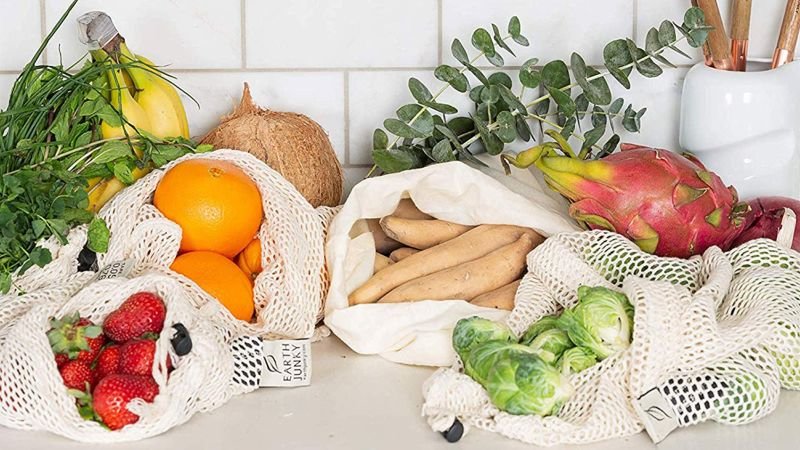
Here’s a rough breakdown based on gap size, the distance between the woven threads, since that’s the number that actually predicts performance.
| Produce Type | Best Mesh Gap | Why It Works |
|---|---|---|
| Leafy greens, herbs | Under 2mm | Keeps moisture in without trapping the condensation that causes wilting |
| Root vegetables (potatoes, carrots, onions) | 3-5mm | Lets loose soil fall away and keeps air circulating around the skins |
| Citrus, apples, stone fruit | 5-8mm | Maximum airflow, and the wider gaps mean less friction damage to the skin |
| Loose grains, legumes, small beans | Under 1mm, or a solid cotton weave instead | Anything wider and product spills straight through at the register |
| Berries | Fine weave with a rigid or semi-structured base | Berries need support underneath as much as they need airflow above |
A bag with 6mm gaps holding lentils is a mess waiting to happen. A bag with 1mm gaps holding a head of lettuce is going to trap enough humidity to shorten its shelf life by a couple of days. The mesh has to match the job.
3. Where People Usually Get This Wrong
The most common mistake is buying one multi-pack of identical bags and expecting them to handle everything from spinach to dried chickpeas. It’s an easy mistake to make, since most retailers sell mesh bags in sets without specifying gap size at all, and honestly most product listings don’t even mention it. You end up guessing.
The second mistake, and this one trips up people who’ve already gotten the sizing right, is washing habits. Mesh bags that go straight from the crisper drawer into a hot wash cycle tend to shrink unevenly, which changes the gap size over time without anyone noticing until the bag starts underperforming for no obvious reason. If you’ve had a bag “stop working” after six months, that’s often what happened, not a manufacturing defect. This connects to a broader pattern covered in common mistakes people make in their first month going plastic-free, where small maintenance details get skipped because they don’t feel urgent at the time.
4. Fabric Matters Almost As Much As Gap Size
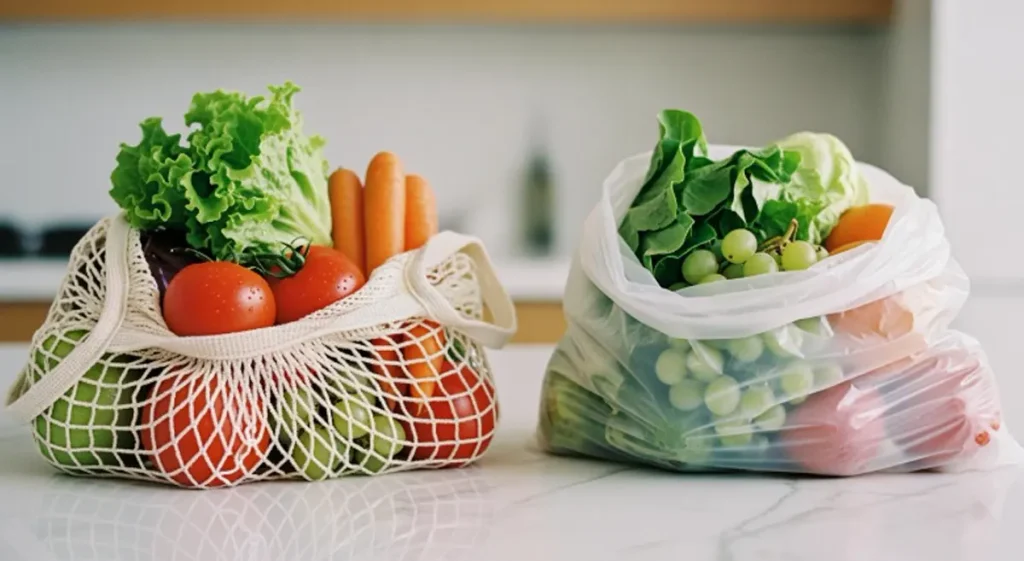
Two bags can have the same mesh gap and still behave completely differently depending on what they’re made from. Cotton mesh breathes well and softens with washing, but it holds onto smells, especially from anything oily or strongly scented, and it takes longer to dry between uses. Nylon and recycled polyester mesh dry fast and resist odor, but they don’t flex the same way, so a tightly packed bag of root vegetables can stretch the weave permanently over time.
And this is where a lot of shoppers assume synthetic automatically means worse, which isn’t quite right. Recycled polyester mesh is often the more practical option for anything going into the fridge regularly, the same logic that comes up when comparing glass versus stainless steel for plastic-free storage: the “purer” material isn’t always the one that performs best for the actual task.
5. Building a Small Set Instead of One Bag Type
The fix isn’t complicated, it’s just not what most starter guides tell you. Instead of buying eight identical bags, buy three or four different gap sizes in small quantities and see which ones you reach for most. Most households land on something like this after a few months:
- Two fine-weave bags for greens and herbs
- Two medium-weave bags for root vegetables and fruit
- One very fine or solid-cotton bag for grains and legumes
That’s a small, deliberate set rather than a drawer full of bags that all do the same middling job. It’s the kind of adjustment that fits naturally into a wider room-by-room plastic-free approach, where the goal isn’t buying more, it’s buying the right thing once.
None of this is complicated once you know to look for it. But it does mean reading a product description more carefully than “reusable mesh produce bag, pack of 5,” which is most of what’s on offer if you’re shopping quickly.
Frequently Asked Questions
Can I just use one type of mesh bag for everything?
You can, but you’ll notice the tradeoffs quickly. A single mesh size will underperform for at least one category of produce, usually either letting small items spill through or trapping moisture around delicate greens.
Does a tighter weave keep produce fresher for longer?
Not universally. Tighter weaves help contain small items but trap more humidity, which actually speeds up spoilage in leafy vegetables and soft fruit. Fresher storage depends on matching the weave to the produce, not just going as tight as possible.
Why do my mesh bags start smelling after a few months?
This is almost always a drying issue rather than a fabric defect. Bags stored damp, especially cotton ones, develop odor from trapped moisture. Letting bags fully air dry before folding them away solves most of this.
Is nylon mesh actually better than cotton mesh?
Better depends on use. Nylon dries faster and resists smell, which makes it a strong choice for regular fridge storage. Cotton breathes better and is gentler on soft produce, but needs more attention to drying and washing.
How do I check mesh gap size before buying if it’s not listed?
Look at product photos closely, or check reviews for mentions of small items like rice or quinoa spilling out. If a listing doesn’t specify gap size in millimeters, treat it as a medium-weave bag until proven otherwise.
Mesh size is one of those details that seems minor right up until you’re standing over a colander of spilled lentils. Get it right once and it stops being something you think about at all, which is really the whole point of a good swap. For more on building out a kitchen that actually works without single-use plastic, the guides at plasticfreeliving.online go through the rest of the setup step by step.