Three years ago I put a “certified compostable” coffee cup lid in my backyard bin, marked the date on a scrap of paper, and forgot about it. Eight months later I dug it out, mostly intact, a little softer at the edges but unmistakably a lid. That single moment did more to change how I write about plastic-free swaps than any report I’ve read since.
1. What “Compostable” Actually Promises
Compostable does not mean “will rot if you leave it outside.” It’s a specific, testable claim. A product can only carry that label if it breaks down into usable compost, safely, in roughly the same timeframe as the organic material it’s mixed with. That’s the standard the U.S. Federal Trade Commission’s Green Guides hold marketers to, and it’s a stricter bar than most shoppers assume.
The problem is the gap between that legal definition and the conditions most people actually have access to. A product can be entirely truthful on its packaging and still be functionally useless to the person who buys it, because the composting environment it was designed for doesn’t exist in their kitchen, their yard, or even their city’s waste system.
2. Home Compostable vs. Industrial Compostable, and Why the Difference Matters More Than the Word “Compostable” Itself
This is where most confusion starts, and it’s not really the shopper’s fault. Two products can sit next to each other on a shelf, both stamped “compostable,” and mean completely different things.
Industrially compostable materials, tested against the ASTM D6400 standard in the U.S., need sustained heat above roughly 55 to 60°C, controlled moisture, and active microbial turnover, conditions you get at a commercial composting facility and basically nowhere else. Home compostable materials are certified against a separate, harder-to-earn standard, such as TÜV Austria’s OK Compost HOME mark, meant to reflect what an ordinary backyard bin can achieve.
A 2022 UK study run through University College London’s Big Compost Experiment, one of the largest citizen-science composting projects to date, had over 1,600 households test home-compostable plastics in their own bins. Sixty percent of the items certified home compostable did not fully break down. Lead researcher Danielle Purkiss later told reporters that lab conditions paid for by manufacturers behaved very differently from the real home composting conditions the products ended up in. That’s not a fringe result. It’s the largest dataset we have on the question, and it lines up with what I’ve seen testing packaging for this site.
| Claim on Package | What It Actually Requires | Where You Can Use It |
|---|---|---|
| “Compostable” (unqualified) | Ambiguous, check for a certification mark | Don’t assume, verify first |
| BPI Certified Compostable (older, pre-2025 scope) | Industrial facility, sustained high heat | Municipal or commercial composting only |
| BPI Commercial and Home Compostable (new tier, launched Dec 2025) | Tested for both settings | Check which tier the specific product carries |
| TÜV Austria OK Compost HOME | Backyard bin, ambient temperature | Home compost, most climates |
| “Biodegradable” (no timeframe stated) | Nothing enforceable | Treat as marketing, not instruction |
3. Here’s Where People Usually Go Wrong
The mistake I see constantly, including one I made myself with that lid, is treating any packaging with a leaf icon or the word “eco” printed near it as interchangeable. It isn’t. Some of those leaf-shaped logos aren’t certifications at all. Some suppliers use marks that closely resemble the real BPI, OK Compost, or Seedling logos but carry no issuer name and no certificate number anywhere on the packaging, which means there’s nothing behind the image except intention.
The second common error is assuming a product labeled for industrial composting will still do something useful in a home pile, just slower. It often won’t do much of anything. Plant-based plastics like PLA are structurally similar to conventional plastic once they’re outside the heat range they were engineered for. Without sustained high temperatures, the polymer chains that are supposed to break down largely just sit there. And many composting facilities reject PLA outright because sorting staff and equipment can’t reliably tell it apart from ordinary plastic, so even the industrial route isn’t guaranteed.
If you’ve read through our piece on what beginners confuse most between plastic-free and zero waste, this is the same pattern showing up again. A swap that sounds correct in principle can still fail in practice if the surrounding system, in this case composting infrastructure, isn’t built to support it.
4. What This Means for What You Actually Buy
I’m not going to tell you to abandon compostable packaging entirely. That’s an overcorrection, and it ignores the fact that some of these materials do work, under the right conditions. What I will say is that the label alone isn’t information. The certification is.
Before you count a compostable product as a genuine win, check three things. First, which certification mark is actually printed on it, not just whether the word “compostable” appears somewhere on the box. Second, whether that certification covers home or industrial conditions, since they are not interchangeable and the packaging usually says which one in small print near the logo. Third, whether you have real access to the right disposal path. A product certified for industrial composting is not doing anything for the planet if it ends up in your general waste bin because your city doesn’t collect food scraps and packaging separately.
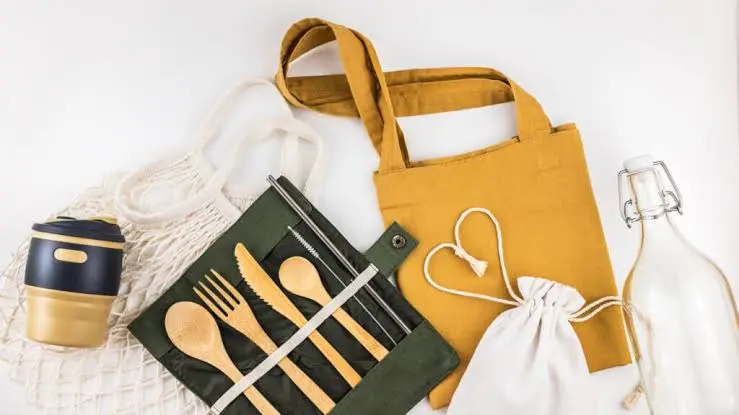
This is also, honestly, why I stopped chasing compostable versions of everything and started paying more attention to reusables first. That’s a slight tangent from the labeling question, but it’s the direction most of my own kitchen decisions have gone. A stainless steel container I bought four years ago has outlasted every “compostable” food box I’ve tried to replace it with, and it never needed a certification to prove it works. We’ve written more on that comparison in our piece on glass versus stainless steel storage, if you want the longer version of that argument.
None of this means every plant-based product on a shelf is a scam. Some brands do the testing properly and label honestly, and regulators are paying closer attention than they used to. But the burden of checking still sits with the shopper, not the packaging designer, and that’s unlikely to change soon.

5. A Quick Note on Regulation, Because It’s Shifting
The rules around this are tightening, slowly. FTC guidance requires marketers making compostable claims to have competent, reliable scientific evidence that the entire product will break down into usable compost, safely and in about the same time frame as the material it’s composted with, and to qualify the claim clearly if home composting or municipal facilities aren’t realistically available to most consumers. California goes further and won’t allow “biodegradable” on plastic bags or containers at all, only “compostable,” and only if it meets the ASTM D6400 standard.
That’s useful context, but it’s not something you can verify by squinting at a lid in a grocery aisle. Which is exactly why I keep coming back to plasticfreeliving.online’s general rule for any new swap: assume the marketing is aspirational until the certification proves otherwise, and don’t be embarrassed if a swap you were excited about turns out to be a dead end. That happens to everyone working through this, not just beginners. It happened to me with a lid I still have sitting in a drawer somewhere, half composted, entirely unconvinced by its own packaging.
Similar greenwashing patterns show up outside of compostables too. If you’re curious how a “natural” material can still be mostly synthetic, our breakdown of whether bamboo products are really plastic-free covers a near-identical labeling problem, and our look at silicone walks through another one.
FAQ
Does putting a compostable cup in my regular food scrap bin help at all? Only if your municipal composting program explicitly accepts certified compostable packaging, and many don’t. Some facilities pull it out and send it to landfill because it can jam equipment or slow processing. Check your local program’s accepted materials list rather than assuming.
Is PLA the same as “bioplastic”? PLA is one type of bioplastic, made mostly from fermented plant starch, usually corn. Bioplastic is a broad category that includes several materials with very different composting requirements, so knowing a product is “bioplastic” tells you less than you’d think.
Why would a company use a fake-looking compostable logo? Sometimes it’s deliberate greenwashing. More often it’s a supplier further up the chain using loose language, and the brand printing the packaging doesn’t verify it closely enough. Either way, the responsibility for the claim legally sits with the marketer, not just the manufacturer.
If I can’t compost it properly, is a compostable product worse than regular plastic? Not worse in terms of toxicity, but the environmental benefit you were counting on likely isn’t happening, and a small percentage of these materials do leave behind microplastic fragments in soil when they partially break down. Treat unclear-disposal-path products as a wash rather than a win.
What should I actually look for on packaging? The specific certification name and number, not just the word compostable or a leaf icon. BPI, TÜV Austria OK Compost, and the certified Seedling logo are the ones with real testing behind them in most markets.
For more on how these labeling gaps play out across other “eco” materials, our beginner’s hub is a decent next stop.