Plastic Free for a Month: What Happens to Your Trash?
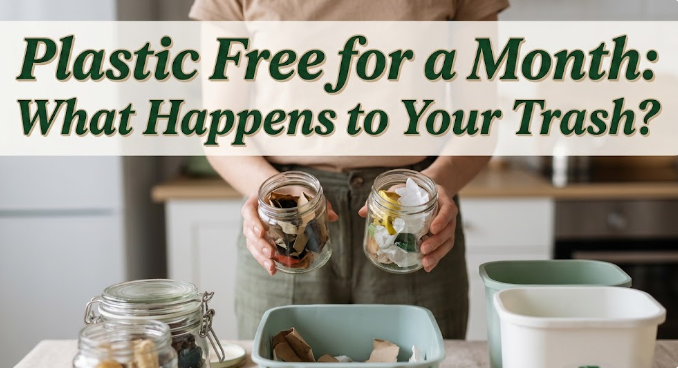
At the end of the month, I put everything I hadn’t been able to avoid into a single glass jar and weighed it. Four hundred and thirty grams. Not zero, which is what I’d secretly hoped for, and not the overflowing bin I’d braced for either. Somewhere in between sat the honest answer to a question most “plastic free” content skips over: once you commit to a month like this, where does the trash you do still make actually go, and what does that number even mean?
That’s the part nobody photographs for Instagram. The clean jar at the end looks good. The process of figuring out what belongs in it, and what happens to it after, is messier and more useful to understand.
1. What Actually Ends Up in the Jar
Most people picture a plastic-free month as avoiding grocery bags and straws. In practice, the trash that survives a serious month of effort comes from somewhere else almost entirely: the packaging you didn’t choose. Medication blister packs. The seal on a jar of tahini. The tiny sticker on produce. The lining inside a cardboard oat milk carton, which is plastic even though the box looks recyclable.
If you’re just starting out and want a sense of where to focus first, plastic-free living, where to start is worth reading before you begin, because it saves you from spending week one fighting the wrong battles.
Here’s roughly how a typical household’s “unavoidable” trash breaks down over 30 days, based on patterns that show up again and again:
| Category | Typical share of the jar | Why it’s hard to avoid |
|---|---|---|
| Food packaging seals and liners | 30-35% | Hidden inside otherwise recyclable containers |
| Medical and hygiene items | 15-20% | Safety regulations require sealed plastic |
| Produce stickers and twist ties | 10% | Small, easy to miss, add up fast |
| Shipping and mail packaging | 15% | Out of your control once ordered |
| Everything else (odds and ends) | 20% | Broken items, single-use items given at events, etc. |
None of this is a failure. It’s just accurate. Anyone claiming a totally empty jar after 30 days is either not counting everything or living somewhere with very different infrastructure than most of us.
2. Where the Plastic Hides
This is the section that actually changes behavior, because the plastic that trips people up in month one is rarely the plastic they expected.
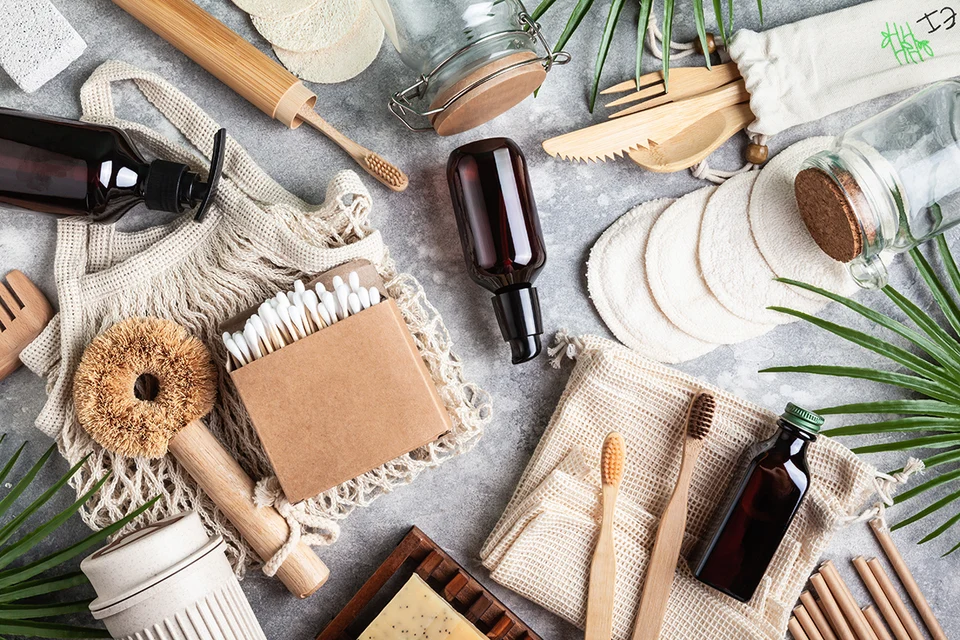
Bread bags. Frozen vegetable bags. The window in an envelope. The coating on receipt paper, which most people don’t even register as plastic. Bamboo products with a plastic handle glued on, which is a whole separate trap worth understanding on its own, and there’s a good breakdown of that specific issue at is bamboo really plastic-free if you’ve been buying “eco” swaps without checking closely.
Here’s where people usually go wrong: they treat plastic-free as a shopping decision made once at the store, then stop paying attention. But packaging changes. A brand you trusted in January can reformulate in March. The only way to stay accurate is to keep checking, not to memorize a list once and assume it holds.
And there’s a second mistake, quieter but more common. People confuse plastic-free with zero waste, then feel like they’ve failed when they’re not doing both perfectly. They’re related but not the same goal, and mixing them up is probably the single biggest source of burnout in month one. If that distinction is fuzzy for you, plastic-free vs zero waste, what beginners confuse most untangles it properly.
3. What Actually Happens to the Trash You Collect
Say the plastic makes it into your jar or your bin. What happens next depends entirely on the material, and this is where most explanations get vague. So, specifically:
Soft plastics (bread bags, cling film, the film on toilet paper packs) almost never go in curbside recycling, even when the bin symbol suggests otherwise. Most municipal systems can’t process film plastic without it jamming the machinery. It ends up landfilled or, in the better cases, taken to a dedicated soft-plastics drop-off point at a supermarket, if your area has one.
Rigid plastics (yogurt tubs, bottles) have a real shot at recycling, but only if they’re clean and the local facility accepts that specific resin. A tub with dried food residue is often rejected at the sorting stage and landfilled anyway, which means rinsing isn’t optional if you actually want the item recycled.
Mixed materials (a coffee cup with a plastic lining, a chip bag with foil inside) are essentially unrecyclable with current standard infrastructure. They’re built to be thrown away.
So the honest version of “what happens to your trash” is: some of it gets a second life, a decent chunk gets rejected further down the line even after you sorted it correctly, and a portion was never going to be recyclable no matter what you did. That’s not an excuse to stop trying. It’s the reason reducing what you buy in the first place matters more than sorting what you already have.
4. What Actually Changes After 30 Days
The trash reduction is real but it’s not the main thing that shifts. What changes is the pause before buying something. You start reading labels reflexively. You notice which stores actually stock package-free bulk bins and which just claim to. You get faster at spotting the swaps that genuinely help versus the ones that are just repackaged plastic wearing a beige color scheme.
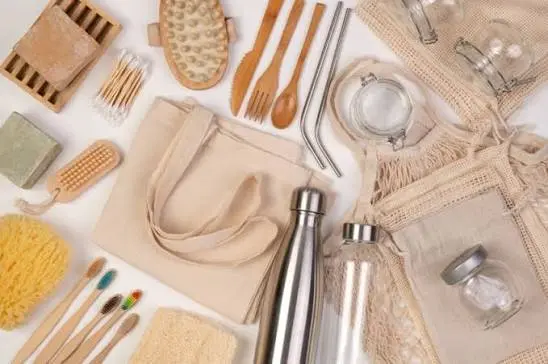
A few practical swaps consistently make the biggest dent without requiring a lifestyle overhaul, and if you haven’t tried them yet, plastic-free swaps every beginner should try first is a solid next stop after finishing this.
One more thing worth naming plainly: the habit rarely survives the month intact unless you plan for the slip-ups in advance. Life happens. You’ll be handed a plastic fork at a work lunch, or the only milk left at 9pm comes in a carton you’d normally skip. A lot of people quit right there, treating one exception as proof the whole effort failed. It isn’t. Consistency over a year matters more than a perfect 30 days.
Common Mistakes to Watch For
- Assuming “recyclable” printed on packaging means your local facility actually takes it
- Buying bulk plastic-free starter kits that ship in more plastic than they save
- Switching to glass and metal alternatives all at once instead of replacing items as they wear out
- Ignoring the trash you can’t see, like what was used to make and ship the product before it reached you
- Giving up after one slip instead of treating the month as a rough average, not a perfect score
If you’ve made it through your first real attempt and want to avoid the traps that catch most people in the following weeks, mistakes most beginners make in month one covers the specific ones that tend to undo early progress.
A Quiet Note on the Jar Itself
I still have that jar from my own first month. Four hundred and thirty grams sitting on a shelf, which sounds almost sentimental written down, but really it’s just a number I check myself against. Some months it’s higher. A birthday party or a hospital visit will do that. The point was never to keep it at zero forever. It was to know exactly what’s in there and why, instead of not looking at all.
FAQs
Does a plastic-free month actually reduce my carbon footprint, or is it mostly about trash? It affects both, but the trash reduction is the easier thing to measure. Manufacturing new plastic has its own carbon cost, so buying less of it upstream matters more than what happens to it once it’s in your bin.
What do I do with the plastic I collect but can’t recycle locally? Check whether a nearby supermarket runs a soft-plastics collection point, since many accept film and wrapping that curbside programs reject. For everything else, landfill is the honest answer, and the goal shifts to buying less of that category next time.
Is it worth doing this for just one month, or does it need to be longer to matter? One month is enough to build the habit of checking labels and noticing packaging, which is the part that actually sticks. The trash number itself matters less than whether the awareness carries into month two.
My family isn’t on board. Can this work if I’m the only one trying? Yes, though your reduction will be smaller than if the whole household participated. Focus on the purchases you control directly, like your own lunches and personal care items, rather than trying to police everyone else’s habits.
What’s the biggest single swap that made a difference for most people? Bulk bin shopping for dry goods tends to have the largest single impact, since it removes an entire category of packaging at once rather than swapping one item at a time.
If you’re planning your own version of this experiment, it’s worth reading through plastic-free living, where to start before day one, since most of what trips people up in week one is avoidable with a little groundwork first.