9 Simple Beginner Plastic Free Living Changes That Stick
There is a moment most people remember clearly—the first time they notice how much plastic quietly fills their lives. It’s in the crinkling of snack wrappers, the stack of grocery bags tucked inside another bag, the bathroom shelf lined with bottles that never seem to empty at the same pace they accumulate. It’s not dramatic. It’s subtle, persistent, and strangely normal.
When I first tried to live with less plastic, I imagined it would require a complete lifestyle overhaul. I thought I would need expensive products, a minimalist home, and endless motivation. What actually worked was far simpler: small, repeatable changes that didn’t feel like punishment. The kind of changes that slowly become habits, and then, eventually, just the way you live.
This is not a story about perfection. It’s about friction—reducing it, working around it, and sometimes accepting it. It’s about finding changes that stick, not because they are ideal, but because they fit into real, messy, everyday life.
Below are nine simple beginner plastic-free living changes that don’t just sound good in theory—they last.
- start with one bag you actually remember
Reusable shopping bags are often the first step people take, and also the first one they fail to maintain. The problem isn’t intention. It’s memory. You forget the bag at home, or in the car, or buried under something else. So you accept another plastic bag, promising yourself it’s “just this once.”
The change that sticks is not “use reusable bags.” It’s choosing one bag and assigning it a permanent role. One bag that lives in your everyday routine—hung on a doorknob, tucked into your daily backpack, or folded inside your purse.
Instead of owning ten reusable bags you rarely use, you rely on one that becomes part of your rhythm. You stop thinking about it. It’s just there.
There’s also something psychological about limiting the number. One bag feels manageable. Ten feels like a system you have to maintain.
Over time, you may add more. But starting with one shifts the habit from intention to default.
- stop buying bottled water before you replace it
It’s tempting to buy a reusable water bottle and expect everything to change overnight. But habits don’t work that way. If bottled water is convenient, you’ll keep buying it unless something easier replaces it.
The key is not just owning a reusable bottle—it’s preparing it.
Fill it before you leave the house. Keep it visible. Place it near your keys or phone so it becomes part of your “leaving routine.” If your bottle is empty and tucked away, it might as well not exist.
Some people find it helpful to have two bottles—one in use, one drying. Others keep a bottle permanently in their car or bag. The idea is to reduce the moments where buying bottled water feels like the easiest option.
When the reusable option becomes the path of least resistance, the habit sticks without effort.
- choose unpackaged produce without overthinking it
Grocery stores can feel like a maze of plastic. Wrapped cucumbers, bagged apples, pre-portioned greens. Trying to eliminate all plastic at once is overwhelming.
Instead, begin with a simple rule: when there’s a choice between packaged and unpackaged, choose the unpackaged version.
That’s it. No need to hunt for specialty stores or perfect solutions. Just notice the options already available.
Loose bananas instead of bagged ones. Individual potatoes instead of pre-packed. A bunch of herbs instead of a plastic clamshell.
You’ll start to see patterns. Some items are almost always available without plastic. Others are harder to avoid. That’s okay.
This change works because it doesn’t require extra time or effort. You’re already at the store. You’re already making decisions. You’re just adjusting one variable.
- switch one bathroom product at a time
Bathrooms are full of plastic, and trying to replace everything at once can feel expensive and complicated.
A better approach is to wait until something runs out—and then replace it with a lower-plastic alternative.
Toothbrush → bamboo toothbrush
Body wash → bar soap
Shampoo → shampoo bar
Cotton rounds → reusable cloth pads
This gradual shift avoids waste and spreads out the cost. It also gives you time to adjust. Not every alternative will work perfectly the first time, and that’s part of the process.
Some swaps will feel effortless. Others may require a bit of trial and error. The goal isn’t to find perfect replacements immediately—it’s to keep moving forward without burnout.
- bring your own container when it feels easy
The idea of carrying containers everywhere can feel unrealistic. But there are moments where it’s surprisingly easy.
Maybe you always buy lunch from the same place. Maybe there’s a bakery you visit regularly. Maybe you pick up takeaway food once a week.
Start there.
Keep a container in your bag or car on the days you know you might use it. Ask politely if they can use it instead of disposable packaging. Some places will say yes. Some won’t.
What matters is not the outcome every time, but the habit of trying when it’s convenient.
Over time, these small moments add up. And occasionally, you’ll find places that welcome the idea, making the change even easier.
- create a “no plastic impulse buy” pause
A lot of plastic enters our lives through unplanned purchases—snacks, drinks, small items we didn’t intend to buy.
Instead of banning these purchases entirely, introduce a pause.
When you reach for something wrapped in plastic, take a few seconds. Ask yourself if you really want it, or if it’s just convenient.
Sometimes you’ll still buy it. That’s fine. But often, the pause is enough to break the automatic response.
You might choose a different option. Or decide you don’t need it at all.
This change is subtle, but powerful. It shifts your relationship with consumption, not just plastic.
- build a small “plastic-free kit”
The idea of being prepared can feel intimidating, but it doesn’t have to be elaborate.
A simple kit might include:
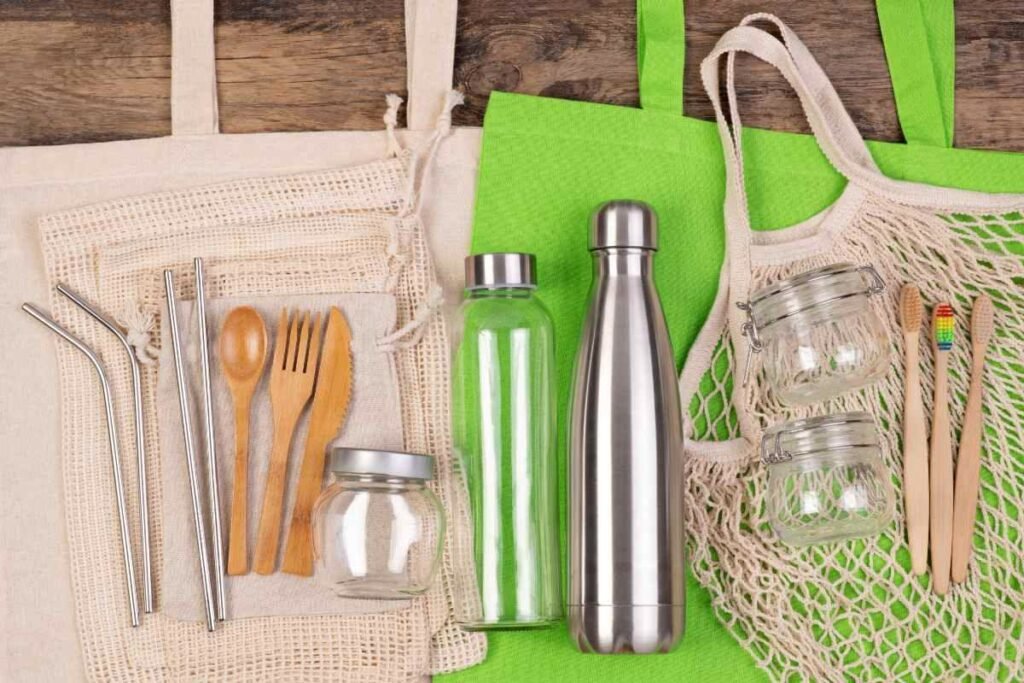
A reusable bag
A water bottle
A small container
A set of utensils
Keep it minimal. Keep it portable. Most importantly, keep it somewhere you’ll actually use it.
For some people, that’s a backpack. For others, it’s a car compartment or a work desk drawer.
The purpose of the kit is not to handle every situation. It’s to handle enough situations that you reduce reliance on single-use plastic.
When you have what you need within reach, the sustainable choice becomes the easy one.
- accept imperfect progress
One of the biggest obstacles to plastic-free living is the idea that you have to do it perfectly.
You don’t.
You will forget your bag. You will buy something wrapped in plastic. You will choose convenience sometimes.
What matters is not consistency in every moment, but direction over time.
When you accept imperfection, you remove the pressure that often leads to giving up entirely. You allow yourself to continue, even after setbacks.
This mindset is what makes changes stick. Not because you never fail, but because you don’t stop.
- make your environment do the work
Habits are easier when your environment supports them.
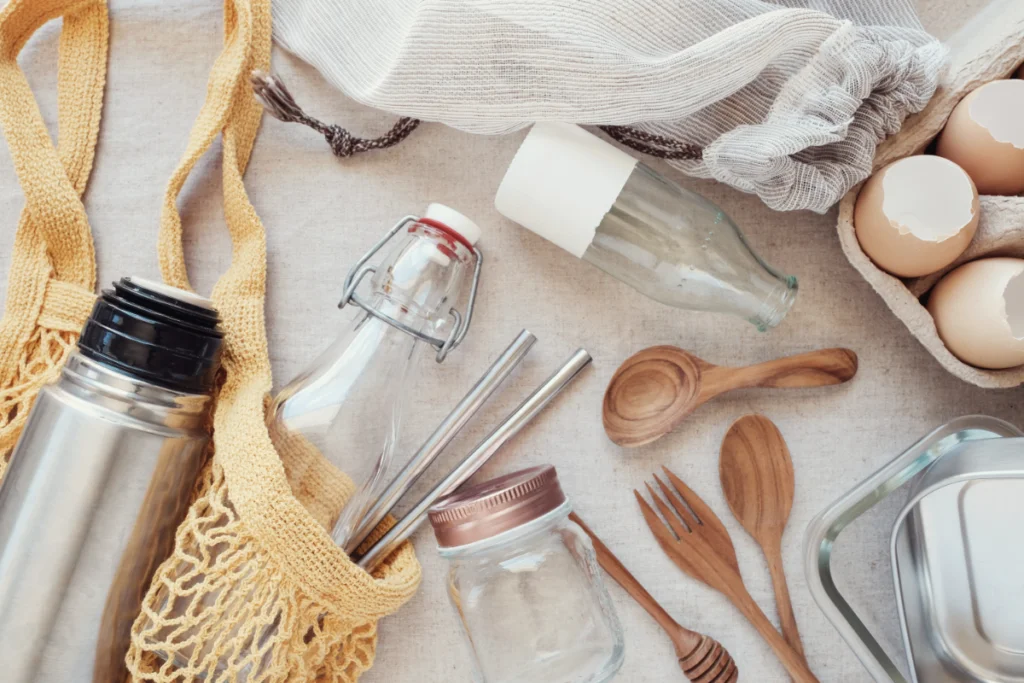
Place your reusable items where you’ll see them. Keep plastic alternatives out of immediate reach. Organize your space so the sustainable option is the obvious one.
If your reusable bag is hidden in a drawer, you won’t use it. If it’s hanging by the door, you probably will.
If your water bottle is clean and ready, you’ll grab it. If it’s buried in the sink, you’ll buy a drink instead.
These small adjustments reduce the need for willpower. They turn conscious choices into automatic ones.
And that’s the real goal—not to think about plastic less, but to make decisions that don’t require thinking at all.
—
There is a quiet shift that happens when these changes begin to settle into your life. You stop noticing them as “effort.” They become normal, almost invisible.
You reach for your bag without thinking. You refill your bottle without hesitation. You choose unpackaged produce without deliberation.
And in that quiet shift, something important happens: the idea of living with less plastic stops being a project, and starts being part of who you are.
Not perfectly. Not completely. But meaningfully.
Frequently Asked Questions
- Is it expensive to start living plastic-free?
It can be, if you try to replace everything at once. But if you switch items gradually—only when they run out—it’s often more affordable. Many plastic-free alternatives, like reusable bottles or cloth items, save money over time.
- What if I don’t have access to plastic-free options?
Focus on what is available to you. Even small choices, like avoiding unnecessary packaging or reusing items, make a difference. Plastic-free living is not all-or-nothing—it’s about reducing where you can.
- How do I stay consistent with these habits?
Make the changes easy to follow. Keep reusable items visible and accessible. Build habits around your existing routines instead of creating entirely new ones.
- What should I do with the plastic items I already have?
Use them until they wear out. Throwing them away immediately creates more waste. Transition gradually by replacing items with better alternatives when needed.
- Can one person really make a difference?
Individually, the impact may feel small. But collectively, small changes influence demand, reduce waste, and inspire others. Personal habits also shape broader awareness and cultural shifts.
- What is the easiest change to start with?
Using a reusable bag or water bottle is often the simplest starting point. These changes require minimal effort but can significantly reduce single-use plastic over time.
—
In the end, plastic-free living isn’t about dramatic transformation. It’s about quiet persistence. The kind that builds slowly, almost unnoticed, until one day you realize your habits have changed—and they’re not going anywhere.