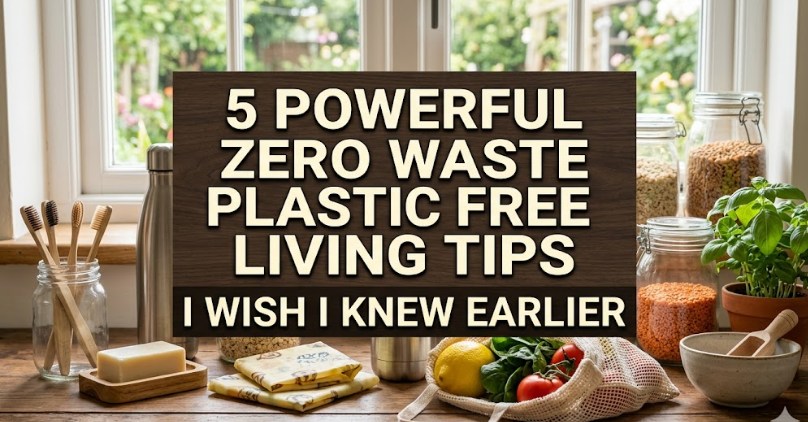
5 Powerful Zero Waste Plastic Free Living Tips I Wish I Knew Earlier
The moment you start thinking about plastic-free living, you quickly realize it’s not just about swapping a few items — it’s about rethinking habits you’ve had your entire life. And honestly, that realization can feel overwhelming. I remember standing in a grocery store aisle once, holding a cucumber wrapped in plastic, wondering how something so simple became so complicated.
If I could go back to the beginning of my journey, there are a handful of lessons I wish someone had shared with me. Not the picture-perfect Instagram version of zero waste, but the practical, messy, real-life version that actually works.
This article is not just advice. It’s a mix of lessons, routines, mini checklists, mindset shifts, and practical systems that make plastic-free living realistic — not exhausting.
Let’s dive into the five biggest tips I wish I knew earlier.
Tip 1: Start with the 20% that creates 80% of your waste
One of the biggest mistakes beginners make is trying to change everything at once. I did it too. I wanted a plastic-free bathroom, kitchen, wardrobe, office — all in the same week. Within days, I felt burned out and ready to quit.
What I didn’t realize back then is that most household plastic waste comes from a surprisingly small group of items.
When you focus on the “big impact items” first, your results multiply fast.
The biggest plastic waste culprits in most homes:
Kitchen:
• Bottled water
• Grocery packaging
• Plastic wrap and zip bags
• Takeaway containers
• Dish sponges
Bathroom:
• Shampoo bottles
• Toothpaste tubes
• Disposable razors
• Body wash bottles
• Cotton pads
Lifestyle:
• Shopping bags
• Coffee cups
• Food delivery packaging
Instead of replacing everything, focus on these first.
High-impact swaps checklist:
Immediate swaps (Day 1–7)
- Carry a reusable water bottle
- Carry a reusable shopping bag
- Say no to plastic straws and cutlery
- Switch from paper towels to cloth towels
Short-term swaps (Month 1)
- Switch to bar soap and shampoo bars
- Use reusable food containers
- Replace cling film with containers or wraps
- Use a reusable coffee cup
Long-term swaps (3–6 months)
- Buy groceries in bulk where possible
- Switch to safety razor
- Replace disposable cleaning supplies
- Move toward refillable products
The mindset shift:
You don’t need perfection. You need momentum.
Once I stopped trying to be perfect and focused on the highest-impact items, my trash reduced dramatically in just a few months.
Tip 2: The secret is building “reuse habits,” not buying eco products
When people start zero waste living, they often go shopping.
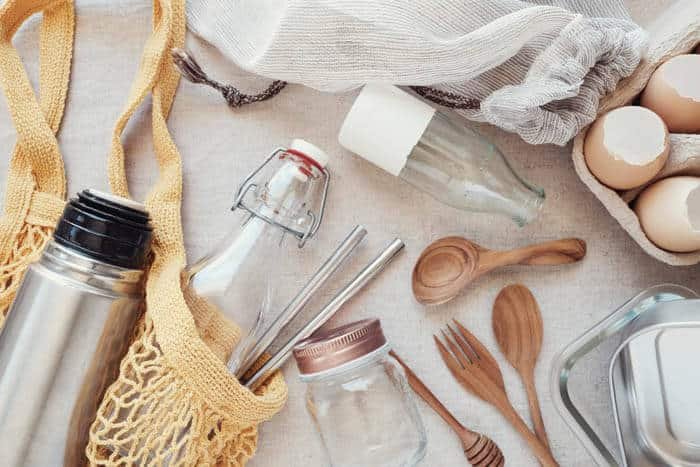
Reusable jars. Bamboo toothbrushes. Stainless steel straws. Refillable containers. Organic cotton bags. The list never ends.
Ironically, buying a lot of “eco products” can create more waste and cost than simply changing behavior.
The real secret is building reuse reflexes.
Think about how habits form. You don’t think about locking your door or checking your phone before leaving home — it’s automatic.
Zero waste works the same way.
The 5 reuse reflexes that change everything:
The door check
Before leaving home, always check for:
• Water bottle
• Shopping bag
• Food container (if out for long)
• Coffee cup
The takeaway pause
Before ordering food, ask:
“Can I pick it up in my own container?”
Many places say yes — you just need to ask.
The grocery reframe
Instead of asking:
“What do I need to buy?”
Ask:
“What do I already have?”
Food waste and plastic waste are deeply connected.
The kitchen reset
Every night:
• Empty containers
• Wash reusables
• Repack your bag
This 5-minute habit prevents 80% of single-use purchases.
The social script
Practice saying:
“No straw please.”
“I brought my own bag.”
“I don’t need cutlery.”
It feels awkward the first few times. Then it becomes normal.
Reusable living isn’t about products. It’s about reflexes.
Tip 3: Your kitchen is the real battlefield
I underestimated this completely.
I thought bathroom swaps would be the hardest part. But the kitchen produces the most plastic by far.
Food packaging alone accounts for a massive portion of household waste.
The turning point for me was redesigning my kitchen around systems instead of items.
The plastic-free kitchen system:
Zone 1 — Storage zone
Glass jars and containers replace:
• Zip bags
• Plastic wrap
• Takeaway containers
Starter jar list:
- Large jars for rice and pasta
- Medium jars for lentils and beans
- Small jars for spices and nuts
- Wide jars for leftovers
Zone 2 — Cleaning zone
Swap disposable cleaning tools for:
• Dish brush instead of sponge
• Refillable dish soap
• Cloth rags instead of paper towels
Simple cleaning kit:
- Dish brush
- Refillable soap bottle
- Vinegar spray
- Baking soda jar
- Cloth towels basket
Zone 3 — Cooking zone
Reduce packaged ingredients by cooking from basics.
Beginner pantry list:
• Rice
• Lentils
• Beans
• Pasta
• Oats
• Flour
• Spices
Cooking more from scratch automatically reduces plastic packaging.
Zone 4 — Shopping zone
Create a grab-and-go grocery kit:
Reusable grocery kit:
- 3 tote bags
- 5 produce bags
- 2 glass containers
- 1 insulated bag
Keep this kit near your door or in your car.
When your kitchen system is ready, plastic naturally disappears.
Tip 4: Convenience is the real addiction (and how to redesign it)
The biggest enemy of zero waste isn’t laziness — it’s convenience.
Single-use plastic exists because it saves time and effort.
So instead of fighting convenience, we redesign it.
The “make sustainable easier than wasteful” rule.
Examples:
Old convenience:
Buy bottled water.
New convenience:
Keep filled bottles in the fridge at all times.
Old convenience:
Order takeaway when tired.
New convenience:
Always keep 2 freezer meals ready.
Old convenience:
Grab snacks in plastic packaging.
New convenience:
Keep a snack jar filled weekly.
Create convenience systems:
Sunday reset routine (30 minutes):
• Prep snacks
• Cook one freezer meal
• Refill cleaning supplies
• Restock grocery kit
The prepared home prevents plastic emergencies.
Because most waste happens when we’re tired, hungry, busy, or stressed.
Design your home for your worst days — not your best days.
Tip 5: Progress beats perfection (and guilt is useless)
This is the lesson I wish I learned first.
Zero waste culture sometimes feels intimidating. Social media shows perfect pantries, perfect jars, perfect homes.
Real life is messy.
You will forget your bags.
You will buy packaged food sometimes.
You will throw things away.
And that’s okay.
Sustainability isn’t about one person being perfect.
It’s about millions of people being imperfect — consistently.
The anti-perfection checklist:
Good enough choices:
• Choose less packaging when possible
• Reuse before buying new
• Reduce before replacing
• Use what you already own
The biggest mistake:
Throwing away plastic items to replace them with eco ones.
The sustainable approach:
Use everything you already have until it wears out.
Zero waste is not a destination. It’s a direction.
A realistic weekly zero waste routine
Monday
Refill water bottles and snack jars.
Tuesday
Check pantry before grocery shopping.
Wednesday
Wash reusable bags and containers.
Thursday
Plan 3 simple meals.
Friday
Empty fridge leftovers.
Saturday
Grocery shop with kit.
Sunday
Prep snacks and freezer meal.
Small routines create big change.
The emotional side of plastic-free living
No one talks about this part enough.
At first, you feel excited. Then overwhelmed. Then frustrated. Then proud. Then tired. Then motivated again.
It’s a cycle.
You start noticing plastic everywhere.
You feel guilty throwing things away.
You feel like your efforts are too small.
This is normal.
But here’s the truth:
Every reusable bottle replaces hundreds of disposables.
Every cloth bag replaces thousands of plastic bags.
Every habit spreads to friends and family.
Your actions ripple outward.
The financial surprise of zero waste living
Many people assume plastic-free living is expensive.
It can be — if you buy everything at once.
But over time, most people save money.
Money saved by switching:
• Bottled water → tap water
• Paper towels → cloth towels
• Disposable razors → safety razor
• Takeaway coffee → home coffee
• Packaged snacks → homemade snacks
Reusable items pay for themselves repeatedly.
Zero waste is slow living disguised as sustainability.
The ripple effect you don’t expect
Something unexpected happens when you adopt plastic-free habits.
You become more mindful.
You waste less food.
You cook more.
You shop less impulsively.
You appreciate what you own more.
Zero waste quietly changes your relationship with consumption.
It’s not about plastic anymore.
It’s about intention.
A gentle reminder before you begin
You don’t need a perfect home.
You don’t need a zero waste jar.
You don’t need to do everything.
Start small. Start messy. Start imperfect.
Just start.
FAQs
- Is it possible to live completely plastic-free?
It’s extremely difficult in modern society. The goal isn’t absolute perfection — it’s reducing single-use plastics as much as realistically possible. - Is zero waste living expensive to start?
It can be if you buy many products at once. The best approach is slow swaps as items run out. - What is the easiest first swap to make?
Reusable shopping bags and a reusable water bottle create immediate impact with minimal effort. - What if bulk stores aren’t available near me?
Focus on reducing packaged snacks, cooking more at home, and choosing products with less packaging. - How long does it take to build zero waste habits?
Most people feel comfortable within 2–3 months. Habits become automatic after consistent repetition. - What if my family isn’t supportive?
Lead by example. Start with shared spaces like the kitchen. Positive changes often inspire others over time.
The journey toward plastic-free living isn’t about dramatic change. It’s about quiet, consistent choices that slowly reshape your daily life.
And one day, without noticing, you’ll realize how far you’ve come.