
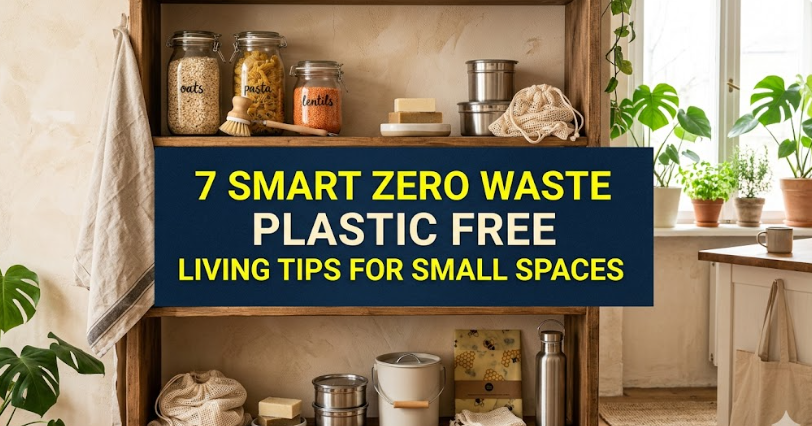
Living sustainably in a small home can feel like trying to fold a map back into its original creases. There never seems to be enough room, and every new “eco-friendly swap” appears to demand more storage, more containers, more organization, and more discipline. Yet the truth is surprisingly comforting: small spaces can become powerful laboratories for zero waste living. When every shelf matters and every corner has a purpose, waste becomes visible. And once it becomes visible, it becomes changeable.
This article explores seven smart zero waste, plastic-free living tips specifically designed for compact homes, apartments, dorm rooms, and studio spaces. But instead of offering a rigid checklist, this guide blends stories, systems, micro-habits, and practical tools so the changes actually stick.
You’ll find tables, mini-workflows, checklists, and real-life scenarios throughout, because sustainable living isn’t just about inspiration — it’s about implementation.
Let’s begin.
Understanding why small spaces are secretly perfect for zero waste living
There’s a myth that sustainable living requires a large pantry, a compost garden, or a garage full of bulk purchases. In reality, the opposite is often true. Small spaces naturally force minimalism, and minimalism is the backbone of zero waste living.
Small spaces:
• discourage overbuying
• reveal clutter faster
• simplify cleaning routines
• encourage thoughtful purchasing
• make habits visible and trackable
Think of your home as a tiny ecosystem. Every object must justify its existence. When something enters your home, it competes for precious space. This competition becomes your greatest sustainability ally.
Before diving into the seven tips, here’s a simple mindset shift:
Small space living isn’t a limitation.
It’s a filter that removes unnecessary consumption.
Tip 1 — Create a micro waste station instead of a recycling corner
Large homes often have the luxury of dedicated recycling rooms or garages. Small homes need something smarter: a micro waste station.
A micro waste station is a compact, organized hub that handles all outgoing waste streams without occupying much space.
Typical waste streams in small homes:
• compost
• recycling
• landfill
• soft plastics (if your city collects them)
• donation box
Instead of spreading bins across the home, stack vertically.
Example vertical setup:
Top shelf: empty jars & containers waiting for reuse
Middle shelf: recycling + landfill
Bottom shelf: sealed compost container
Ideal container sizes for small spaces
Waste Type | Ideal Size | Emptying Frequency | Odor Risk
Compost | 3–5 L | Every 2–3 days | Medium
Recycling | 10–20 L | Weekly | Low
Landfill | 5–10 L | Weekly | Low
Small compost bins reduce odor and force regular emptying, which prevents the “rotting bucket problem” many beginners face.
Mini habit: the 10-second waste check
Every evening, glance at your waste station. If anything is near full, empty it immediately. This tiny habit prevents pileups and keeps your system stress-free.

Tip 2 — Switch from bulk buying to smart bulk buying
Bulk shopping is often promoted as the ultimate zero waste solution. But in small homes, bulk buying can quickly become clutter buying.
Smart bulk buying means purchasing only items that meet three rules:
Rule 1: You use it weekly
Rule 2: It has a long shelf life
Rule 3: It fits inside one dedicated storage zone
The small-space bulk list
Safe bulk items for tiny homes:
• rice
• oats
• lentils
• beans
• pasta
• flour
• sugar
• spices
• tea or coffee
Unsafe bulk items:
• snacks (easy to overconsume)
• fresh produce (spoils quickly)
• trendy health foods you rarely eat
The “one shelf pantry” rule
Designate ONE shelf only for bulk goods.
When it’s full, bulk buying stops.
This rule prevents overstocking and food waste.
Sample one-shelf pantry layout
Shelf Zone | Items | Containers Needed
Left | grains & rice | 3 jars
Center | beans & lentils | 4 jars
Right | flour, sugar, oats | 4 jars
Nine jars can replace dozens of plastic packages each month.
Tip 3 — Adopt the “one in, one out” sustainability rule
Small homes don’t tolerate accumulation. Every new item must replace something.
This is the single most powerful anti-waste habit you can adopt.
When you buy a reusable product:
• a new mug replaces an old mug
• a glass container replaces plastic storage
• cloth napkins replace paper towels
The replacement mindset prevents the “eco clutter trap,” where sustainable swaps ironically create more possessions.
The eco clutter trap checklist
Before buying any eco product, ask:
- What will this replace?
- Where will it live?
- Will I use it weekly?
If you can’t answer all three, don’t buy it.
Sustainable living is about reduction first, replacement second.
Tip 4 — Build a tiny plastic-free kitchen kit
The kitchen produces the most plastic waste in most homes. A small, portable kit can eliminate most of it.
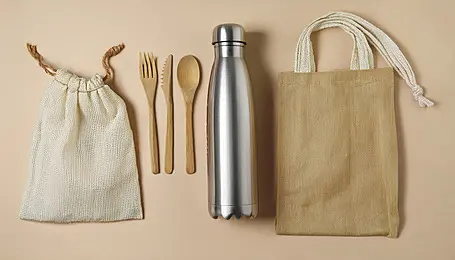
Your compact zero-waste kitchen kit
Item | Purpose | Space Needed
Cloth bags | groceries & produce | tiny drawer
2 glass jars | takeaway & leftovers | cupboard
Steel lunchbox | meals on the go | shelf
Reusable cutlery | eating outside | drawer
Cloth napkins | paper towel replacement | drawer
Beeswax wraps | plastic wrap replacement | small box
This entire kit fits in one drawer.
Yes — one drawer can remove hundreds of plastic items yearly.
Weekly routine idea:
Sunday evening = kit reset day
Wash, dry, and repack everything.
Tip 5 — Turn vertical space into your sustainability ally
Small homes usually lack floor space but have unused vertical space.
Vertical sustainability upgrades:
• wall-mounted drying racks
• hanging produce baskets
• wall spice racks
• pegboards for cleaning tools
• floating shelves for jars
Vertical storage benefits
Benefit | Impact
More visibility | reduces forgotten food
Better airflow | prevents mold & spoilage
Easy cleaning | fewer clutter piles
Better organization | reduces overbuying
The “visible food rule”
If you can’t see food, you forget it.
If you forget it, you waste it.
Transparent jars + open shelves reduce food waste dramatically.
Tip 6 — Create a tiny compost system that actually works
Many people skip composting in small homes because they imagine smell, insects, or mess. But modern small compost systems are simple and compact.
Options for small spaces:
• countertop compost bin
• bokashi bucket
• freezer compost bag
• balcony compost bin
Small space compost comparison
Method | Space Needed | Smell Risk | Maintenance
Freezer compost | very small | none | low
Bokashi bucket | small | very low | medium
Counter bin | small | low | low
Balcony compost | medium | low | medium
The freezer compost trick
Keep a sealed bag in the freezer and store scraps there.
No smell. No bugs. Empty weekly.
It’s the easiest beginner method.
Tip 7 — Design a 5-minute daily reset routine
The biggest secret of zero waste success isn’t motivation.
It’s routine.
A simple daily reset keeps your system running effortlessly.
The 5-minute reset checklist
Minute 1: empty food scraps
Minute 2: rinse jars & containers
Minute 3: return reusable kit to drawer
Minute 4: check pantry shelf
Minute 5: quick kitchen wipe
Five minutes daily prevents weekend overwhelm.
Consistency beats intensity every time.
A realistic weekly zero waste workflow
Day | Action | Time Needed
Monday | grocery planning | 10 min
Wednesday | pantry check | 5 min
Friday | waste station empty | 10 min
Sunday | reusable kit reset | 10 min
Total weekly effort: under 40 minutes.
Small habits compound into big environmental impact.
The psychology of making habits stick in small homes
Tiny homes make habits visible. Visible habits become automatic faster.
Three habit anchors:
• link habits to existing routines
• keep tools visible
• reduce friction
Example:
Coffee routine → cloth napkin habit
Cooking dinner → compost habit
Unpacking groceries → jar refill habit
Habits don’t need motivation. They need triggers.
The hidden emotional benefits of plastic-free living
Beyond environmental impact, people report:
• calmer homes
• cleaner kitchens
• less guilt about waste
• reduced spending
• stronger daily routines
Sustainability often becomes a lifestyle upgrade, not a sacrifice.
Common mistakes in small-space zero waste living
Mistake | Why it happens | Solution
Buying too many jars | excitement phase | use what you have first
Overbulk buying | fear of running out | follow one-shelf rule
Complex composting | overplanning | start with freezer method
Eco gadget overload | social media influence | follow replacement rule
Remember: simplicity is the goal.
A realistic transformation timeline
Week 1: waste station setup
Week 2: kitchen kit build
Week 3: pantry jar system
Week 4: compost habit
Week 5+: routine automation
Within one month, your home can operate on a mostly plastic-free rhythm.
Your home as a sustainability ecosystem
When systems work together:
• waste reduces naturally
• purchases become intentional
• habits become automatic
• clutter disappears
Small homes excel at systems thinking.
Final reflections
Zero waste living in small spaces is not about perfection.
It’s about visibility, simplicity, and consistency.
Tiny homes don’t need giant solutions.
They need smart ones.
And the smallest habits often create the biggest changes.
FAQs
- Is zero waste living expensive to start?
Not necessarily. Most changes involve using what you already own. Replacing disposable items gradually spreads costs over time.
- What if I forget reusable bags or containers?
Keep backups in frequently used places like your backpack or car. Habit stacking helps this become automatic.
- Can I live zero waste without composting?
Yes. Composting is helpful but not mandatory. Reducing consumption and reusing items still makes a huge impact.
- How do I prevent clutter from reusable items?
Follow the “one in, one out” rule and avoid buying eco products that don’t replace something.
- What’s the easiest first step?
Start with a micro waste station. It makes your waste visible and motivates change naturally.
- How long until habits feel automatic?
Most people notice routines forming within 3–4 weeks when habits are tied to daily routines.
Small spaces prove an important truth: you don’t need more room to live sustainably. You simply need smarter systems.