A kitchen drawer opened, and a thin avalanche of plastic fell out. Sauce packets, cracked takeaway cutlery, a mysterious lid that belonged to nothing. That moment wasn’t dramatic, just quietly inconvenient. The kind of small inconvenience that builds into a realization: most plastic doesn’t arrive because we choose it. It arrives because it’s the default.
This article isn’t about perfection, guilt, or dramatic lifestyle overhauls. It’s about the tiny swaps that feel almost suspiciously easy. The kind that slip into daily life without resistance, without friction, without the sense that you’re trying to be someone else.
Below are fourteen plastic-free swaps that don’t feel like sacrifices. They feel like upgrades.
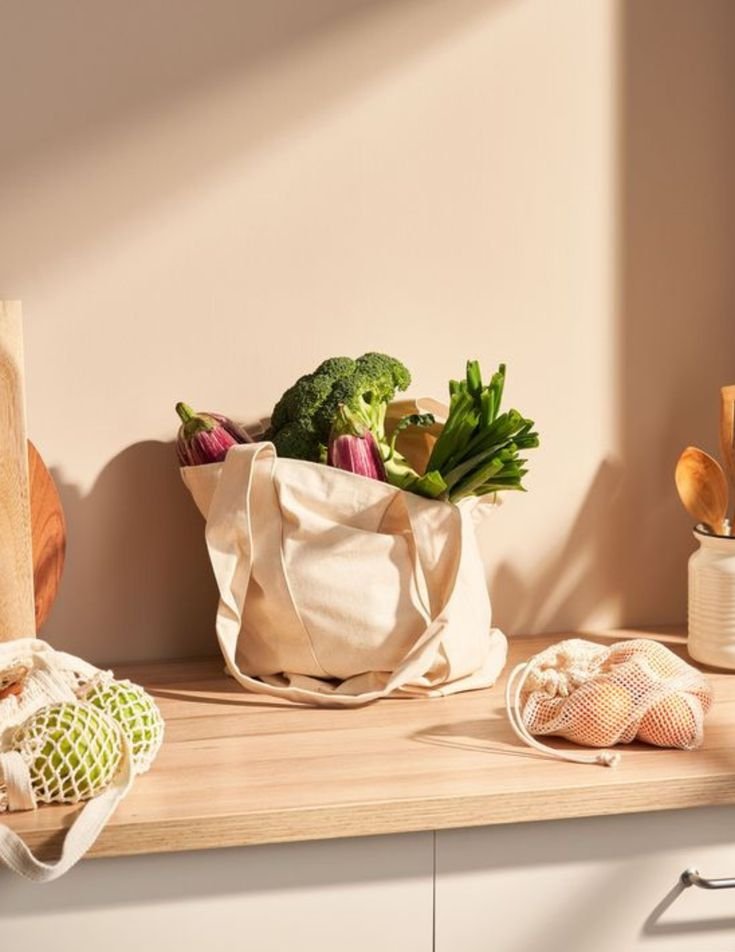
- The tote bag that lives in your bag, not your car
Reusable shopping bags are the symbol of zero waste living, yet they fail in the most predictable way: they stay at home.
The effortless version of this swap begins with a mindset shift. Instead of storing totes in the car, store them in your everyday bag. One compact foldable tote weighs almost nothing. It becomes invisible until needed.
There is a particular satisfaction in pulling a fabric bag from your backpack at the checkout. It removes the small social friction of saying no to plastic bags. There’s no awkward pause. No last-minute scramble.
The secret is not motivation. It’s proximity.
The psychology of habit formation tells us something simple: we use what’s already within reach. This swap works because it eliminates the moment of decision.
Once it becomes routine, the experience of accepting a plastic bag begins to feel oddly unnecessary. Like printing directions in the age of GPS.
- A reusable water bottle that you actually love
Many people attempt this swap and quietly fail. Not because they don’t care, but because the bottle becomes an obligation instead of a companion.
The effortless version starts with choosing a bottle you genuinely enjoy using. The weight, the texture, the lid, the ease of cleaning — these details matter more than most people expect.
When a bottle feels good to hold and easy to carry, it stops being a sustainability tool and becomes an everyday object.
Water bottles eliminate an astonishing number of single-use plastics over time. Yet the emotional shift is subtle. You stop thinking about buying water. It becomes background noise that disappears.
This swap is less about environmental impact and more about removing tiny daily transactions from your life.
- Bar soap quietly replacing bottles
Liquid soap seems convenient until you notice how quickly it disappears. Bar soap lasts longer, travels better, and eliminates the endless cycle of pump bottles.
The biggest surprise for most people is how modern bar soaps feel. They’re not the drying hotel bars many remember. Today’s versions are moisturizing, beautifully scented, and often packaged in simple paper.
A bar of soap sits quietly at the sink, asking for nothing. No refills. No pump failures. No empty plastic bottles to rinse and recycle.
It feels less like a compromise and more like returning to a simpler design that never needed improvement.
- Shampoo bars that remove the “running out” panic
Few swaps spark skepticism like shampoo bars. Yet this is often the swap people end up loving most.
A shampoo bar lasts far longer than liquid shampoo. It travels without leaking. It removes the familiar anxiety of squeezing the last drops from a plastic bottle while wondering if you have time to buy another before tomorrow morning.
Hair adjusts faster than expected. Within weeks, the bar feels normal.
The biggest surprise is the shelf space it frees. A small bar replaces a bulky bottle, quietly simplifying the shower.
- Loose produce instead of plastic-wrapped produce
This swap feels tiny, but it changes the way shopping looks. Instead of reaching automatically for wrapped cucumbers and bagged apples, you reach for the loose ones.
Cloth produce bags help, but even skipping the bag entirely often works. Most produce can be placed directly in the cart and washed at home.
The effort required is minimal. The visual impact is immediate.
Shopping becomes less about packaging and more about food.
- A stainless steel razor replacing disposable ones
Disposable razors are a perfect example of convenience culture. Cheap, accessible, and designed to be thrown away.
A safety razor flips that design on its head. The handle lasts for years. Only the blade is replaced, and it’s fully recyclable.
The shaving experience is slower at first, then smoother. There’s a small learning curve, but once crossed, the swap feels permanent.
It’s a quiet shift from disposable thinking to durable design.
- Cloth napkins that feel unexpectedly luxurious
Paper towels and paper napkins dominate modern kitchens. They disappear quickly and reappear constantly on shopping lists.
Cloth napkins break that cycle. They feel more intentional. Meals feel slightly more relaxed, slightly more human.
Laundry replaces shopping.
And strangely, this swap often saves money while reducing waste.
- A reusable coffee cup changing morning routines
Coffee culture and disposable cups have grown together. Yet bringing a reusable cup introduces a small ritual to mornings.
It adds a sense of continuity to daily routines. The cup becomes part of the ritual, like the drink itself.
Some cafés even offer discounts. But the real benefit is the shift in rhythm.
Your coffee becomes something you carry, not something you throw away.
- Beeswax wraps replacing cling film
Plastic wrap is used for seconds and kept for centuries. Beeswax wraps solve the same problem with a reusable, washable material.
They mold with the warmth of your hands, seal bowls, and wrap leftovers. They feel tactile in a way plastic never does.
The first time you wash and reuse a wrap instead of throwing it away feels oddly satisfying.
- Refillable cleaning products simplifying cupboards
Cleaning aisles are dominated by colorful plastic bottles. Yet many cleaning tasks can be handled by simple refill systems or concentrates.
Refill stations and tablets reduce packaging while decluttering cupboards.
Fewer products, fewer bottles, less decision fatigue.
The home begins to feel less like a storage space for chemicals and more like a living space again.
- A lunchbox replacing disposable packaging
Packing lunch in reusable containers eliminates a steady stream of wrappers and bags.
The change feels small at first. Then it becomes invisible.
A lunchbox becomes part of the morning routine. The habit stabilizes quickly because it saves time and money.
- Reusable straws that disappear into routine
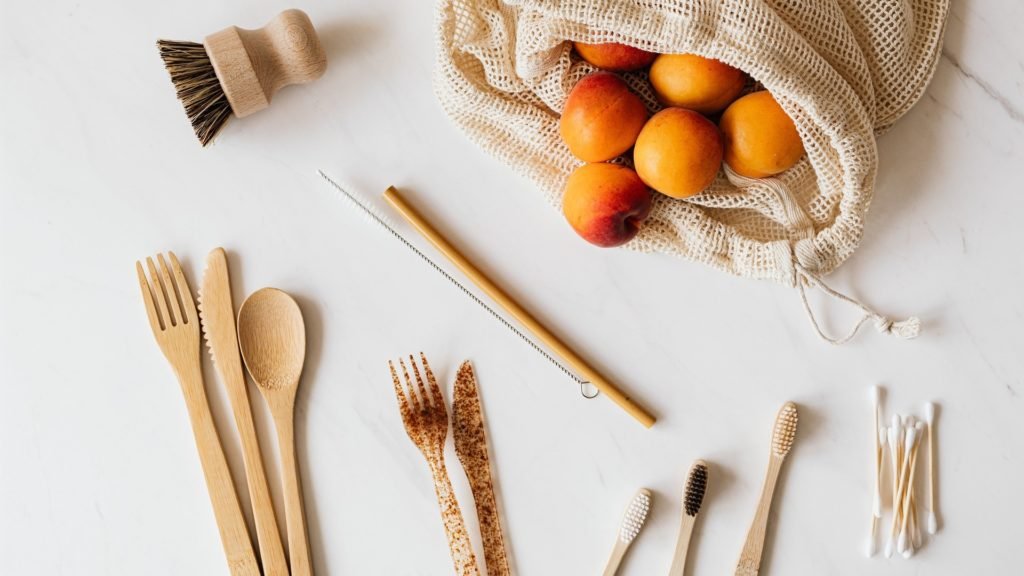
Straws are rarely essential, yet they appear everywhere. Carrying a reusable straw removes the default without effort.
It’s a tiny object with a surprisingly large ripple effect.
- Buying in bulk where it makes sense
Bulk shopping isn’t about filling a pantry overnight. It’s about slowly shifting staples — rice, pasta, oats — to larger containers and fewer packages.
The kitchen becomes calmer. Less packaging enters the home.
And grocery shopping becomes less frequent.
- Repair before replacing
Perhaps the most powerful swap is a mindset shift. Repairing instead of replacing slows consumption and changes the relationship with possessions.
Mending clothes, fixing appliances, tightening screws — small acts that extend the life of everyday objects.
This is the swap that makes all others easier.
A gentle conclusion
Zero waste living is often presented as a dramatic lifestyle. In reality, it’s a series of quiet adjustments. Most swaps don’t feel revolutionary. They feel practical.
The goal is not perfection. The goal is frictionless change.
Over time, these small decisions stack into a lifestyle that feels lighter, simpler, and less cluttered.
And the most surprising part? Once habits settle, the old way begins to feel less convenient than the new one.
Frequently Asked Questions
Is zero waste living expensive to start?
It doesn’t have to be. Many swaps save money over time because reusable items replace disposable purchases. Starting slowly and replacing items only when they run out keeps costs low.
Do I need to go completely plastic-free to make a difference?
No. Small changes add up significantly over time. Even a few swaps can reduce a large amount of waste each year.
What if I forget my reusable items often?
This is normal in the beginning. Keeping reusable items in everyday bags and creating routines around them helps the habit stick.
Are shampoo bars and soap bars hygienic?
Yes. When stored in a dry area between uses, bar products remain clean and safe. Proper storage is the key.
How long does it take to adjust to zero waste habits?
Most people adapt within a few weeks. Habits feel unfamiliar at first, then quickly become automatic.
Can families realistically adopt these swaps?
Absolutely. Many families find that reusable items simplify routines and reduce shopping trips, making daily life easier rather than harder.