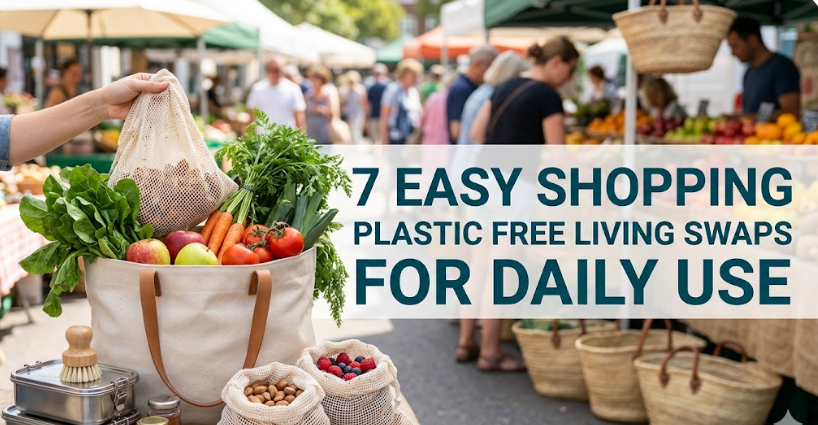
7 easy shopping plastic free living swaps for daily use
There is a quiet moment that happens the first time you notice how much plastic surrounds your everyday life. It is not dramatic. It is not loud. It happens while unpacking groceries, or tossing out an empty shampoo bottle, or peeling the thin wrapping off something you didn’t even remember buying. It accumulates in the background—crinkling, piling, persisting.
Living with less plastic is not about perfection. It is not about turning your home into a minimalist shrine overnight or spending a fortune on eco-friendly products. It is about small decisions, repeated consistently, that gradually reshape your habits. The beauty of plastic-free living is that it does not demand a radical transformation—it invites a mindful shift.
What follows is not just a list of swaps. It is a lived-in approach, one that acknowledges convenience, budget, culture, and real-life messiness. These seven swaps are designed for daily use, rooted in practicality, and flexible enough to adapt to your routine.
Let’s begin where most changes start: with awareness.
a morning observation that changes everything
Imagine your typical morning. You wake up, brush your teeth, wash your face, maybe prepare tea or coffee, and head out or begin your day at home. Without thinking, plastic shows up in almost every step—your toothbrush, toothpaste tube, face wash bottle, milk packet, snack wrapper.
The goal is not to eliminate all of it overnight. The goal is to gently replace what you use daily with alternatives that feel natural over time.
swap 1: the reusable shopping bag that becomes second nature
It sounds simple because it is. And yet, it is often the most overlooked habit.
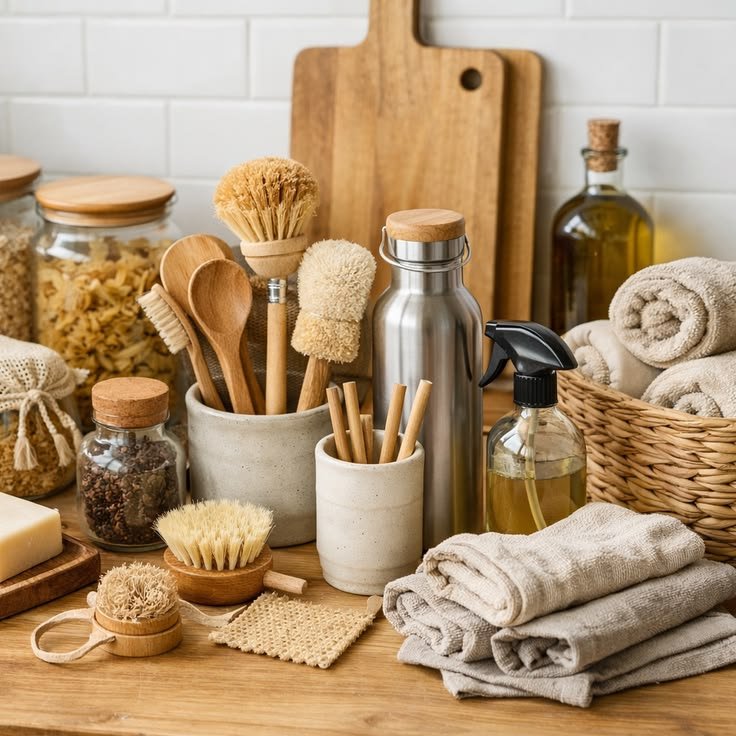
Plastic bags are designed for minutes of use but persist for decades. Replacing them with reusable bags is one of the easiest and most impactful swaps.
Start by placing cloth or canvas bags where you can’t ignore them—near your door, in your car, inside your backpack. The trick is not owning them; it is remembering them.
Over time, something interesting happens. You begin to feel slightly uncomfortable accepting plastic bags. Not out of guilt, but out of awareness. The habit rewires itself.
To make it stick:
- Keep at least two bags in every place you frequently leave from
- Choose bags that fold small and are easy to carry
- Wash them occasionally so they remain pleasant to use
A reusable bag is not just an item. It is a signal—a small declaration that your choices matter.
swap 2: refillable water bottles instead of disposable plastic bottles
Water is essential. Plastic bottles are not.
Switching to a refillable bottle reduces waste and often improves your relationship with hydration. You begin to carry water with intention instead of purchasing it impulsively.
There is also a subtle psychological shift. Drinking from your own bottle feels personal. It belongs to you. It becomes part of your daily rhythm.
Materials vary—stainless steel, glass, BPA-free plastic—but the principle remains the same: reduce single-use consumption.
To integrate this swap:
- Keep your bottle visible on your desk or in your bag
- Refill it at the same times each day to build consistency
- Clean it regularly to maintain hygiene and taste
This swap also saves money over time, especially if you frequently buy bottled drinks.
swap 3: loose produce instead of pre-packaged fruits and vegetables
Walk into any grocery store, and you will notice how many fruits and vegetables come wrapped in plastic—cucumbers, carrots, herbs, even bananas.
Choosing loose produce may feel like a small act, but it compounds quickly.
Bring lightweight produce bags made of cloth or mesh. Or skip bags entirely when possible. Most items can go directly into your cart and be washed at home.
This swap encourages a more mindful shopping experience:
- You select exactly what you need
- You reduce food waste by avoiding bulk packaging
- You reconnect with the tactile nature of food
There is also a quiet satisfaction in filling your basket with unpackaged produce. It feels closer to how food is meant to be handled—simple, direct, unwrapped.
swap 4: glass or steel containers for storage instead of plastic containers
Kitchen storage is one of the biggest hidden sources of plastic use. From leftovers to dry goods, plastic containers dominate most households.
Switching to glass or stainless steel containers is not only better for the environment but also for durability and health.
Glass does not absorb odors or stains. Steel is lightweight and long-lasting. Both reduce the need for frequent replacements.
You do not need to replace everything at once. Start with what breaks or wears out. Gradually transition.
Practical tips:
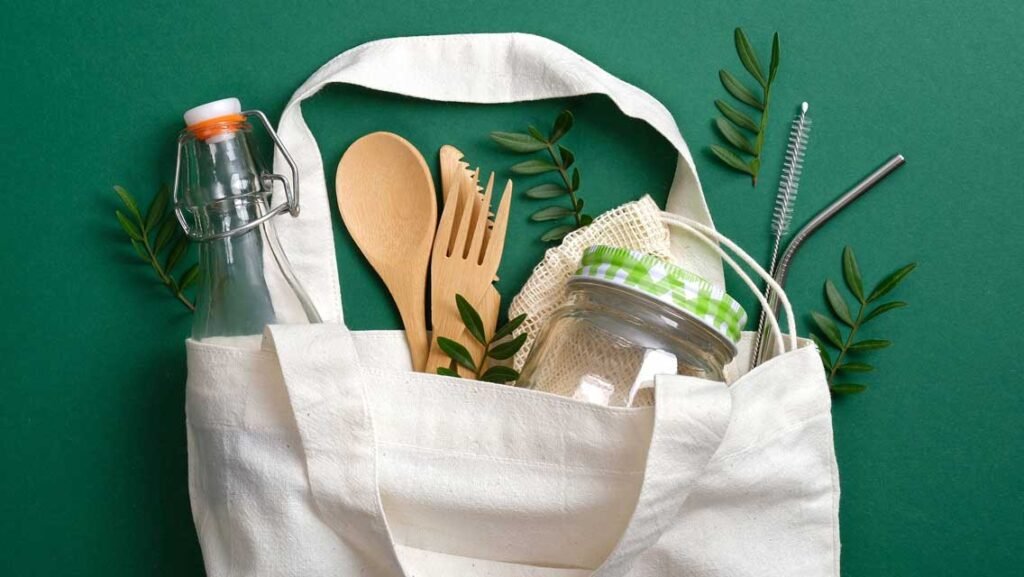
- Use glass jars for grains, spices, and snacks
- Store leftovers in transparent containers so you can see what you have
- Repurpose old jars before buying new ones
This swap also transforms your kitchen visually. It becomes cleaner, more organized, and oddly calming.
swap 5: bar soap and shampoo bars instead of liquid bottles
Bathroom products are notorious for plastic packaging. Bottles pile up quickly—shampoo, conditioner, body wash, face wash.
Bar alternatives offer a simple solution.
Soap bars have been around for generations. Shampoo bars, though newer to some, are increasingly accessible and effective.
The transition may take a short adjustment period. Your hair or skin might respond differently at first. But once you find the right products, the benefits are clear.
Why this swap works:
- Bars last longer than liquid equivalents
- They often contain fewer synthetic ingredients
- They eliminate the need for plastic bottles
To make the switch easier:
- Store bars on a dry surface to extend their life
- Experiment with different brands or formulations
- Keep a small container for travel
This is one of those swaps that feels old-fashioned in the best way—simple, reliable, and efficient.
swap 6: reusable coffee cups instead of disposable cups
If you drink tea or coffee outside your home, you have likely used disposable cups. Many of these are lined with plastic, making them difficult to recycle.
A reusable cup changes that.
It becomes part of your routine—something you carry like your phone or wallet. Over time, it feels incomplete to leave without it.
Many cafes accept reusable cups, and some even offer discounts.
To build the habit:
- Keep your cup near your keys or bag
- Rinse it after each use to avoid buildup
- Choose a design you enjoy using
There is also a subtle emotional benefit. Drinking from your own cup feels more grounded, less rushed. It turns a routine purchase into a more intentional experience.
swap 7: switching from cling film to beeswax wraps or lids
Cling film is one of the most convenient yet wasteful kitchen items. It is used briefly and discarded immediately.
Alternatives like beeswax wraps, silicone lids, or even simple plates can replace it effectively.
Beeswax wraps mold around food and containers using the warmth of your hands. They are reusable and biodegradable.
If beeswax is not accessible, consider:
- Using containers with lids
- Covering bowls with plates
- Reusing paper or cloth wraps
This swap requires a slight shift in habit, but it quickly becomes intuitive.
rethinking convenience
One of the biggest misconceptions about plastic-free living is that it is inconvenient. In reality, it simply redefines convenience.
Instead of relying on disposables, you rely on preparation. Instead of constant replacement, you focus on longevity.
There is a learning curve, yes. You might forget your bag. You might buy something wrapped in plastic out of necessity. That is okay.
Progress is not linear. It is cumulative.
the financial side of plastic-free swaps
Many people assume that eco-friendly choices are expensive. While some products have a higher upfront cost, they often save money over time.
Reusable items reduce the need for repeated purchases. Durable materials last longer. Mindful shopping reduces impulse buying.
Consider:
- A reusable bottle replacing dozens of plastic bottles
- Cloth bags eliminating the need to buy bags repeatedly
- Bulk buying reducing packaging costs
Plastic-free living is not just environmentally conscious—it can be financially sensible.
a shift in mindset, not just materials
Ultimately, these swaps are not about the items themselves. They are about how you think.
You begin to ask questions:
- Do I need this?
- Is there a reusable option?
- Can I avoid this packaging?
These questions reshape your habits in ways that extend beyond plastic.
You may find yourself wasting less food, buying fewer unnecessary items, and appreciating what you own more deeply.
when things don’t go perfectly
There will be days when convenience wins. When you forget your bottle. When the only option available is plastic.
This does not erase your efforts.
Sustainable living is not about strict rules. It is about consistent intention. Every small change contributes to a larger impact.
community and influence
Your choices do not exist in isolation. When others see you using a reusable bag or declining plastic straws, it sparks curiosity.
Change spreads quietly.
You do not need to convince anyone. Simply living your values is enough to inspire others.
over time, it becomes effortless
What feels like a conscious effort today becomes automatic tomorrow.
You will reach for your reusable bag without thinking. You will prefer unpackaged produce. You will notice plastic in ways you didn’t before.
This is how habits form—not through force, but through repetition.
closing reflection
Plastic-free living is not a destination. It is a direction.
These seven swaps are starting points, not endpoints. They are practical, accessible, and adaptable.
What matters is not how quickly you adopt them, but how consistently you practice them.
Small changes, repeated daily, have a way of reshaping not just your environment, but your perspective.
And in that shift, something meaningful happens—you begin to live not just with less plastic, but with more awareness.
frequently asked questions
- is it expensive to switch to plastic-free alternatives?
Not necessarily. While some items may cost more upfront, they usually last longer and reduce repeated spending. Over time, many people find they actually save money. - what if i forget to carry reusable items?
It happens to everyone. The key is to build habits gradually—keep items in places you frequently access, like your bag or car, until it becomes routine. - are plastic-free products always better for health?
Many plastic-free options, like glass or stainless steel, are considered safer because they do not leach chemicals. However, it is still important to choose high-quality products. - can i go completely plastic-free?
It is very difficult in today’s world. The goal should not be perfection but reduction. Focus on what you can control and improve gradually. - how do i start if i feel overwhelmed?
Start with one or two swaps, such as a reusable bag or water bottle. Once those become habits, move on to others. Small steps are more sustainable than drastic changes. - do these swaps really make a difference?
Yes. Individual actions add up, especially when adopted by many people. Reducing single-use plastic helps lower waste, conserve resources, and encourage better production practices.