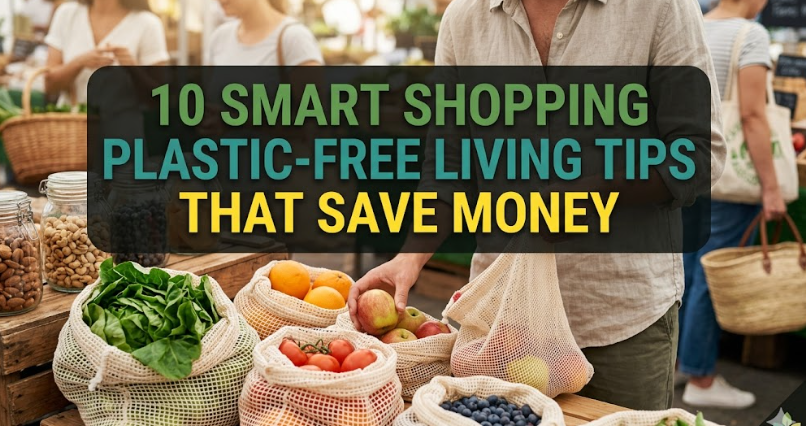
10 Smart Shopping Plastic Free Living Tips That Save Money
There’s a quiet shift happening in how people shop. It doesn’t involve flashy apps or complicated systems. It’s simpler than that. It’s about noticing the small things—how often we accept plastic without thinking, how much of it ends up unused, and how much money quietly slips away with it. Plastic-free living is often framed as an environmental decision, but it’s also a financial one. When done thoughtfully, it naturally reduces waste, encourages mindful consumption, and leads to real savings.
This isn’t about perfection. It’s about small, repeatable habits that slowly reshape the way you shop. Over time, these habits begin to feel less like effort and more like second nature.
Below are ten practical, real-world strategies that connect plastic-free living with smarter spending. Each one is rooted in everyday life, not theory.
- Start with what you already have
Before buying anything “eco-friendly,” pause and look around your home. Chances are, you already own items that can replace plastic alternatives. Glass jars from sauces, sturdy cloth bags, old containers—these are all tools waiting to be reused.
Many people make the mistake of replacing plastic with expensive “zero-waste” products immediately. Ironically, this creates more consumption. A better approach is to transition gradually. Reuse first, then replace only when necessary.
A simple exercise: open your kitchen cabinets and take inventory. That pickle jar? It can store lentils. That takeaway container? It can become a lunch box. Each reuse saves money and avoids another purchase.
This mindset shift—using instead of replacing—is the foundation of both plastic-free living and financial discipline.
- Bring your own bags, always
Reusable shopping bags are perhaps the easiest entry point. But the real savings come from consistency. Many stores charge for plastic bags now, and even small fees add up over time.
Keep bags in places where you won’t forget them:
– In your car
– Near your door
– Folded inside your everyday backpack
Over time, this becomes automatic. You stop paying for bags, and you stop accumulating clutter at home.
An added benefit: reusable bags are usually stronger, meaning fewer accidents and fewer spoiled groceries.
- Buy in bulk strategically
Bulk buying is often associated with warehouse shopping, but in a plastic-free context, it means something slightly different. It’s about purchasing loose items or large quantities using your own containers.
Grains, beans, spices, nuts—these are often cheaper when bought in bulk. You avoid both the packaging cost and the brand markup.
However, the key word here is “strategically.” Buying in bulk only saves money if you actually use what you buy. Food waste cancels out any savings.
A practical tip: start with staples you use regularly. Rice, flour, or oats are good examples. Bring your own containers or bags if possible, and track how quickly you use them.
- Choose loose produce over packaged
Walk through any grocery store and you’ll notice something odd: fruits and vegetables wrapped in plastic, even when they already have natural protection.
Loose produce is often cheaper and fresher. It also allows you to buy exactly the amount you need. This reduces both food waste and unnecessary spending.
For example, instead of buying a pre-packaged bag of six apples, you might only need three. That simple choice cuts your cost in half and avoids extra plastic.
It also encourages more mindful eating habits. You become more aware of what you’re actually consuming, rather than buying in bulk out of habit.
- Cook more, package less
Convenience foods are one of the biggest sources of plastic waste—and unnecessary expense. Pre-cut vegetables, ready-made meals, individually wrapped snacks—these all come at a premium.
Cooking at home shifts the equation. You buy raw ingredients, use less packaging, and save money.
This doesn’t mean spending hours in the kitchen. It can be as simple as preparing meals in batches. A pot of soup, a tray of roasted vegetables, a container of cooked rice—these can cover multiple meals.
Over time, you’ll notice a pattern: the less processed the food, the less plastic it involves, and the cheaper it tends to be.
- Carry a reusable kit
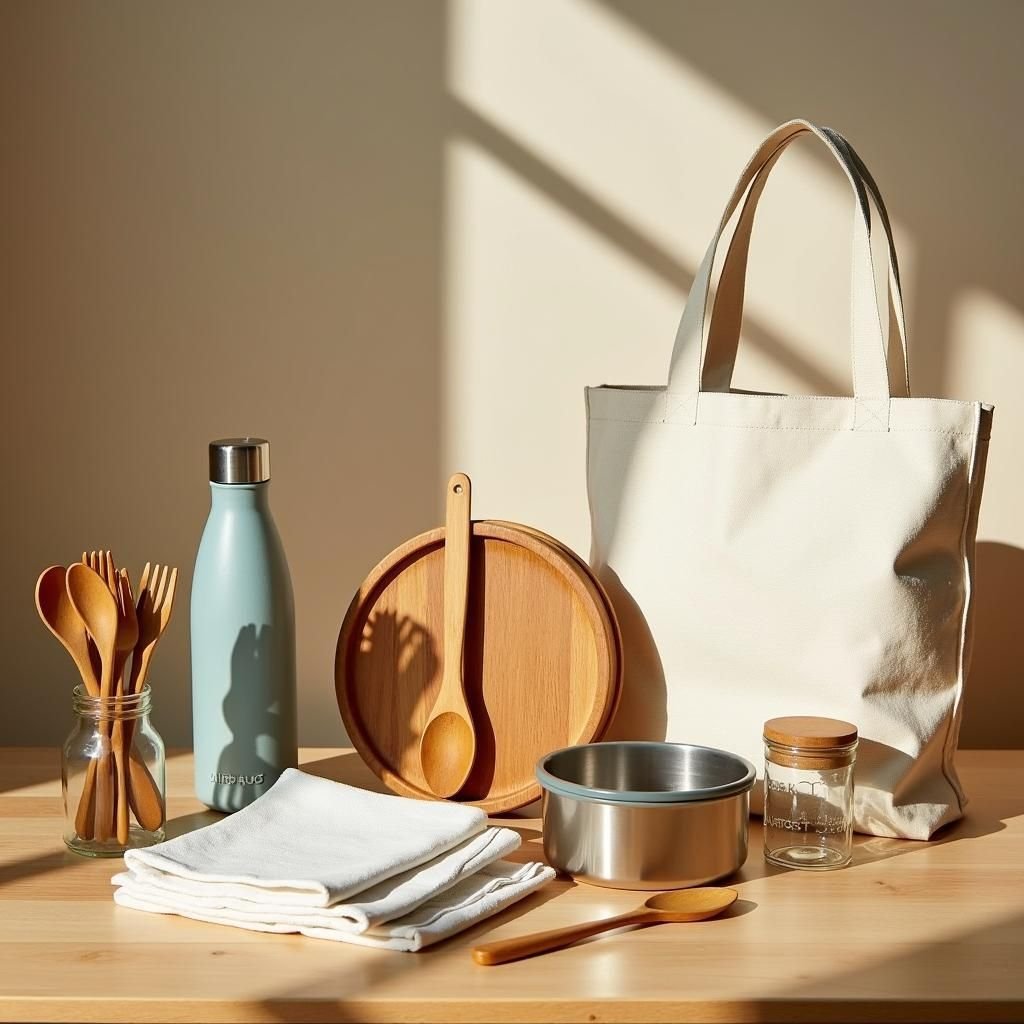
Think of this as your everyday toolkit. A small set of items that helps you avoid plastic when you’re out:
– A reusable water bottle
– A cloth napkin or handkerchief
– A set of cutlery
– A small container for leftovers
This might sound excessive at first, but it quickly becomes practical. You’ll find yourself declining plastic straws, takeaway containers, and disposable utensils without inconvenience.
Financially, it adds up. You stop buying bottled water. You avoid impulse purchases simply because you’re prepared.
There’s also a subtle psychological effect: carrying your own items makes you more intentional about your choices.
- Avoid “eco” impulse buying
The rise of eco-friendly products has created a new kind of consumer trap. Bamboo this, stainless steel that—often marketed as essential.
But not everything labeled “eco” is necessary.
Before buying, ask:
Do I already have something that works?
Will I use this regularly?
Is this replacing something, or just adding to my collection?
Plastic-free living is not about buying better things. It’s about needing fewer things.
This approach saves money and reduces clutter. It also keeps the focus on habits rather than products.
- Repair instead of replacing
Plastic items often break quickly, but many everyday objects can be repaired with a bit of effort.
A torn cloth bag can be stitched. A loose lid can be fixed. Even some containers can be repurposed rather than discarded.
Repairing builds a different relationship with your belongings. You begin to see them as long-term assets rather than disposable items.
Financially, this is one of the most powerful habits. Every repair is a purchase avoided.
- Shop local when possible
Local markets often use less packaging than large supermarkets. You’re more likely to find loose items, fresh produce, and the option to use your own bags.
Prices can also be more competitive, especially for seasonal items.
There’s another advantage: flexibility. At a local stall, you can often ask for exact quantities, avoiding both waste and overspending.
Shopping locally also supports smaller businesses, creating a more resilient community economy.
- Slow down your shopping decisions
Perhaps the most overlooked tip is simply this: take your time.
Impulse buying is one of the main drivers of both plastic waste and unnecessary spending. Slowing down interrupts that pattern.
Before adding something to your cart, pause:
Do I need this?
Can I get it without plastic?
Is there a better alternative?
This small moment of reflection often leads to better choices.
Over time, it becomes a habit. You buy less, waste less, and spend less.
—
A day in practice
Imagine a typical shopping day with these habits in place.
You leave home with your reusable bags and water bottle. At the store, you choose loose vegetables, measure out grains into your own containers, and skip the packaged snacks. You buy only what you need for the week.
Back home, you cook simple meals, store leftovers in reusable containers, and reuse jars for storage.
There’s no dramatic change, no complicated system. Just small decisions, repeated consistently.
At the end of the month, the difference shows—not just in reduced plastic waste, but in your expenses.
—
The financial perspective
Plastic often hides its true cost. It’s built into packaging, branding, and convenience. When you remove it from your shopping habits, you also remove those hidden expenses.
You start paying for the product itself, not the packaging around it.
This shift aligns your spending with your actual needs. It reduces waste in every sense—material and financial.
—
Challenges and realistic expectations
Plastic-free living isn’t always easy. Availability varies, habits take time to change, and convenience can be tempting.
There will be moments when you forget your bag or have to accept plastic. That’s normal.
The goal isn’t perfection. It’s progress.
Even partial changes make a difference. Using reusable bags most of the time, buying loose produce when possible, cooking more often—these are meaningful steps.
—
A quiet transformation
What begins as a practical effort to reduce plastic often leads to something deeper. You become more aware of your consumption patterns. You start questioning convenience. You notice how small choices add up.
And perhaps most importantly, you realize that living with less waste often means living with less expense.
It’s not about sacrifice. It’s about clarity.
—
FAQs
- Is plastic-free living more expensive to start?
It can seem that way initially, especially if you buy reusable items all at once. However, starting with what you already have significantly reduces costs. Over time, the savings from buying less packaged goods outweigh any initial investment.
- How do I remember to bring reusable bags?
Make it part of your routine. Keep bags in visible places like near your door or inside your car. With repetition, it becomes a habit, much like carrying your phone or keys.
- What if bulk stores aren’t available in my area?
You can still apply the principle by choosing larger, less-packaged options at regular stores. Focus on reducing packaging where possible, even if bulk bins aren’t accessible.
- Does plastic-free living really save money?
Yes, mainly because it encourages mindful spending. You buy fewer packaged goods, waste less food, and avoid unnecessary purchases. These changes naturally reduce expenses.
- How do I handle takeaway food without plastic?
Carrying a small container can help, but it’s not always practical. When possible, dine in instead of taking out, or choose places that use minimal packaging.
- What’s the easiest first step to take?
Start with reusable bags and buying loose produce. These are simple changes that require little effort but make a noticeable difference.
—
In the end, plastic-free shopping isn’t a strict rulebook. It’s a collection of small, adaptable habits. Each one reduces waste, saves money, and brings a bit more intention into everyday life.