5 Powerful Home Plastic Free Living Changes I Tried Myself
I didn’t wake up one day and decide to eliminate plastic from my life. Like most people, my journey started with a small discomfort — noticing how often I threw things away that I had just bought days before. Grocery bags, food packaging, shampoo bottles, cling wrap. It all piled up faster than I could ignore.
At first, I thought plastic-free living meant extreme minimalism or inconvenience. But what I discovered over time was something very different. It wasn’t about perfection. It was about awareness, experimentation, and gradually building a lifestyle that felt lighter, cleaner, and more intentional.
In this article, I’m not sharing theoretical tips. These are five changes I personally tried at home — not all easy, not all perfect — but each one genuinely shifted the way I live. If you’ve ever thought about reducing plastic but felt overwhelmed, this might give you a grounded place to start.
—
- Rethinking the kitchen: where most plastic hides
If there is one place where plastic quietly dominates, it’s the kitchen. I didn’t realize this until I actually started looking. Every drawer, every shelf, every purchase seemed to involve plastic in some way.
My first step wasn’t to throw everything out. That would have been wasteful and expensive. Instead, I made a rule: replace items only when they wear out.
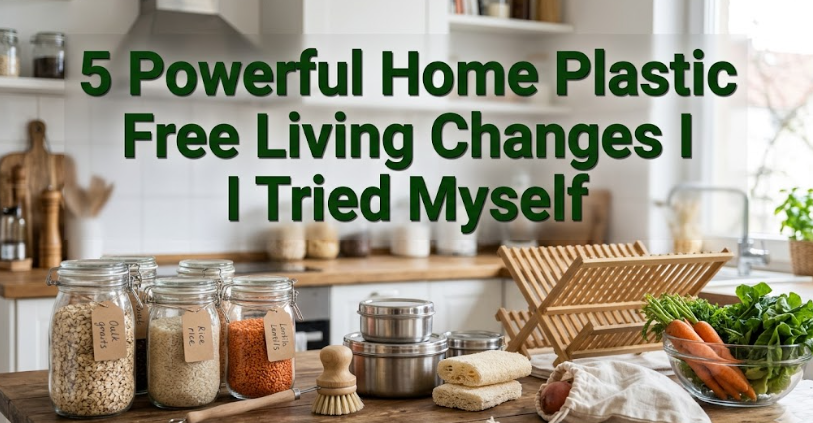
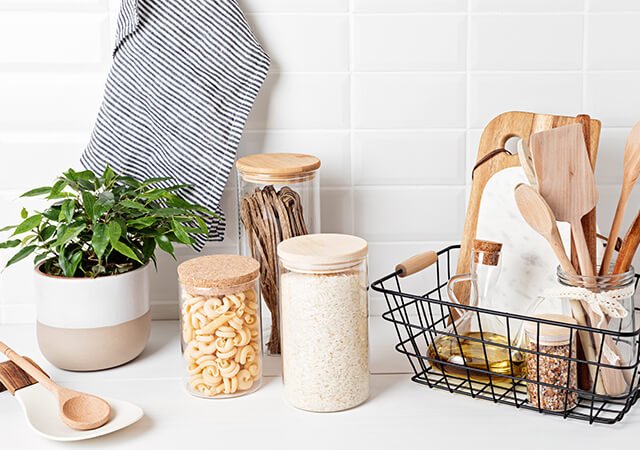
The first swap I made was with food storage. I moved from plastic containers to glass jars and stainless steel boxes. At first, it felt inconvenient. Glass is heavier. It breaks. It requires more care. But after a few weeks, I noticed something unexpected — my food stayed fresher, and I felt more connected to what I was eating.
I also replaced cling film with beeswax wraps. I was skeptical at first. They don’t seal like plastic. But they do something better — they encourage mindful storage instead of overwrapping everything.
Shopping habits also changed. I started carrying cloth bags and buying loose produce instead of pre-packaged items. This one shift alone reduced a surprising amount of plastic.
What surprised me most wasn’t the reduction in waste — it was the shift in mindset. I stopped seeing convenience as something disposable and started seeing it as something I could design.
—
- Transforming the bathroom: small swaps, big impact
The bathroom turned out to be my second biggest plastic zone. Almost everything I used came in plastic packaging — shampoo, toothpaste, razors, soap dispensers.
This is where I started experimenting more boldly.
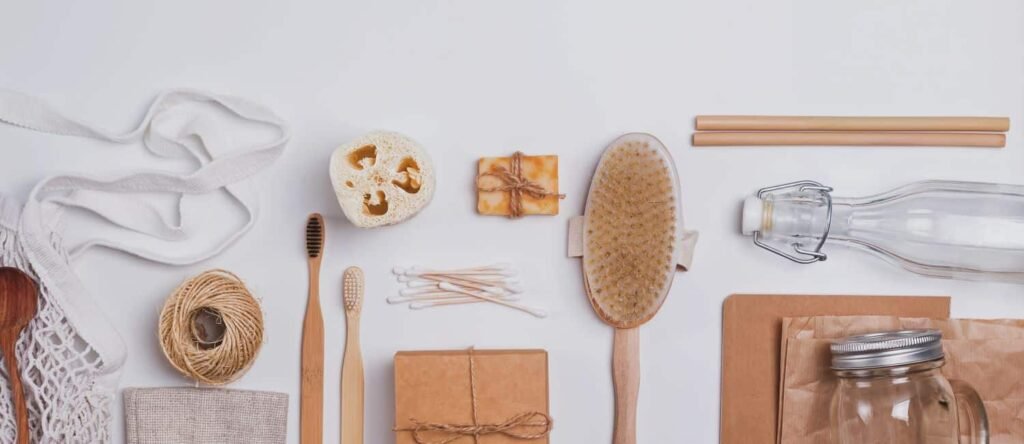
I switched from liquid shampoo to solid shampoo bars. The transition was not instant. My hair felt different at first. But after a few weeks, it adjusted, and I actually preferred the lighter, cleaner feel.
Toothpaste was another interesting shift. I tried toothpaste tablets instead of tubes. It felt strange in the beginning — chewing something before brushing — but it eliminated one more plastic item from my routine.
I also replaced disposable razors with a safety razor. This was one of the most intimidating changes. It required learning a new technique and being more careful. But over time, it became second nature, and I realized how much waste I had been generating before.
Even something as simple as switching from plastic soap bottles to bar soap made a difference. It reduced clutter, simplified my routine, and made the space feel calmer.
What I learned here was that plastic-free living isn’t just about the environment — it’s about redefining daily rituals.
—
- Cleaning without plastic: simplifying the entire system
Cleaning products were something I had never questioned. Bottles under the sink, sprays for every surface, wipes for convenience. It all seemed normal.
Until I looked at the waste.
Instead of replacing each product with a “plastic-free version,” I took a different approach: I simplified everything.
I started using a few core ingredients — vinegar, baking soda, and castile soap. These covered almost every cleaning need in my home.
For wiping surfaces, I switched from disposable wipes to reusable cloths. Old t-shirts became cleaning rags. This wasn’t just sustainable — it was practical and cost-effective.
Laundry was another area of change. I moved from liquid detergent in plastic bottles to powder in cardboard packaging. It worked just as well and reduced a steady stream of plastic waste.
One unexpected benefit was mental clarity. Fewer products meant fewer decisions. Cleaning became simpler, faster, and less overwhelming.
This shift taught me that plastic-free living often goes hand in hand with minimalism.
—
- Rethinking shopping habits: prevention over replacement
One of the biggest realizations in my journey was this: the most effective way to reduce plastic is to avoid bringing it home in the first place.
This sounds obvious, but it requires a completely different way of thinking.
I stopped shopping impulsively and started planning more intentionally. Before buying something, I would ask: Does this come in plastic? Is there an alternative? Do I really need it?
I began visiting local markets instead of relying entirely on supermarkets. Buying in bulk, using my own containers, and choosing unpackaged goods became part of my routine.
This change wasn’t always convenient. Sometimes I had to visit multiple stores. Sometimes I couldn’t find what I needed. But over time, it became easier.
I also learned to accept imperfection. Not everything is available plastic-free. And that’s okay. The goal isn’t zero plastic overnight — it’s less plastic over time.
What changed most was my awareness. I started seeing packaging not as invisible, but as part of the product itself.
—
- Shifting mindset: from perfection to progress
The most powerful change wasn’t a product swap or a habit — it was a shift in mindset.
At the beginning, I felt pressure to do everything “right.” To eliminate plastic completely. To follow strict rules. But this quickly became exhausting and unrealistic.
Over time, I realized that plastic-free living is not about perfection. It’s about intention.
There were days I forgot my reusable bag. Times I bought something wrapped in plastic because I had no alternative. Moments I felt frustrated.
But instead of giving up, I learned to treat these moments as part of the process.
Progress matters more than perfection.
This mindset made everything sustainable — not just environmentally, but personally. It allowed me to keep going without burnout.
—
What changed in my life overall
After implementing these five changes, I noticed something deeper than reduced waste.
My home felt different. Less cluttered. More intentional. Calmer.
My habits became more mindful. I wasted less, consumed less, and appreciated more.
I also felt a stronger connection to everyday actions — cooking, cleaning, shopping. Things that once felt automatic became meaningful.
Plastic-free living didn’t complicate my life. It simplified it.
—
Challenges I faced (and what helped)
This journey wasn’t without challenges.
Convenience was the biggest hurdle. Plastic is everywhere because it’s easy. Breaking that pattern required effort and patience.
Social situations were another challenge. Bringing your own containers or refusing plastic can feel awkward at first. But confidence grows with time.
Cost was also a concern. Some plastic-free alternatives are more expensive upfront. But many last longer, which balances the cost over time.
What helped most was taking it step by step. Trying one change at a time. Learning through experience instead of trying to do everything at once.
—
How you can start (without overwhelm)
If you’re thinking about reducing plastic in your home, start small.
Pick one area — maybe your kitchen or bathroom — and make one change. Use what you already have. Replace items gradually.
Focus on habits, not just products.
And most importantly, be patient with yourself.
This is not a race. It’s a lifestyle shift.
—
Frequently Asked Questions
- Is it possible to live completely plastic-free?
In today’s world, it’s extremely difficult to eliminate plastic entirely. The goal should not be perfection but reduction. Even small changes can have a significant impact over time.
- Are plastic-free alternatives more expensive?
Some items may cost more initially, but they often last longer. Reusable products, for example, save money in the long run by replacing disposable ones.
- What is the easiest first step to reduce plastic at home?
One of the simplest starting points is switching to reusable shopping bags and avoiding single-use plastic packaging when possible.
- How do I stay consistent with plastic-free habits?
Start small and build gradually. Focus on habits that fit naturally into your lifestyle. Consistency comes from making changes that feel manageable.
- What if I don’t have access to bulk stores or alternatives?
Do what you can with what’s available. Even choosing products with less packaging or reusing items makes a difference. Plastic-free living is not all-or-nothing.
- Does plastic-free living really make a difference?
Yes, especially when adopted collectively. Individual actions contribute to larger environmental impact, and they also influence businesses and communities over time.
—
In the end, this journey isn’t about eliminating plastic perfectly. It’s about living more consciously, making better choices where possible, and creating a home that reflects those values.
And once you start, you might find — like I did — that the benefits go far beyond reducing waste.