Plastic Free Bathroom: Where Microplastics Hide
We swabbed a bathroom cabinet for this piece. Not a lab test, nothing scientific, just an honest inventory of everything sitting on the shelf above the sink. Out of fourteen items, eleven contained plastic in some form that was shedding into the water, the air, or straight onto skin. Two of them were marketed as “eco-friendly.”
That gap between labeling and reality is where most of the confusion in this niche lives. People assume microplastics are a laundry problem or an ocean problem, something that happens somewhere else. The bathroom is one of the most concentrated sources in the average home, and almost none of it is visible unless you know exactly what you’re looking for.
1. Where the Plastic Is Actually Coming From
Microplastics in a bathroom fall into two rough categories. There’s the stuff designed to break apart on purpose, and the stuff that sheds as a byproduct of normal use.
The first category is smaller than it used to be. Exfoliating microbeads, the tiny plastic spheres once common in face washes and body scrubs, were phased out across much of the US after the Microbead-Free Waters Act in 2015, and the EU restricted intentionally added microplastics in cosmetics starting in 2023. If your scrub still has that gritty, uniform texture and was bought more than five or six years ago, it might still be sitting in your cabinet.
The second category is the bigger issue today. Nylon bristles on a toothbrush wear down every time you brush. Synthetic loofahs and shower puffs shred constantly under water pressure, and because they’re mesh, the fibers go straight down the drain. Wet wipes, even the ones labeled “biodegradable,” often contain polyester or polypropylene blended into the fibers. None of this is dramatic on its own. It adds up because it happens every single day, in every bathroom, for years.
2. The Items People Never Suspect
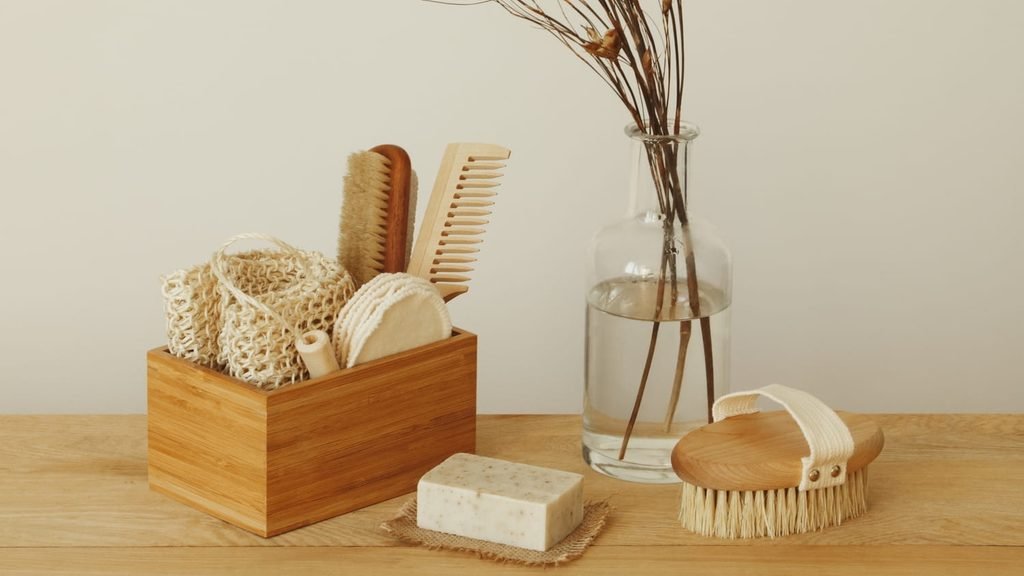
Some sources are obvious once you think about them. Others genuinely surprise people, including those who’ve already done the easy swaps like reusable water bottles and cloth shopping bags.
| Item | Common Material | Sheds Microplastic? | Easy Swap |
|---|---|---|---|
| Toothbrush | Nylon bristles, plastic handle | Yes, bristles wear down | Bamboo handle, boar or plant-based bristle |
| Dental floss | PTFE or nylon, often wax coated | Yes | Silk floss or bamboo fiber floss |
| Shower puff / loofah | Nylon mesh | Yes, heavily | Natural loofah gourd or washcloth |
| Cotton buds | Plastic stem, cotton tip | Stem doesn’t biodegrade | Paper stem cotton buds |
| Exfoliating scrub | Polyethylene beads (older stock) | Yes if pre-2015/2023 stock | Sugar, oat, or coffee ground scrub |
| Bath mat | Chenille or microfiber synthetic | Yes, in the wash | Cotton or bamboo bath mat |
| Wet wipes | Polyester/polypropylene blend | Yes, and doesn’t fully break down | Reusable cloth with water |
| Shower curtain | PVC or vinyl | Sheds under heat and friction | Cotton, hemp, or linen curtain |
A few of these are worth pulling apart individually, because the swap isn’t always as simple as the table makes it look.
Floss is the one nobody thinks about. It’s used for seconds a day, it seems too small to matter, and it’s one of the more persistent offenders because it’s designed to be strong and slippery, which in plastic terms means durable and slow to break down. Silk floss coated in beeswax does the same job without leaving synthetic fiber behind.
Bath mats are the other sleeper source, and this is one of those spots where not every “natural-sounding” material is actually plastic free, so it’s worth checking the label rather than assuming chenille or “microfiber” means anything eco about it. Microfiber, despite the soft, almost cloud-like name, is polyester. It’s one of the highest-shedding synthetic textiles that exists, and a bath mat gets washed often, sits wet for hours at a time, and takes constant foot friction. That’s close to a worst-case scenario for fiber shedding.
3. What Actually Works Once You Start Swapping
The instinct is to replace everything at once. That’s usually where people burn out, and it’s one of the more common mistakes beginners make in the first month, buying a full cabinet of replacements before figuring out what they’ll actually keep using.
A more realistic order, based on what tends to stick:
Start with the toothbrush and cotton buds. These are cheap, they’re used up and replaced regularly anyway, so there’s no waste in switching mid-use, and the difference in feel is minimal. Move to the shower puff or loofah next, since a natural loofah or a plain washcloth does the job just as well and lasts longer than the synthetic version falls apart.
Floss and the bath mat can come after that, once the habit of checking labels starts to feel normal instead of like extra work. And if budget is a concern, which it usually is, going plastic free on a tight budget is entirely doable if you replace items as they wear out rather than throwing away anything still usable.
One thing worth saying plainly: you don’t need to buy a matching “zero waste bathroom kit” for this to work. Half the products marketed that way are bundled convenience, not necessity.
4. Where People Get This Wrong
The biggest misconception is thinking “plastic free” and “biodegradable” mean the same thing. They don’t, and wet wipes are the clearest example. A pack labeled biodegradable can still contain a percentage of synthetic fiber blended in for strength, and unless it’s certified to a specific standard, that word on the packaging is doing a lot of unearned work.
The second mistake is assuming natural-sounding names guarantee natural materials. “Microfiber” sounds gentle. It’s plastic. “Chenille” sounds like a cotton weave from a grandmother’s quilt. It’s very often synthetic. Reading the actual fiber content on the tag matters more than the marketing name on the front.
And the third, smaller thing people miss: an exfoliating scrub bought years ago and still sitting in the cabinet might predate the microbead bans entirely. Checking the ingredient list for polyethylene or polypropylene takes thirty seconds and it’s worth doing before assuming an old product is fine just because it’s already been bought.
None of this needs to become obsessive label-reading for every single product forever. It’s a short list, applied a handful of times, and after that it’s just habit.
If you’re still working out where to begin more broadly, the swaps every beginner should try first covers the wider household picture beyond just the bathroom, and it’s a reasonable next stop once the shelf above your sink is sorted.
Plastic Free Living gets asked about this bathroom breakdown more than almost any other room in the house, probably because it’s the one space where the plastic is touching skin and going down the drain daily without anyone really clocking it.
Frequently Asked Questions
Are bamboo toothbrushes actually better, or is that just marketing? The handle is genuinely plastic free if it’s real bamboo, but check the bristles specifically. Most bamboo toothbrushes still use nylon bristles because plant-based bristle alternatives are less common and slightly more expensive. It’s still a meaningful reduction, just not a complete one unless the bristles are explicitly labeled plant-based.
Do natural loofahs need to be replaced as often as synthetic ones? Roughly the same, every four to six weeks with regular use, since both types hold moisture and can grow bacteria. The difference is what happens after you throw it out. A natural loofah gourd composts. A nylon puff sits in landfill for centuries.
Is dental floss really a significant source of microplastic? On its own, no single strand matters. Used daily for years across a household, it adds up more than people expect, mainly because most conventional floss is PTFE, the same family of material as Teflon, and it’s built specifically not to break down.
How can I tell if a bath mat or towel is synthetic without checking the tag? If it feels almost silky or plush in an unnatural way and dries slower than cotton, it’s very likely a polyester or microfiber blend. Genuine cotton and bamboo textiles tend to feel more textured and absorb water faster.
Do I need to throw away plastic bathroom items I already own? No, and this trips a lot of people up early on. Using up what you already have is the better environmental choice over replacing it prematurely just for the sake of consistency. Swap as items wear out naturally.
For a wider look at how plastic ends up in places you wouldn’t expect, plastic packaging and why it’s on nearly everything is a reasonable next read.