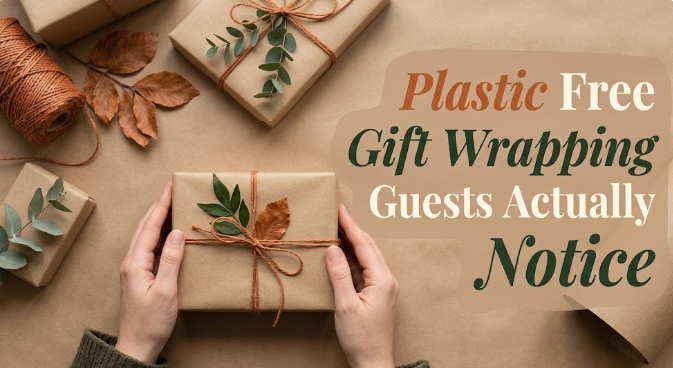
Plastic-Free Gift Wrapping Guests Actually Notice
Last December I watched someone unwrap a present, glance at the paper for exactly one second, and drop it straight into the bin without a second thought. That’s the moment that made me rethink gift wrapping entirely. Most of what we buy as “wrapping paper” is glossy, laminated, sometimes glittered, and almost never recyclable. It gets used once, for less time than it takes to boil a kettle, and then it’s gone. Meanwhile the plastic tape, the ribbon made from polyester, the gift bags with metallic foil printing, all of it quietly piles up the same way.
The good news is that plastic-free wrapping doesn’t have to look like a compromise. Done well, it’s actually the wrapping people remember. Furoshiki cloth, brown kraft paper with hand-drawn details, dried botanicals tied with jute, these get photographed and complimented in a way that shiny foil paper never does. This isn’t about sacrificing presentation for principle. It’s about picking materials that were never going to end up in landfill in the first place.
1. Why Most Wrapping Paper Fails the Recycling Test
Here’s the part most people get wrong: they assume if paper looks like paper, it can go in the recycling bin. It usually can’t. Most commercial wrapping paper is coated in plastic laminate, dye, or glitter, which contaminates recycling batches and gets pulled out at sorting facilities anyway. Add tape, ribbon, and sticky bows and you’ve got a bundle that’s essentially non-recyclable from the start.
This is one of the biggest misconceptions in the plastic-free living space generally, and it’s worth understanding before you even shop for materials. If a wrapping paper is shiny, metallic, or has any kind of textured coating, treat it as landfill-bound. Plain, uncoated paper is the only kind that has a real second life. We’ve covered this pattern before when writing about plastic packaging and why it shows up on nearly everything, and gift wrap follows the exact same logic. Manufacturers optimize for shelf appeal, not end-of-life.
2. Materials That Actually Hold Up (And Look Intentional)
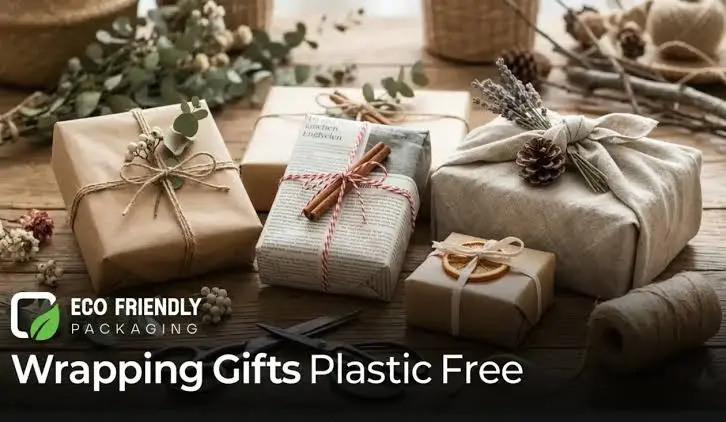
Once you know what to avoid, the substitutes are simple. Here’s how the main options compare when you’re standing in a store trying to decide.
| Material | Reusable? | Cost Per Use | Visual Impact |
|---|---|---|---|
| Kraft paper + string | No, but recyclable | Low | Clean, minimal |
| Furoshiki cloth | Yes, dozens of times | Higher upfront, drops fast | High, distinctive |
| Newspaper or old maps | No, but recyclable | Free | Nostalgic, casual |
| Fabric scraps or scarves | Yes | Free if repurposed | Personal, varies |
| Glass jars or tins | Yes | Moderate | Practical, doubles as gift |
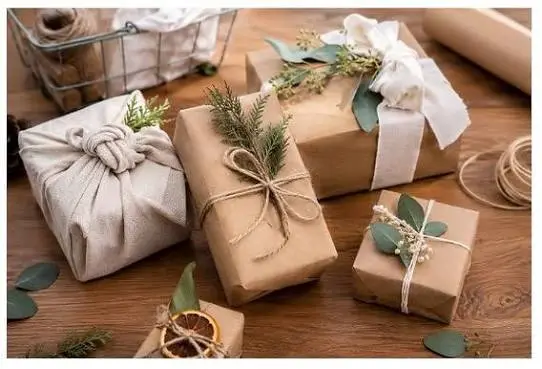
Furoshiki, the Japanese cloth-wrapping technique, gets mentioned a lot in zero-waste circles and for good reason. A single square of cotton or linen can wrap dozens of gifts over years, and the folding technique itself becomes part of the presentation. It photographs beautifully, which matters more than people admit when gifts are being unwrapped in front of a phone camera at every family gathering now.
And honestly, don’t underestimate a plain brown paper bag with a hand-written name on it. Simplicity reads as intentional when everything around it is over-designed.
3. Where the Small Details Actually Matter
Guests don’t consciously register “this wrapping is plastic-free.” What they register is texture, colour restraint, and a sense that effort went somewhere specific. That’s the part that separates memorable wrapping from forgettable wrapping, plastic-free or not.
A few things worth prioritizing:
- Natural twine or raffia instead of curling ribbon, which is almost always plastic
- Dried herbs, a sprig of rosemary, or a cinnamon stick tucked under the string
- A wax seal or simple stamp instead of a plastic bow
- Handwritten tags on scrap card instead of printed stickers
None of these cost much. What they do is signal care in a way that mass-produced bows can’t. This is a small but real overlap with something we’ve written about in the context of plastic-free swaps every beginner should try first: the swaps that stick long-term are usually the ones that also happen to look or feel nicer, not just the ones that are more virtuous on paper.
One thing I’ll admit. My first year trying this, I over-decorated everything. Every gift had three types of natural embellishment stacked on top of each other and it ended up looking cluttered rather than considered. Less is genuinely more here. Pick one or two details per gift, not five.
4. Common Mistakes People Make With Plastic-Free Wrapping
The most common mistake isn’t material choice, it’s tape. People switch to kraft paper and furoshiki and then seal everything with standard plastic tape, which defeats a good chunk of the purpose. Paper tape or a simple knot solves this, but it’s the detail almost everyone forgets on their first attempt.
The second mistake is assuming reusable wrapping has to be expensive. Furoshiki cloth can be cut from an old bedsheet or a thrifted scarf. You don’t need to buy a specialty set to start.
The third, and this one catches people off guard, is forgetting that “recyclable” doesn’t mean “compostable” and vice versa. Tissue paper with glitter is neither. Plain brown paper is recyclable but not typically compostable if it has ink or tape residue on it. Knowing which bin something actually belongs in matters more than assuming good intentions cover it.
If you’re newer to this whole approach and mistakes like this feel familiar, you’re not alone. We wrote a longer piece specifically on the mistakes most beginners make in month one that covers a lot of the same “assumed I was doing it right” territory.
5. What To Do With Gifts You Receive Wrapped in Plastic
You can’t control how other people wrap things for you, and that’s fine. Save what’s salvageable. Ribbon can be reused. Sturdy paper without tears can be folded and stored for next year. Gift bags in particular are worth keeping since they’re one of the most reused items in most households already, even by people who’ve never thought about plastic-free living at all.
What’s not worth doing is stressing over what arrives at your door. This whole approach works best applied to what you control, which is your own wrapping, not everyone else’s.
If you’re setting up a system at home for storing reusable wrapping materials year to year, it’s worth applying the same logic we discussed in glass versus stainless steel storage, pick containers built to last rather than whatever’s convenient in the moment.
At Plastic Free Living, the wrapping question comes up constantly around November, and it’s usually framed as a trade-off between looking good and being responsible. It isn’t one. The materials that hold up best over time, cloth, plain paper, natural trims, are also the ones that tend to get noticed and remembered. That’s not a coincidence. Simpler materials force a bit more intention into the process, and intention is what people actually respond to when they’re standing there with a present in their hands.
I still keep a drawer of folded furoshiki squares by the door every December. Some years I use them for exactly one gift. Other years, half the household’s presents go out wrapped in the same three pieces of cloth, rotated and refolded. Either way, nothing from that drawer has ever ended up in a bin.
FAQs
Does furoshiki wrapping actually save money over time? Yes, after the first two or three uses. A cotton furoshiki square costs roughly the same as a roll of decent wrapping paper but can be reused indefinitely, so the cost per gift drops fast.
Can I compost wrapping paper instead of recycling it? Only if it’s plain, uncoated paper with no tape, glitter, or foil on it. Most commercial wrapping paper fails this test even when it looks like plain paper.
What’s a good plastic-free alternative to sticky gift bows? A small sprig of dried greenery, a fabric scrap tied in a knot, or a simple wax seal all work well and don’t leave adhesive residue behind.
Is it rude to ask for wrapping materials back after a gift exchange? Not really, especially with family or close friends. Framing it as “I reuse this every year” tends to get a positive response rather than an awkward one.
What do I do with plastic ribbon I already own? Use it up rather than throwing it out. Buying reusable alternatives while discarding usable materials creates more waste, not less. Phase it out naturally as it wears down.
If you want a deeper look at how small household habits compound over a full year, the plastic-free living beginner’s hub is a good next stop.