Zero Plastic Waste Shops: What Happens After Year One?
Most people stop going to their zero waste shop around month four. Not because they gave up on plastic-free living, but because the novelty wore off and the drive across town started to feel like a chore. That’s the part nobody puts in the glossy “start your zero waste journey” posts. The real story isn’t the first trip with your jars and mesh bags. It’s what happens twelve months in, when the habit either sticks or quietly dies.
We’ve spent a long time tracking what actually happens to people who commit to shopping plastic-free for a full year, both through reader stories on plasticfreeliving.online and through our own trial runs. The pattern is pretty consistent, and it’s more interesting than the before-and-after photos suggest.
1. The First Few Months Are About the Ritual, Not the Waste
In month one, everything feels significant. You bring your own containers, the shop staff know your name, and every refill feels like a small win against packaging. That’s a good thing. It builds the habit. But it’s also a bit performative, and that’s fine too, because habits need a hook before they need logic.
By month three, the ritual starts thinning out. You forget a jar. You buy the plastic-wrapped version because you’re in a hurry. And here’s where a lot of people quietly decide the whole thing was harder than advertised, which is exactly the trap we cover in plastic-free living mistakes most beginners make in month one. The mistake isn’t the missed jar. It’s treating one missed jar as proof the system failed.

2. What Actually Changes By Month Six
This is where things get honest. By the six-month mark, most people have stopped trying to buy everything package-free. They’ve narrowed it down to the products where it actually matters, staples like grains, legumes, oils, and cleaning refills, and they’ve let go of chasing zero plastic on everything else. That narrowing isn’t failure. It’s what sustainable actually looks like, as opposed to sustainable-sounding.
A few things tend to happen around this point:
- Shopping trips get shorter because you know exactly what you need and where it lives in the store
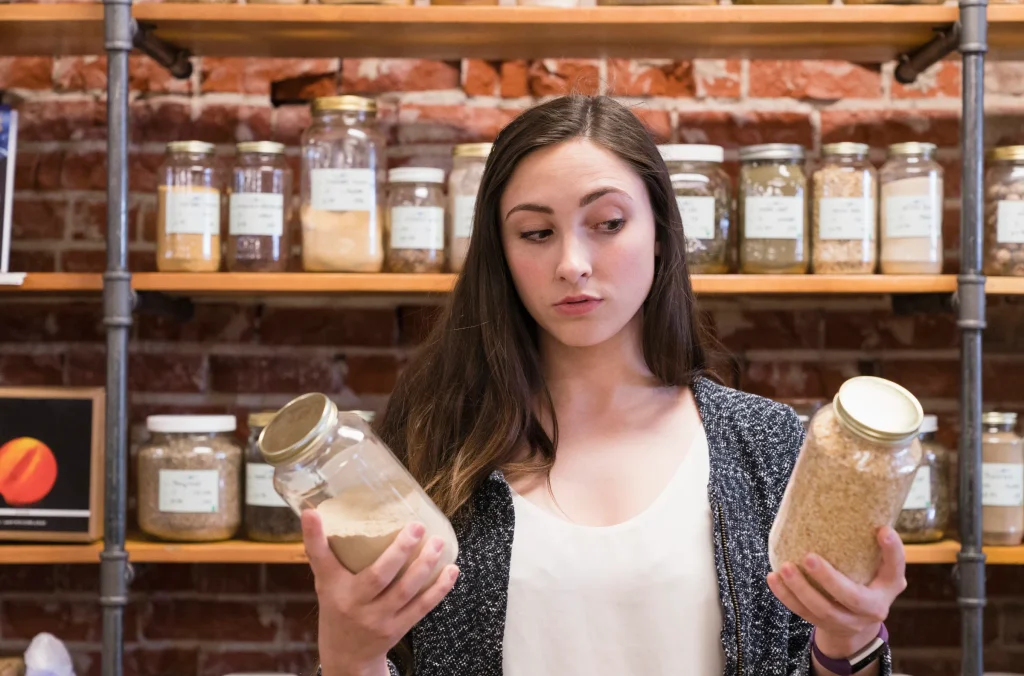
- The container collection stabilizes, usually around six to eight jars and two or three cloth bags, not the twenty you thought you’d need
- People stop buying novelty zero waste products (bamboo everything, for instance) and start buying what they’ll actually use for years
- The bulk shop becomes one stop among several, not the only place you’re allowed to shop
If you’re still figuring out which swaps are worth keeping past the honeymoon phase, plastic-free swaps every beginner should try first is a decent starting filter, though your own year-one results will probably reshuffle the list anyway.
3. The Costs Nobody Mentions at the Start
Bulk shopping is cheaper per unit for a lot of staples. That part is true. What’s less discussed is the upfront cost of containers, the time cost of a shop that’s rarely as close as the supermarket, and the fact that bulk prices on some items (nuts, oils, specialty flours) can actually run higher than the packaged version on sale. Anyone telling you zero waste shopping is automatically cheaper hasn’t tracked a full year of receipts.
Here’s a rough picture of how the costs shift over twelve months, based on patterns we’ve seen reported by readers:
| Stage | Typical Spend Pattern | What’s Driving It |
|---|---|---|
| Month 1-2 | Higher than usual | Buying containers, jars, bags |
| Month 3-4 | Uneven | Some overbuying, some forgotten trips back to packaged goods |
| Month 6 | Roughly even with before | Habits settle, fewer impulse buys |
| Month 9-12 | Slightly lower | Buying only what’s used, less food waste from bulk portioning |
That dip in food waste toward the end of the year matters more than people expect. Buying exactly the amount of rice or lentils you need, instead of a fixed bag size, quietly cuts down on the stuff that goes stale in the back of the pantry. If money is the thing holding you back from starting at all, can you go plastic-free on a tight budget walks through where the early costs actually land.
4. Where People Usually Go Wrong After Year One
The biggest mistake we see, consistently, is container drift. People start with glass jars and stainless containers, and by month ten they’ve replaced half of them with cheaper plastic tubs because a jar broke or a lid cracked and the plastic one was right there at the supermarket. It’s a small thing, and it happens quietly enough that people don’t notice they’re back where they started on a chunk of their kitchen storage.
The second mistake is assuming the zero waste shop should replace the supermarket entirely. It shouldn’t, and trying to make it do that is usually what burns people out around month five or six. A hybrid approach, bulk shop for staples and cleaning refills, supermarket for the rest, tends to be what actually survives past year one.
And a smaller one, but worth naming: people stop checking whether their “plastic-free” alternatives actually are. Bamboo cutlery bound with resin, “eco” packaging with a plastic liner you can’t see. If that’s a blind spot for you, is bamboo really plastic-free is worth a read, because the answer surprises most people.
5. What’s Actually Worth Keeping Once the Novelty Fades
After twelve months, the honest answer is that a handful of habits stick and a lot of the extras fall away. That’s not a failure story. That’s what durable change looks like when you strip out the performance of it.
The things that tend to survive: a fixed set of jars that get refilled without thinking about it, a mental map of which two or three items are worth the extra trip, and a general suspicion toward packaging that carries into every purchase, not just the ones at the bulk shop. The things that tend to fall away: the container hoarding, the pressure to make every single purchase package-free, and the idea that this has to look a certain way to count.
If your containers have taken a beating this year and you’re deciding what to replace, plastic-free storage containers that actually last years is worth checking before you default to whatever’s cheapest at checkout.
We’ll say this plainly, because it doesn’t get said enough on plasticfreeliving.online or anywhere else in this space: year one isn’t about hitting zero. It’s about figuring out which two or three habits you’ll still be doing without thinking in year three. Everything else was just the practice run.
FAQs
Do I need to keep going to the same zero waste shop every week to make it worth it? No. Most people who stick with it long term go every two to three weeks for staples and rely on the supermarket in between. Weekly trips tend to be a month-one habit that fades once you know your actual usage.
Is it normal for the container collection to shrink over time? Yes, and it usually should. Starting with too many containers is common, and by month six most people have settled on a smaller working set that actually gets used, rather than jars sitting empty on a shelf.
Why does my zero waste shopping sometimes cost more than the supermarket? Bulk pricing depends heavily on the item. Staples like rice, oats, and legumes are usually cheaper long term, but specialty items like nuts, oils, and some flours can cost more per unit than a supermarket sale price. It balances out over a full year more than it does week to week.
Should I feel bad if I’ve gone back to some packaged products? Not really. Most long-term zero waste shoppers land on a hybrid approach rather than an all-or-nothing one. The goal after year one is usually consistency on the items that matter most, not perfection across the board.
How do I know if my “eco-friendly” swaps are actually plastic-free? Check the fine print on binding agents, liners, and coatings, since a lot of bamboo, cork, and “natural” products use small amounts of plastic resin or lining that isn’t obvious from the packaging. When in doubt, look up the specific material rather than trusting the label.