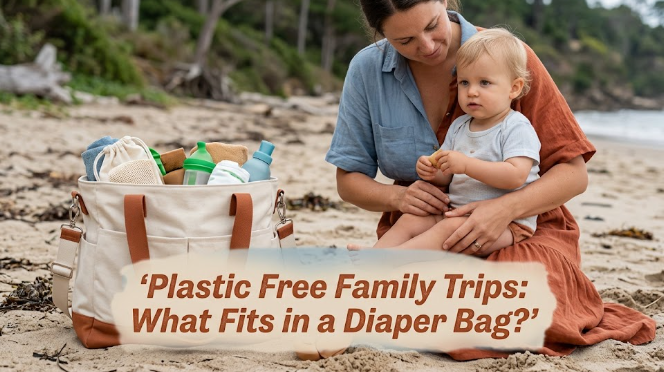
A reader messaged me three days before a flight to her in-laws’ place last winter, asking a version of a question I get more than almost any other. What actually goes in the bag when you’re trying to keep plastic out of it, and you’ve got a baby who does not care about your values, only about being fed, changed, and occasionally distracted. I get some form of this question constantly, usually right before a trip, usually with a note of low-grade panic attached. So here’s what I actually tell people. Minus the parts that don’t survive contact with a real toddler at gate B12.
1. What Actually Has To Be In There
Start with function, not philosophy. A diaper bag has one job while you’re travelling, and that’s covering feeding, changing, and mess, in that order of urgency. Everything else is negotiable.
For most families that means: enough diapers for the day plus a couple extra for delays, a change of clothes for the baby, wipes, a way to deal with a soiled diaper until you find a bin, something to feed them, and a comfort item. That’s it. That’s the actual list before anyone starts adding “eco” to the front of every word.
Where plastic tends to sneak back in is convenience packaging. Individually wrapped wipes, snack pouches, disposable bibs, the little sachets of formula or snacks that airports sell you at 6am because you forgot yours. None of that is a moral failing if you end up using it mid-journey. But if you’re packing ahead of time, you have room to choose differently, and that’s the actual leverage point.
2. The Swaps That Hold Up, And The Ones That Don’t
I get asked a lot whether cloth wipes and reusable pouches are worth the hassle for travel specifically, as opposed to at home where you’ve got a washing machine on standby. My honest answer is some yes, some no.
Reusable cloth wipes in a small wet bag hold up well for a day trip or a short flight. You use them, you seal them in the bag, you deal with laundry when you land. For a longer trip, say four or five days without laundry access, I’d bring a smaller stash of cloth and back it up with plastic-free paper wipes rather than forcing the fully reusable system the whole way. That’s not a compromise, that’s just logistics.
Silicone food pouches are genuinely one of the better swaps for travel because they’re refillable and don’t rely on you finding somewhere to recycle them. Stainless steel snack containers work the same way and double as a bowl in a pinch. If you’ve been reading through our plastic-free swaps guide for beginners, most of what applies at home translates directly to a bag you’re carrying through security, with the one caveat that liquids and gels still fall under the usual airport rules regardless of what they’re stored in.
What doesn’t hold up as well is trying to replace every single-use item with a reusable one on your first trip. That’s a fast way to end up with a diaper bag you can barely zip and a parent who’s more stressed than when they started.
3. Packing By Trip Length
People pack the same way for a two hour drive as they do for a five day trip, and then wonder why the bag feels wrong either direction. Here’s roughly how I’d scale it.
| Trip Length | Diapers | Wipes | Feeding | Extra Clothes |
|---|---|---|---|---|
| Day trip / under 4 hours | 3 to 4 | Small cloth stash or 1 travel pack | 1 to 2 reusable pouches or containers | 1 full change |
| Half day flight or drive | 5 to 6 | Cloth plus a paper backup pack | 2 to 3 meals worth, reusable containers | 2 full changes |
| Multi-day trip | Enough for arrival day only, buy or use cloth on site | Backup pack plus cloth for emergencies | Reusable set, restock food locally | 2 to 3 changes plus one extra outfit for you |
That last column surprises people. Pack a change of clothes for yourself, not just the baby. Anyone who’s travelled with an infant knows exactly why.
4. Where People Usually Get This Wrong
The most common mistake I see, and I mean genuinely see, in comments and messages, is people trying to solve this the week before travel instead of testing the system at home first. You do not want to discover mid-flight that your silicone pouch leaks under pressure changes, or that the wet bag you bought doesn’t actually seal. Test everything on a normal Tuesday, not on travel day.
The second mistake is underestimating how much grace to give yourself once you’re actually moving. I’ve written before about the mistakes most beginners make in their first month going plastic-free, and travel is where those mistakes get amplified, because you’re tired, the schedule isn’t yours, and the shop at the rest stop doesn’t stock what you’d choose at home. A single plastic-wrapped snack bought out of desperation at hour six of a delayed flight does not undo the work. It’s one item, not a verdict on the whole trip.
And the third one, smaller but real: overpacking “just in case” until the bag itself becomes the stressor. A heavier bag means a harder time moving through an airport with a baby on your hip. Sometimes the plastic-free choice that actually serves the day is the lighter one.
5. What I’d Skip Entirely
A few things I don’t bother bringing anymore, plastic-free version or otherwise. Disposable bibs, full stop, a bandana or a spare onesie does the job. Pre-made “eco travel kits” sold as a bundle, since you’ll almost always use half the contents and pay for novelty. And multiple backup systems for the same task. Pick one wipe system, one feeding system, and trust it, rather than packing three versions of the same solution because you’re anxious about running out.
If budget is part of what’s holding you back from switching over, that’s worth its own conversation, and I’ve gone into it properly in a piece on going plastic-free on a tight budget, because travel gear especially does not need to be expensive to work.
FAQs
Do I need to buy new “eco-friendly” gear before a trip, or can I just use what I have? Use what you have first. Test it at home, and only replace something if it genuinely fails you, not because it isn’t branded as sustainable.
What do I do with used cloth wipes or diapers when there’s no washing machine around? A dedicated wet bag with a waterproof lining holds soiled items for a day or two without issue. Rinse what you can before sealing, and deal with a full wash as soon as you’re somewhere with facilities.
Are silicone pouches actually plastic-free? Food-grade silicone is a different material from conventional plastic and doesn’t shed microplastics the same way, though it’s still a synthetic material, not a natural one. It’s a genuinely better long-term choice for travel because it’s reusable and durable, not because it’s “plastic-free” in a technical sense.
What’s the one item you’d never leave home without? A spare set of clothes for the adult, not just the baby. It’s the item nobody remembers and everybody eventually needs.
Is it realistic to stay fully plastic-free on a long-haul flight? Not entirely, and that’s fine. Airport security rules and in-flight service limit your control. Aim for reducing what’s in your own bag, and let go of what’s outside it.
I still think about that reader’s message sometimes, mostly because her follow-up email a week later said the trip went fine, the wipes worked, and the thing she’d worried about most (a screaming baby at security) had nothing to do with plastic at all. That’s usually how it goes. Pack for function first, let the plastic-free part follow naturally, and don’t let the bag become one more thing you have to be perfect at.
If you’re just getting started with any of this, our guide on where to start with plastic-free living is a decent place to build from before your next trip comes up.