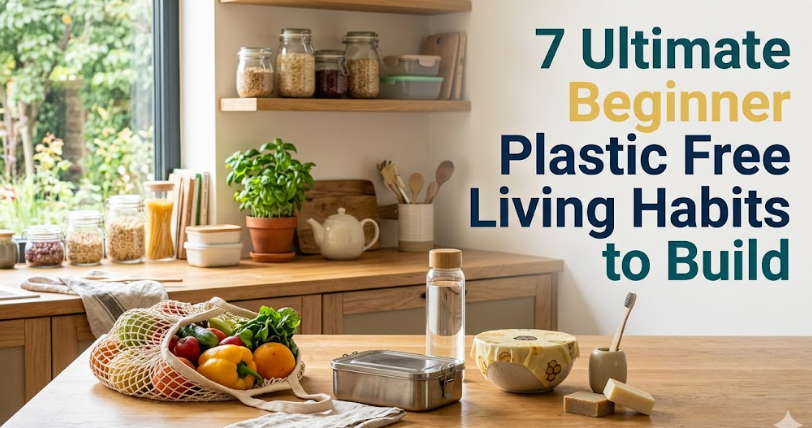
7 Ultimate Beginner Plastic Free Living Habits to Build
There’s a moment that often sparks the shift. It might come while unpacking groceries and noticing how much plastic quietly piles up. Or while tossing yet another empty bottle into a bin that never really feels like a solution. For many beginners, plastic-free living doesn’t begin with a grand plan—it starts with discomfort, curiosity, and a question: is there a better way to live with less waste?
The truth is, building a plastic-free lifestyle is not about perfection. It’s about rhythm. Habits. Small, repeatable actions that gradually reshape the way you consume, discard, and think about everyday choices. What follows isn’t a strict rulebook. It’s a collection of habits—practical, adaptable, and grounded in real life—that beginners can build without feeling overwhelmed.
habit one: carry reusables like they’re part of you
If there’s one habit that quietly transforms everything else, it’s this: always have your reusables within reach. Not occasionally. Not when you remember. But as a built-in part of your daily routine.
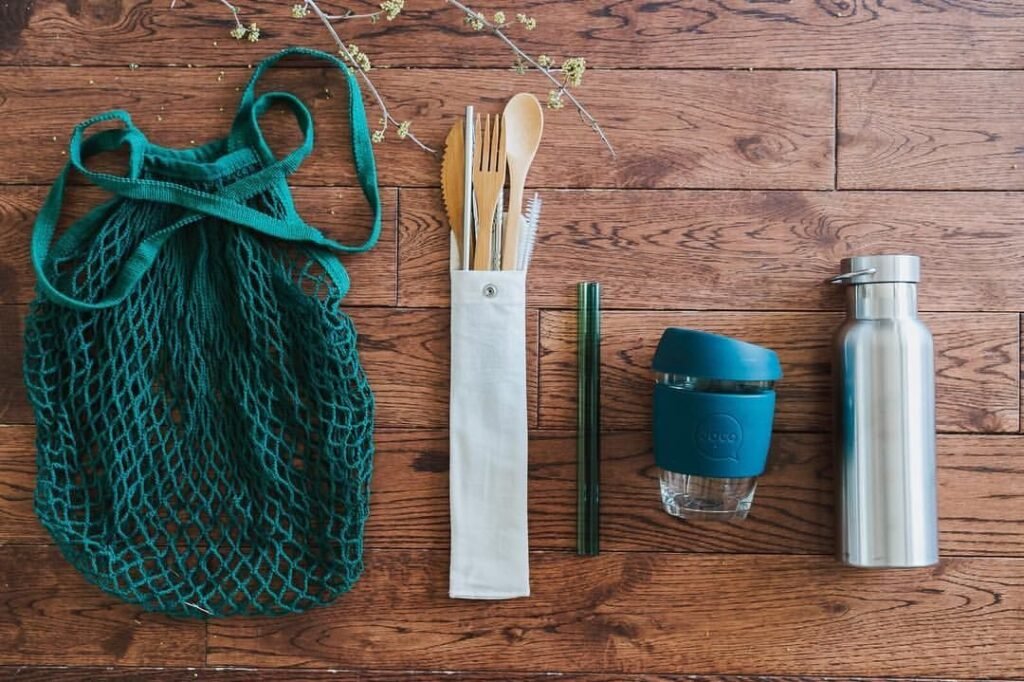
Imagine leaving your home the same way you check for your phone or wallet. Now add a cloth tote bag, a reusable water bottle, and maybe a small container or utensil set. At first, it feels like an extra burden. But after a few weeks, it becomes automatic.
A woman once described how she tied this habit to something she never forgets—her house keys. She attached a foldable cloth bag to her keychain. It looked small, almost insignificant. But that tiny change eliminated dozens of plastic bags from her life over time.
This habit works because it eliminates the excuse of convenience. Most plastic waste happens not because people don’t care, but because they’re unprepared in the moment. You walk into a shop without a bag. You feel awkward refusing plastic. You accept it.
Preparation dissolves that tension.
Try this:
Keep a “go-kit” near your door. Include a bag, bottle, and container. Make it visible. Make it easy. The less effort required, the more likely you are to follow through.
habit two: slow down your buying decisions
Plastic-free living is less about swapping items and more about questioning habits. One of the most powerful beginner habits is simply this: pause before you buy.
In a fast-paced consumer world, buying is often impulsive. You see something, you like it, you purchase it. Plastic is embedded in this system—packaging, wrapping, containers—all designed for speed.
Slowing down introduces awareness.
Before buying anything, ask:
Do I need this?
Do I already own something similar?
Is there a plastic-free alternative?
Can I borrow or reuse instead?
This pause doesn’t need to be long. Even 10 seconds can disrupt automatic behavior.
There’s a quiet psychological shift here. When you stop seeing yourself as just a consumer and start seeing yourself as a decision-maker, your relationship with products changes. You begin to value longevity over convenience, quality over quantity.
An interesting exercise is to delay non-essential purchases by 24 hours. Often, the desire fades. And when it doesn’t, you make a more intentional choice.
habit three: build a refill-first mindset
Refilling is one of the most satisfying habits in a plastic-free lifestyle. It replaces the cycle of buying and discarding with a loop of reuse.
Start by identifying products you use regularly: soap, shampoo, oil, grains, spices. Then explore whether you can refill them locally or buy them in bulk with your own containers.
The first time you refill a bottle instead of buying a new one, it feels like a small victory. Over time, these small wins accumulate.
But this habit is not just about access to refill stores. It’s about mindset. Even in places where refill options are limited, you can still practice it by choosing larger containers, reusing jars, or repurposing packaging.
A beginner once shared how they turned old glass jars into storage containers for lentils and rice. It wasn’t perfect, but it shifted their thinking. Instead of throwing things away, they started asking, “What else can this be used for?”
Refilling teaches resourcefulness.
To make it easier:
Keep a few clean containers ready for spontaneous refills.
Label them if needed.
Start small—maybe just one product—and build from there.
habit four: rethink convenience in your kitchen
The kitchen is often the heart of plastic use. From cling wrap to packaged snacks, it’s easy to accumulate waste without noticing.
A powerful beginner habit is to redefine convenience. Instead of relying on disposable items, create systems that make sustainable choices just as easy.
For example:
Replace plastic wrap with cloth covers or reusable lids.
Store leftovers in containers you already own.
Prepare simple snacks at home instead of buying individually wrapped ones.
One family reduced their kitchen waste dramatically by doing one simple thing: they started prepping fruits and snacks in advance and storing them in visible containers. When hunger struck, the easy option was already plastic-free.
This habit isn’t about making life harder. It’s about shifting effort from the moment of need to a moment of preparation.
There’s also something grounding about working with real materials—glass, metal, cloth. They feel different. More permanent. Less disposable.
habit five: make waste visible
Plastic often disappears from our awareness the moment we throw it away. One habit that can change everything is making your waste visible.
Instead of immediately discarding plastic, try collecting it in a separate container for a week. Don’t judge it. Just observe.
At the end of the week, take a look.
This simple act can be eye-opening. You start to see patterns. Maybe it’s snack wrappers. Maybe it’s takeaway containers. Whatever it is, you now have data.
And with awareness comes change.
A beginner once described how this habit shifted their priorities. They realized most of their plastic came from bottled drinks. That insight led them to invest in a good reusable bottle—and their waste dropped significantly.
This habit works because it removes abstraction. Waste becomes tangible. Personal.
If you’re comfortable, you can even track it:
How many plastic items did you use this week?
Which ones were avoidable?
No need for perfection. Just curiosity.
habit six: learn to say “no” without hesitation
Refusing plastic can feel awkward at first. Whether it’s a plastic bag at a shop or a straw at a café, there’s a social element involved.
But like any habit, it becomes easier with practice.
Start with simple, polite phrases:
“No bag, thank you.”
“I have my own.”
“I don’t need a straw.”
You don’t need to explain or justify. A calm refusal is enough.
What’s interesting is how quickly this habit becomes part of your identity. The first few times, you might feel self-conscious. But eventually, it feels natural—even empowering.
There’s also a ripple effect. When others see you refusing plastic, it normalizes the behavior. It opens conversations.
One person shared how their consistent refusal of plastic bags influenced their local shopkeeper. Over time, the shopkeeper began asking all customers if they needed a bag instead of automatically giving one.
Change doesn’t always start big. Sometimes it starts with a quiet “no.”
habit seven: embrace imperfection and keep going
Perhaps the most important habit of all is this: let go of the idea that you have to do everything perfectly.
Plastic-free living is not a destination. It’s an ongoing process. There will be moments when you forget your reusable bag. Times when plastic is unavoidable. Situations where convenience wins.
That’s okay.
What matters is consistency, not perfection.
Many beginners quit because they feel they’re not doing enough. But every small change counts. Every habit you build reduces your impact in a meaningful way.
Think of it like learning a new language. You don’t become fluent overnight. You practice, you make mistakes, you improve.
The same applies here.
Celebrate progress:
The first time you refuse a plastic bag.
The first week you reduce your waste.
The first habit that becomes second nature.
These moments matter.
Over time, what once felt like effort becomes instinct.
a closing reflection
Building a plastic-free lifestyle isn’t about transforming your life overnight. It’s about reshaping your daily patterns in ways that feel sustainable—both for you and for the environment.
These seven habits are not rigid rules. They are starting points. You can adapt them, expand them, or approach them in your own way.
The goal is not to eliminate plastic entirely. The goal is to become more aware, more intentional, and more aligned with your values.
And perhaps, in the process, you’ll discover something unexpected: that living with less plastic often means living with more clarity, more simplicity, and more connection to the things that truly matter.
frequently asked questions
- is it expensive to start living plastic-free?
It doesn’t have to be. In fact, many plastic-free habits save money over time. Reusing items, buying less, and avoiding disposable products can reduce expenses. The key is to use what you already have before buying alternatives.
- what if i don’t have access to bulk or refill stores?
You can still practice plastic-free habits by choosing products with less packaging, buying larger sizes, and reusing containers at home. The mindset matters more than the location.
- how do i stay consistent with these habits?
Start small and build gradually. Focus on one habit at a time until it becomes routine. Linking new habits to existing routines—like keeping a reusable bag near your keys—can also help.
- can one person really make a difference?
Yes. Individual actions add up, and they also influence others. Your habits can inspire friends, family, and even local businesses to make changes.
- what should i do with the plastic i already have?
Use it for as long as possible. Repurpose containers, reuse bags, and avoid throwing things away prematurely. The goal is to reduce waste, not create more.
- how long does it take to build these habits?
It varies for everyone, but many habits start to feel natural within a few weeks of consistent practice. The more you repeat them, the easier they become.
In the end, plastic-free living is less about restriction and more about intention. And habits—simple, steady, human habits—are what make that intention real.