6 Easy Zero Waste Plastic Free Living Wins for Everyday Life
There is a quiet moment that usually starts it all.
For some people it’s opening a kitchen drawer and realizing it’s overflowing with plastic bags. For others it’s seeing the bin fill up after just two days. For me, it was a simple grocery receipt. One apple, wrapped in plastic. One cucumber, wrapped in plastic. One pack of cookies inside a plastic tray inside a plastic wrapper inside another plastic bag.
It suddenly felt like every item came with a lifetime companion I never asked for.
Zero waste living often gets misunderstood as a strict lifestyle meant only for perfectionists. Mason jars lined up in minimalist kitchens. Bulk stores on every corner. Time, money, and energy to spare.
Real life is messier than that.
The good news? You don’t need perfection to make meaningful change. You don’t need a complete lifestyle overhaul. And you definitely don’t need to throw everything away and start from scratch (that would create more waste anyway).
Instead, real change happens through small, easy wins. Habits that fit into everyday life and quietly reshape it.
This guide walks through six of the easiest plastic-free wins you can start today — no pressure, no guilt, just progress.
why small wins matter more than big dramatic changes
When people first discover zero waste living, they often try to do everything at once. They buy a full starter kit, attempt DIY toothpaste, stop buying packaged food, and try to compost on the same weekend.
Within a month, most of it collapses.
Not because the intention was wrong, but because the approach was unsustainable.
Behavior research shows that habits stick when they are:
• easy to start
• visible in daily life
• rewarding quickly
• repeatable without effort
Small wins create momentum. Momentum creates identity. Identity creates lasting lifestyle change.
Think of zero waste as a direction, not a destination.
win #1 – the reusable bag habit that eliminates hundreds of plastics yearly
This is the gateway habit of plastic-free living.
And it works because it attaches to an existing routine: leaving the house.
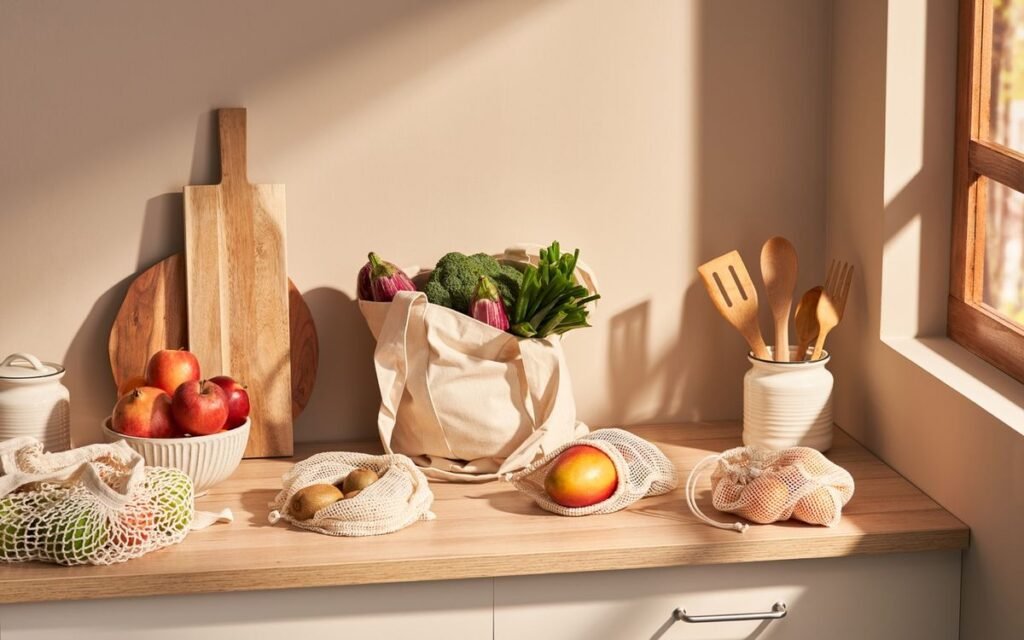
The biggest mistake people make is keeping reusable bags in a cupboard. If bags live in cupboards, they get forgotten.
Instead, bags must live where action happens.
Habit stacking strategy:
• Put foldable bags inside your everyday backpack or handbag
• Keep 2–3 bags in your car or near the front door
• Clip a tiny foldable bag to your keys
The goal is frictionless access.
average plastic bag usage vs reusable habit
| Scenario | Bags per week | Bags per year |
|---|---|---|
| Typical shopper | 5–8 | 260–416 |
| Occasional reuse | 2–3 | 104–156 |
| Consistent reusable habit | 0–1 | 0–52 |
Even imperfect reuse cuts hundreds of plastic bags yearly.
unexpected bonus: better shopping decisions
People who carry reusable bags tend to shop more intentionally. The bag becomes a mental cue: buy what you need, not what’s convenient.
mini checklist for success
• Own at least 4 reusable bags
• Store them in 3 different locations
• Always return bags after unloading groceries
• Keep one tiny emergency bag on keys
This single habit often sparks the entire journey.
win #2 – switching to a reusable water bottle and ending daily plastic bottles
Disposable water bottles are one of the most visible forms of plastic waste. They are used for minutes and exist for centuries.
Let’s look at a realistic scenario.
If someone buys just one bottle of water per day:
365 bottles per year
3,650 bottles in 10 years
That’s one habit. One product. One daily choice.
The reusable bottle habit succeeds because it saves money immediately.
cost comparison over one year
| Item | Cost per unit | Annual cost |
|---|---|---|
| Disposable bottles | $1 average | $365 |
| Reusable bottle | $15–25 once | $15–25 |
It pays for itself in weeks.
how to make the habit stick
• Keep bottle beside your phone when leaving home
• Refill before leaving work or school
• Place bottle on bedside table overnight
• Choose a bottle you actually like using
Design matters. If it’s heavy, leaks, or hard to clean, the habit dies.
tiny psychological trick
People drink more water when they carry a bottle. The habit improves health and reduces waste simultaneously.
win #3 – the 5 minute kitchen swap that removes the most hidden plastic
Kitchens hide the biggest plastic offenders:
cling wrap
zip bags
paper towels wrapped in plastic
plastic sponges
Replacing everything at once feels overwhelming. Instead, replace items only when they run out.
simple replacement roadmap
| When this runs out | Replace with |
|---|---|
| Cling wrap | Beeswax wraps or containers |
| Zip bags | Reusable silicone bags |
| Paper towels | Washable cloths |
| Plastic sponge | Wooden brush or loofah |
This slow replacement approach avoids waste and spreads cost over months.
realistic timeline example
Month 1 → finish cling wrap → buy beeswax wraps
Month 2 → finish paper towels → buy cloths
Month 3 → finish zip bags → buy silicone bags
Within a season, the kitchen becomes dramatically lower waste.
unexpected bonus: kitchens become calmer
Less clutter. Fewer refills. Fewer emergency grocery runs.
win #4 – the 10 second coffee and tea upgrade
Takeaway drinks produce massive plastic waste:
plastic lids
straws
stirrers
lined cups
One reusable mug can eliminate hundreds of disposable cups yearly.
If you buy coffee 3 times per week:
156 cups per year.
cafes increasingly welcome reusable cups
Many even offer small discounts.
habit trick: create a “leave the house kit”
• reusable mug
• water bottle
• foldable bag
Keep them together near the door.
When leaving becomes automatic, waste reduction becomes automatic.
social ripple effect
This habit is visible. Friends and coworkers notice. Conversations start naturally.
win #5 – the bathroom routine reset that cuts daily plastic
Bathrooms contain some of the most frequent single-use plastics.
Common items:
toothbrushes
toothpaste tubes
shampoo bottles
razors
cotton pads
But this swap should be slow and gentle. Bathroom routines are personal.
easy starter swaps
| Current item | Low waste alternative |
|---|---|
| Plastic toothbrush | Bamboo toothbrush |
| Liquid soap | Bar soap |
| Shower gel | Soap bar |
| Disposable razor | Safety razor |
| Cotton pads | Washable rounds |
Why this category works well:
Bathroom products run out regularly. Every empty bottle becomes a chance to switch.
bonus benefit: reduced visual clutter
Bars and refillables often reduce packaging bulk.
win #6 – the grocery mindset shift that changes everything
Groceries create the majority of household waste. But the solution isn’t perfection.
It’s awareness and small choices.
The “one swap per trip” rule
Each grocery visit, choose one plastic-free alternative.
Examples:
• loose produce instead of wrapped
• glass jar instead of plastic container
• cardboard packaging instead of plastic
• bulk rice instead of small plastic packs
Over a year, this compounds dramatically.
visualizing compounding change
| Trips per week | Swaps per year |
|---|---|
| 1 trip/week | 52 swaps |
| 2 trips/week | 104 swaps |
That’s over 100 plastic reductions without stress.
progress beats perfection
Zero waste living isn’t about fitting all trash into a jar. It’s about reducing harm where you realistically can.
Even imperfect progress creates meaningful environmental impact.
realistic weekly zero waste routine example
Monday
Refill water bottle and carry reusable mug.
Tuesday
Use cloths instead of paper towels.
Wednesday
Grocery trip: choose one plastic-free swap.
Thursday
Carry reusable bag for spontaneous shopping.
Friday
Refill soap or cleaning products if needed.
Weekend
Wash reusable items and reset.
Simple. Repeatable. Sustainable.
common mistakes that make people quit
trying to do everything overnight
throwing away usable items to replace them
buying expensive zero waste kits immediately
feeling guilty about imperfection
Zero waste should reduce stress, not create it.
mindset shift: from consumer to steward
This journey isn’t about restriction. It’s about awareness.
You start noticing packaging. Materials. Waste. Systems.
And slowly, your choices align with your values.
how these six wins compound over one year
Estimated reductions per person per year:
| Habit | Plastic items avoided |
|---|---|
| Reusable bags | 300 |
| Reusable bottle | 365 |
| Reusable mug | 150 |
| Kitchen swaps | 200+ |
| Bathroom swaps | 150+ |
| Grocery mindset | 100+ |
Potential yearly reduction: over 1,200 plastic items.
From six simple habits.
what zero waste really feels like after a year
Less clutter.
More intention.
Lower spending.
Better habits.
Greater awareness.
And most importantly: confidence that small actions matter.
final thoughts
The idea that individuals can’t make a difference is one of the biggest myths of modern life. Systems are made of people. Markets respond to demand. Culture shifts through everyday behavior.
Your habits quietly influence family, friends, coworkers, and businesses.
Change spreads.
And it starts with small wins.
frequently asked questions
Is zero waste expensive to start?
Not necessarily. Most swaps happen when items run out. Reusables often save money long term.
Do I need to be perfect to make a difference?
Not at all. Consistent small changes matter far more than perfection.
What if I forget reusable items often?
That’s normal. Habit stacking and keeping backups in multiple locations helps build consistency.
Is recycling enough?
Recycling helps, but reducing and reusing have far greater impact because they prevent waste from being created.
How long does it take to build these habits?
Most people feel comfortable within 2–3 months of gradual changes.
What’s the best first step?
Start with reusable bags and a water bottle. They’re the easiest and most impactful entry points.