
6 secret zero waste plastic free living habits that changed my life
There was a time when I believed zero waste living belonged to people with perfect kitchens, endless time, and the kind of patience usually reserved for monks. My own life was messy, fast, and deeply dependent on convenience. Plastic wasn’t something I thought about; it was simply everywhere. It wrapped my groceries, protected my deliveries, lined my trash bags, sealed my snacks, and quietly filled my home without asking permission.
The shift didn’t happen overnight. It happened through tiny, almost invisible habits that slowly rewired how I saw the world. Not dramatic, Instagram-perfect changes — but quiet, practical ones that felt surprisingly doable. These habits didn’t just reduce plastic; they changed how I spend money, how I shop, how I cook, and even how I think about comfort and convenience.
This article isn’t a rulebook. It’s a collection of the six habits that made the biggest difference in my real, imperfect life. Along the way, you’ll find small exercises, checklists, reflections, and systems you can try immediately.
Let’s begin.
habit one: the “pause before purchase” ritual
This habit sounds simple, but it quietly reshaped everything.
Before buying anything — groceries, clothes, household items — I pause. Not for long. Sometimes just ten seconds.
The rule is simple:
Before I buy, I ask three questions.
- Do I already own something that can do this job?
- Can I borrow or improvise instead?
- Is there a plastic-free version available?
That’s it.
This habit works because most plastic enters our homes invisibly, through automatic buying. We don’t notice it because purchasing is often emotional or habitual, not rational.
mini exercise: the 10-second pause practice
Try this for one week. Every time you’re about to buy something, stop and mentally ask the three questions above. Keep a small note in your phone listing what you didn’t buy because of the pause. By the end of the week, review the list. It becomes shockingly motivating.
unexpected life change
The pause didn’t just reduce plastic. It reduced clutter, spending, and decision fatigue. Shopping became intentional instead of reactive.
small checklist for daily life
• wait 24 hours before non-essential purchases
• unsubscribe from impulse marketing emails
• avoid browsing online stores for entertainment
• keep a running “want list” instead of buying immediately
The biggest secret? Zero waste begins before the checkout line.
habit two: the “default reusables” system
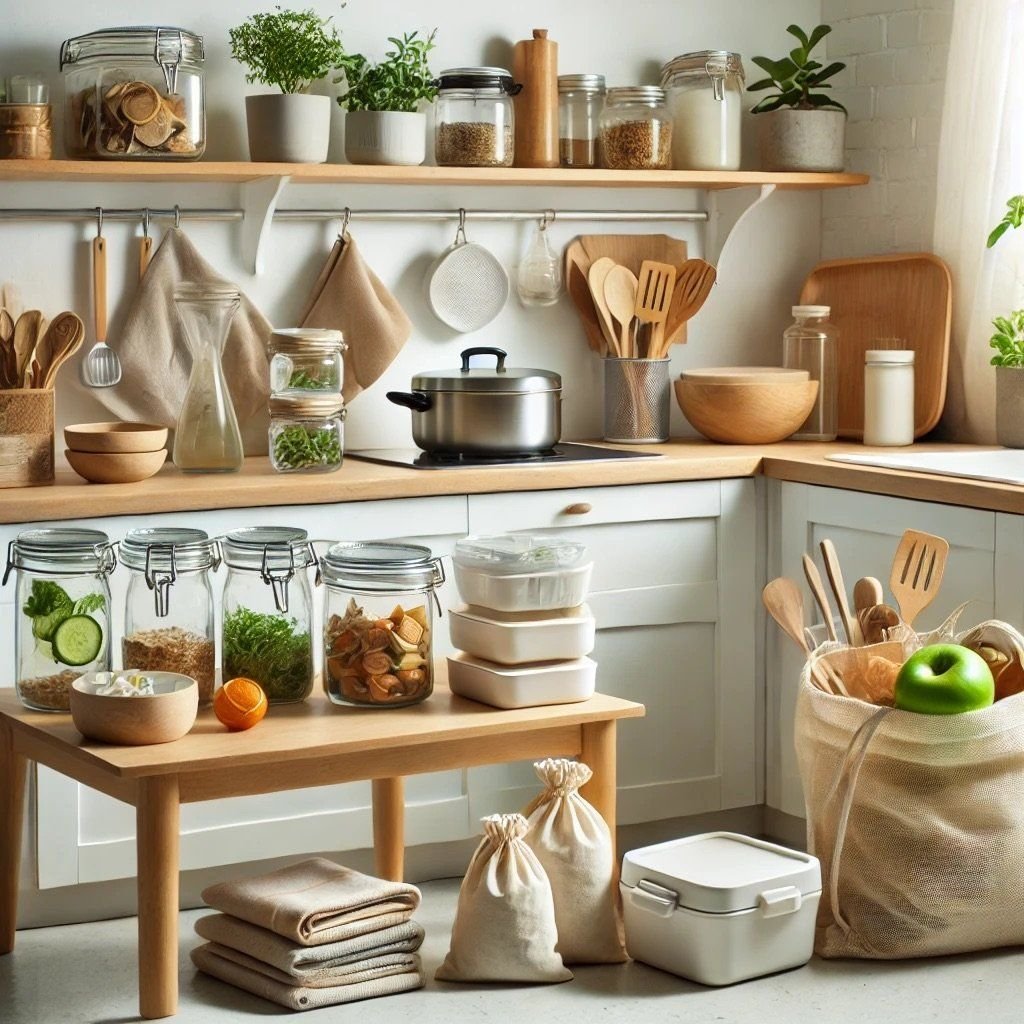
At first, I tried to remember reusable items individually: bags, bottles, containers, utensils. I failed constantly. Forgetting became frustrating.
The solution wasn’t willpower. It was systems.
Instead of remembering items, I made reusables the default.
My bag became a tiny mobile sustainability kit:
• cloth shopping bag
• stainless steel water bottle
• reusable coffee cup
• small food container
• cloth napkin
• metal cutlery
The trick was duplication. I didn’t own one reusable bag — I owned several. One lived in my backpack, one near the door, one in the car.
When something becomes the default, you stop remembering it. It becomes background behavior.
mini exercise: build your “everyday carry kit”
Grab a small pouch and fill it with:
• foldable bag
• reusable bottle
• cloth napkin
• small container
Carry it for two weeks. Notice how many single-use items quietly disappear from your life.
unexpected life change
Eating out became easier, not harder. I stopped worrying about spills, plastic cutlery, or takeaway packaging. I always had what I needed.
This habit teaches a powerful lesson: convenience is something you design.
habit three: the kitchen reset ritual
Most household plastic lives in the kitchen. Packaging, cling film, food waste bags, disposable wipes — the list is endless.
Instead of trying to change everything at once, I created a weekly “kitchen reset.”
Every Sunday evening, I spend 30 minutes preparing my kitchen for the week ahead.
The ritual includes:
• washing reusable produce bags
• refilling glass jars with staples
• prepping snacks in reusable containers
• freezing leftovers before they spoil
• checking fridge before grocery shopping
This single ritual reduced food waste, packaging waste, and midweek takeaway cravings.
weekly reset checklist
pantry check
□ what foods need using soon?
□ what can be frozen?
□ what staples need refilling?
fridge rescue session
□ chop wilting vegetables
□ make soup or stir fry
□ freeze leftovers in portions
snack prep
□ portion nuts and fruit
□ bake simple snacks
□ fill reusable snack containers
unexpected life change
Cooking became less stressful. Food waste dropped dramatically. Grocery shopping became faster and cheaper.
Zero waste isn’t about perfection — it’s about preparation.
habit four: the one-swap-per-month rule
One of the biggest mistakes in zero waste living is trying to change everything immediately. That approach usually ends in burnout.
Instead, I adopted the one-swap-per-month rule.
Each month, I replaced just one disposable product with a reusable or plastic-free alternative.
Month examples:
January — bamboo toothbrush
February — bar soap instead of body wash
March — safety razor
April — refillable cleaning products
May — cloth napkins
June — shampoo bar
After a year, twelve major sources of waste were gone. And it never felt overwhelming.
mini planning table
| month | swap idea |
|---|---|
| Jan | reusable water bottle |
| Feb | beeswax wraps |
| Mar | refillable cleaner |
| Apr | cloth dish towels |
| May | shampoo bar |
| Jun | safety razor |
| Jul | reusable pads or cup |
| Aug | refillable deodorant |
| Sep | loose tea instead of bags |
| Oct | bulk pantry shopping |
| Nov | compost bin |
| Dec | plastic-free gifts |
unexpected life change
This habit made sustainability feel calm and achievable instead of urgent and stressful.
Slow change sticks.
habit five: the “finish what you have” mindset
This habit saved the most money.
Instead of throwing away half-used products when switching to eco alternatives, I committed to finishing everything first.
This meant:
• using old plastic containers until they broke
• finishing bottled shampoo before switching
• repurposing jars and packaging
Zero waste isn’t about throwing things away in the name of sustainability. That creates more waste.
mini reflection prompt
Walk through your home and write down five items you already own that could replace future purchases.
Examples:
• old jars → food storage
• worn t-shirts → cleaning cloths
• takeaway containers → freezer storage
• shoe boxes → organizers
• glass bottles → plant watering
unexpected life change
I stopped feeling guilty about past purchases. Sustainability became forward-focused, not shame-focused.
Progress beats perfection.
habit six: the community mindset shift
This habit changed everything emotionally.
Zero waste became easier when it stopped being a solo mission.
I began:
• sharing bulk purchases with friends
• borrowing tools instead of buying
• gifting experiences instead of objects
• swapping clothes and books
• learning repair skills from others
Waste often comes from isolation. Community reduces duplication.
mini community challenge
Try one of these this month:
• organize a clothing swap
• share a bulk grocery order
• learn one repair skill from someone
• lend something instead of buying
unexpected life change
Sustainability became social, joyful, and collaborative instead of restrictive.
This habit brought connection, not sacrifice.

how these habits reshaped everyday life
After a year of practicing these six habits, the changes were measurable and surprising.
financial impact
• grocery spending dropped
• impulse purchases decreased
• fewer replacements needed
• less food waste saved money weekly
home impact
• less clutter
• easier cleaning
• more organized kitchen
• fewer overflowing trash bags
mental impact
• reduced decision fatigue
• increased sense of control
• deeper appreciation for everyday items
• less guilt around consumption
The most unexpected result? Life felt simpler.
a gentle weekly zero waste routine
monday — inventory day
Check what you already own before planning purchases.
wednesday — midweek kitchen check
Use leftovers and prep snacks.
friday — reusable reset
Wash bags, containers, and bottles.
sunday — kitchen reset ritual
Prepare for the week ahead.
Small rhythms create lasting change.
why these habits actually work
They are:
• small
• repeatable
• forgiving
• system-based
• flexible
They don’t require perfection. They require consistency.
And consistency quietly transforms everything.
common myths that disappeared along the way
myth: zero waste is expensive
Truth: buying less saves money.
myth: it takes too much time
Truth: preparation saves time later.
myth: it requires perfection
Truth: small habits create big change.
myth: it’s inconvenient
Truth: good systems create convenience.
your first week starter plan
day 1 — create your pause-before-purchase rule
day 2 — build your reusable carry kit
day 3 — prepare your kitchen reset checklist
day 4 — choose your first monthly swap
day 5 — identify items to finish before replacing
day 6 — plan one community sharing action
day 7 — reflect and adjust
You don’t need to do everything. Just start.
the quiet transformation
Zero waste living didn’t make my life smaller.
It made my life more intentional.
Less rushing.
Less clutter.
Less guilt.
More creativity.
More connection.
More calm.
And it all began with small, almost invisible habits.
frequently asked questions
- do i have to aim for zero waste perfection?
Not at all. The goal is reducing waste, not eliminating it entirely. Progress matters far more than perfection. - is zero waste living expensive to start?
It can be very affordable because you begin by using what you already own. Most savings appear within the first few months. - what if i forget my reusable items often?
That’s normal. Build systems instead of relying on memory. Keep duplicates in key locations like your bag, car, and kitchen. - how long does it take to see results?
Most people notice financial and clutter reductions within the first 1–3 months. - what is the easiest habit to start with?
The pause-before-purchase ritual. It immediately reduces incoming plastic and unnecessary spending. - can one person really make a difference?
Yes. Individual habits influence families, friends, and communities. Small changes spread faster than we expect.
If there’s one thing to remember, it’s this:
Zero waste living isn’t about doing everything.
It’s about doing something — consistently.