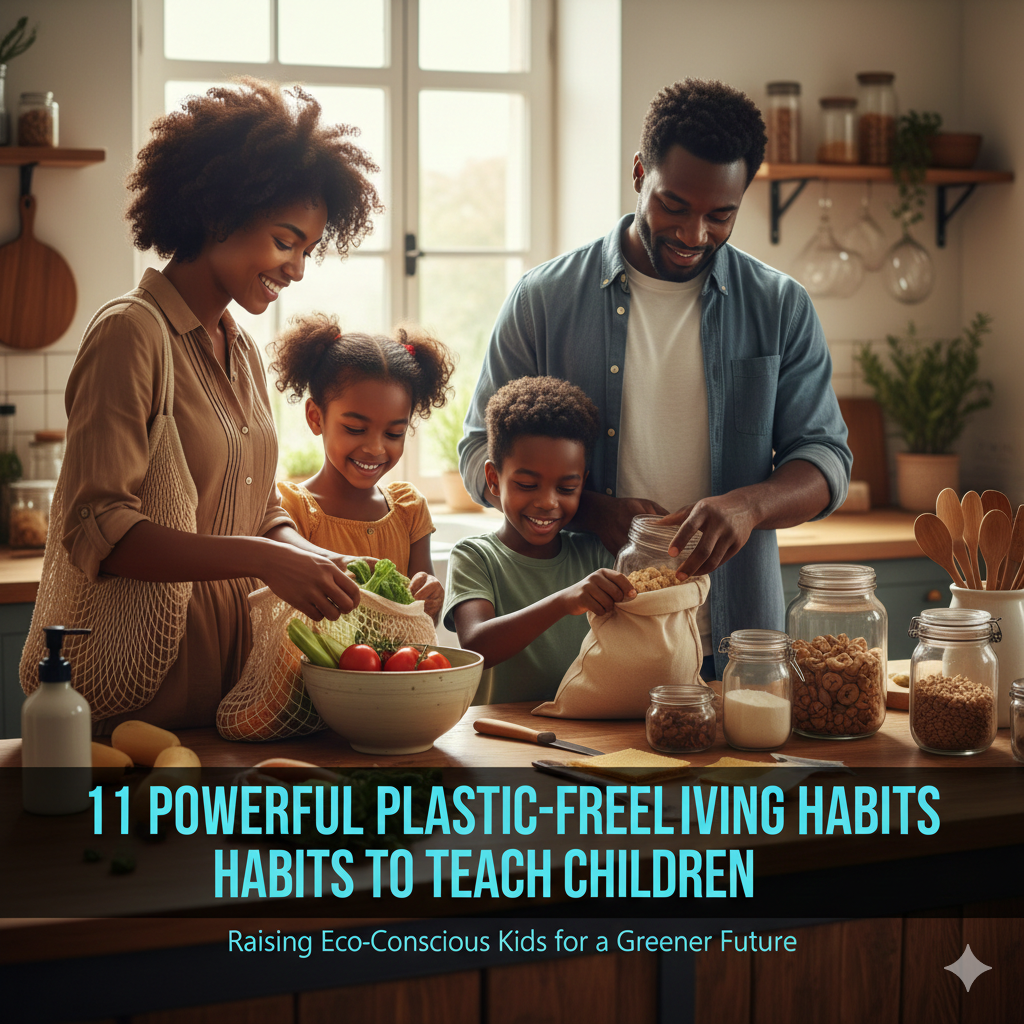
11 Powerful Habits to Teach Your Kids for a Plastic-Free Life
More than 400 million tons of plastic are produced around the world each year. And incredibly, much of it winds up in oceans, landfills and the bellies of animals. The children of today are bound to inherit this world — and the mess that comes with it.
But here’s the good news: Kids are amazing learners. Instill plastic-free living habits at an early age and they don’t merely follow rules. They build values. They grow into people who pause before making a purchase, remember to tote their own water bottle, and decline a plastic straw without having to be asked.
This guide will take you through 11 life-changing habits to teach kids — habits that are easy to begin, hard to give up, and actually fun when practiced as a family.
Why Starting Early Actually Matters
Little kids build habits from the ages of 3 to 9. This window is golden. What they observe, do, and repeat during those years molds the types of people they’ll be for decades.
Habits learned in childhood of not using plastic don’t die. They grow. A 7-year-old who is taught to bring a reusable bag to the grocery store turns into a 25-year-old who never forgets.
In addition to forming habits, teaching children about plastic pollution fosters empathy. They begin to connect their actions with the world around them — like the turtle in the video, the beach full of wrappers and cans, the storm drain that leads to the ocean.
That connection is everything.
Habit 1 — Swap the Plastic Water Bottle for a Reusable One
This is the simplest place to begin — and one of the most meaningful.
The average American uses 156 plastic water bottles a year. Multiply that by a family of four, and you’re over 600 bottles down the drain every year.
Get your child their very own reusable water bottle. Let them choose the color or design. Kids use what they love.
Make It Stick
Have them pack the bottle into their backpack every single day. After a few weeks it becomes second nature. If they leave it behind, don’t substitute a plastic one. A little thirst builds a strong habit.
You can also track how many plastic bottles you’ve avoided as a family. Keeping a tally on the fridge is remarkably effective.
Habit 2 — Say No to Single-Use Plastic Bags
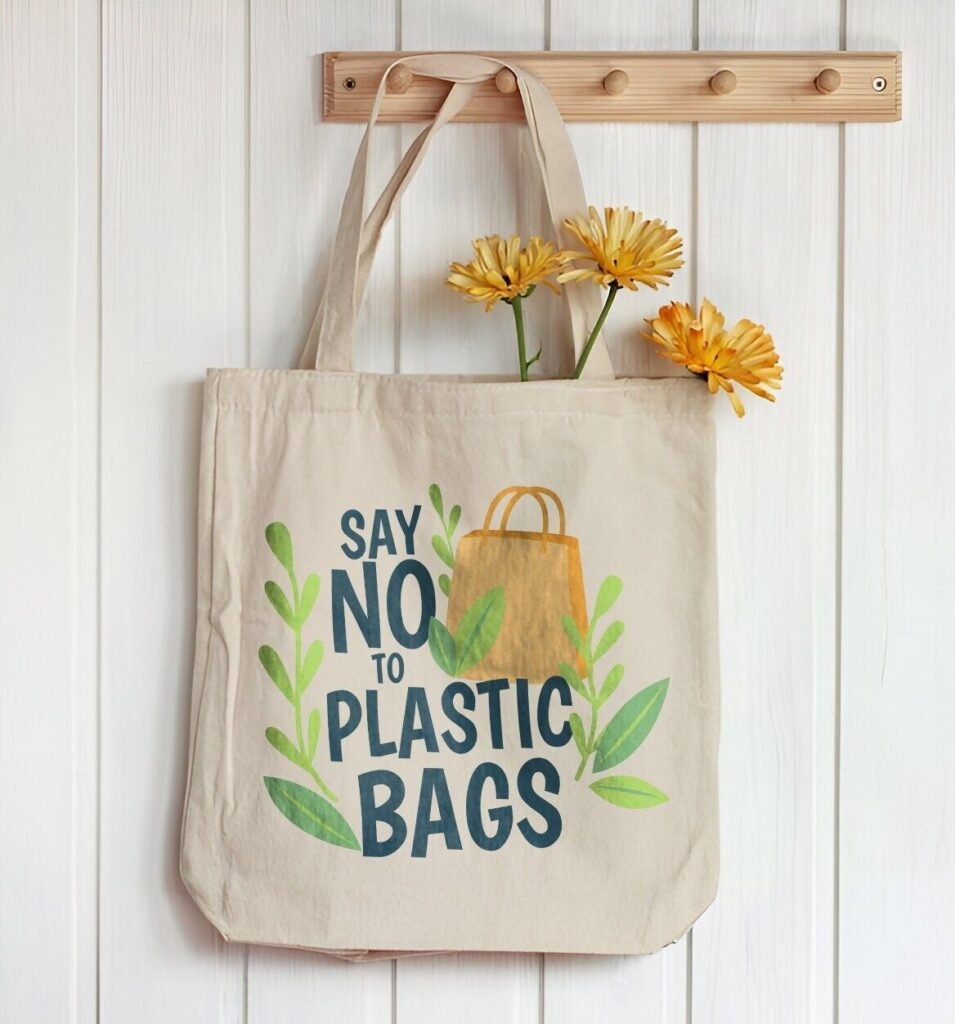
We use plastic bags for 12 minutes on average, yet they can take up to 1,000 years to decompose. That math is brutal.
Teaching kids to say goodbye to plastic bags begins with having reusable ones within reach. Hang them by the door. Keep a few in the car. Make it just as automatic as grabbing your keys.
Turn It Into a Game
When going to the store, make your child the “bag checker.” Their job is to ensure you have enough reusable bags before you leave.
Kids love having a role. Give them one and they’ll rise to the occasion.
Habit 3 — Pack a Plastic-Free Lunch
School lunches are a plastic nightmare — zip-lock bags, plastic wrap, individually wrapped snacks, and plastic utensils. It adds up fast.
Switching to a plastic-free lunchbox can remove hundreds of single-use items per child, per year.
What to Use Instead
| Plastic Product | Plastic-Free Substitute |
|---|---|
| Zip-lock bags | Beeswax wraps or reusable silicone bags |
| Plastic wrap | Cloth snack bags |
| Plastic fork & spoon | Bamboo or stainless steel cutlery |
| Juice boxes | Reusable drink pouch or small thermos |
| Packaged chips | Homemade snacks in a reusable container |
Enlist your child to help pack their own lunch. When they’re involved, they’re invested — and they’ll actually eat it.
Habit 4 — Shop at Bulk Stores and Farmers Markets
At the grocery store, plastic packaging is everywhere. At bulk stores, you can bring your own containers and have them filled — no plastic packaging necessary.
Farmers markets are even better. Produce available without any packaging at all, as nature intended. Exploring resources like Plastic Free Living can also help families find great tips on shopping and living with less plastic every day.
What Kids Learn Here
Taking children to these places teaches them that food doesn’t have to come in plastic. It helps them understand where food really comes from and appreciate fresh, unpackaged goods.
Make it a Saturday tradition. Have your child select one fruit or vegetable at the market each week. They’ll look forward to it.
Habit 5 — Say No to Plastic Toys and Gifts
The majority of toys are plastic. Most break within weeks and head straight to a landfill.
When shopping for children, or teaching them what to request, aim for wood, fabric, and metal — or secondhand.
Better Choices at a Glance
- Wooden building blocks and puzzles
- Cloth dolls and stuffed toys made from natural fibers
- Secondhand toys from thrift stores
- Experience gifts — museum passes, lessons, excursions
Talk with your child about why you’re making these choices. Don’t just hand them a wooden toy without explaining it. Kids understand more than we give them credit for.
Habit 6 — Make Your Own Products at Home
Shampoo bottles, soap dispensers, toothpaste tubes — plastic is in practically every corner of the bathroom. The good news? A surprising number of these can be made at home.
DIY is also a great science lesson and a fun family project.
Simple DIY Swaps Kids Can Help With
Toothpaste tabs: Baking soda, a touch of coconut oil, and one drop of peppermint oil. Press into small rounds and let dry.
Solid shampoo bars: These can be purchased without plastic packaging at many stores, or you can make your own using a simple melt-and-pour kit.
All-purpose cleaner: Water, white vinegar, and a few drops of essential oil in a glass spray bottle. Done.
Let your child measure, mix, and pour. It’s like a chemistry experiment — because it sort of is.
Habit 7 — Start a Family Compost Bin
Food scraps in a plastic garbage bag produce methane. But scraps placed into a compost bin turn into rich soil for growing food.
Composting eliminates the need for plastic garbage bags and shows children the full cycle of food.
Getting Started
You don’t need a large yard. A small bin on a balcony or in the corner of a kitchen will do. There are also odor-free options made specifically for small spaces.
Let your child learn what goes in — fruit peels, vegetable scraps, coffee grounds, eggshells — and what doesn’t: meat, dairy, and oily food.
A few months later, use the compost to plant a small garden. Seeing something grow from scraps is one of the most powerful eco-lessons a child can receive.
Habit 8 — Get Involved in Local Clean-Up Projects
Knowledge without action stays knowledge. Action without understanding stays shallow. Combine both — that’s when the real impact happens.
Participating in beach, park, or community clean-up events shows kids the consequences of plastic pollution firsthand. They see it with their own eyes. They pick it up with their own hands.
What This Does to a Child’s Mindset
Studies have shown that children who participate in environmental action events are far more likely to carry eco-friendly habits forward. The experience creates an emotional memory.
Check community boards, social media, or the websites of organizations like Surfrider Foundation or The Ocean Conservancy to find local clean-up groups. Most organize kid-friendly events.
Habit 9 — Read Books and Watch Documentaries Together
Stories change minds. Habits aren’t formed before values are changed. One of the best ways to instill environmental values in children — without preaching at them — is through books and documentaries.
Books to Read With Kids
- The Lorax by Dr. Seuss — timeless and great for small children
- One Plastic Bag by Miranda Paul — inspired by a true story about a woman who crocheted purses from plastic bags
- Hey, Little Ant by Phillip and Hannah Hoose — a story that promotes empathy toward all living things
Documentaries for Older Kids
- A Plastic Ocean (Netflix) — age 10 and up
- David Attenborough: A Life on Our Planet — inspirational and accessible
- The Story of Plastic — great for tweens and teens
After watching, talk about it. What surprised your child? What made them sad? What do they want to do?
Habit 10 — Teach the Art of Refusing and Requesting
One of the most overlooked plastic-free habits is simply saying no — and asking for what you do want.
“No straw, please.” “Can I have that without a plastic bag?” “Do you have a paper option?”
These phrases seem small. But over a lifetime, they add up to thousands of pieces of plastic avoided.
Practicing This With Your Kids
Role-play at home. Pretend you’re at a restaurant. Let your child order a drink without requesting a straw. Have them practice it at the counter when you’re out together.
Praise them when they do it. Not with dramatic applause — a quiet “that was a great call” goes a long way.
Habit 11 — Celebrate Progress, Not Perfection
This one is as much for the parents as it is for the kids.
Plastic-free living is not about being perfect. It’s about being intentional. It’s okay if your child forgets their water bottle one day. If you purchase something packaged in plastic because there’s no alternative, that’s okay too.
What counts is direction, not destination.
Create a Family Eco-Chart
Track wins together. Each time your family makes a choice to avoid plastic, add a sticker or check mark next to an image on a poster on your wall. At the end of the month, review it together.
Recognize the small wins to keep kids motivated. It shows them that every choice matters — and that their effort is seen and appreciated.
The Lifespan of Plastic-Free Habits
Here’s a general sense of how these habits develop by age group:
| Age Group | What They Can Do |
|---|---|
| Ages 3–5 | Carry their own reusable bag, learn what reusable means, help sort trash |
| Ages 6–8 | Pack their own plastic-free lunch, help with composting, choose reusable toys |
| Ages 9–12 | Shop at bulk stores, participate in DIY projects, join clean-up events |
| Ages 13+ | Research eco-friendly brands, advocate at school, lead by example |
Each stage builds on the one before it. The habits your 4-year-old is forming today are the values your teenager will stand behind tomorrow.
Schools and Communities Also Have a Role
Home is where habits start. But school and community reinforce them.
Ask your child’s teacher what kind of eco-projects they’d like to encourage. Composting programs, plastic-free lunch days, and environmental clubs are welcomed at many schools.
When kids see the values they’re being taught at home reflected beyond it, they take it more to heart.
Connect with other families who are on the same path. It normalizes the lifestyle. Your child won’t feel left out if their friends also carry stainless steel water bottles.
Community matters. Find yours.
Frequently Asked Questions
Q: When should I start teaching plastic-free habits to my child? You can begin as young as age 2 or 3 with simple concepts like reusable bags and water bottles. At this age, kids are very receptive to habits and routine.
Q: What if my child won’t give up plastic toys or packaged snacks? Don’t make it a battle. Start with one swap at a time. Involve them in the decision. When kids feel heard and valued, they’re much more likely to cooperate.
Q: Is plastic-free living expensive? It can feel that way upfront. Reusable items cost more initially, but they’re far cheaper over time. Bulk shopping, DIY products, and secondhand items are all gentle on your wallet. Plastic-free living doesn’t have to be reserved for the wealthy.
Q: How can I explain plastic pollution to a young child without scaring them? Focus on what we can do, not on how bad things are. Present it as an adventure — you’re the heroes helping make a change. Keep the tone optimistic and empowering.
Q: Can one family actually make a real difference? Yes — and the science supports it. A family of four who opts for reusable items can prevent thousands of pieces of plastic from entering the waste stream annually. Multiply that across neighborhoods, cities, and countries, and it adds up quickly.
Q: What is the single easiest first step? Start with the water bottle. It’s used daily and prevents hundreds of plastic bottles per person per year. Simple, visible, and impactful.
Wrapping It All Up
One of the most important things you can do as a parent, teacher, or caregiver is to teach children plastic-free living habits. Not because it will instantly solve the plastic problem — but because it shapes humans who might.
Kids who learn these habits while young won’t just reduce waste. They learn to think critically, feel empathy, get creative, and take their responsibility toward the world seriously.
It doesn’t have to be a complete overhaul of your entire life all at once. Choose one habit from this list. Start this week. Let your child lead sometimes. Celebrate the small wins loudly.
The world doesn’t need perfect people. It needs millions of imperfect people trying their best — and raising children to do even better.