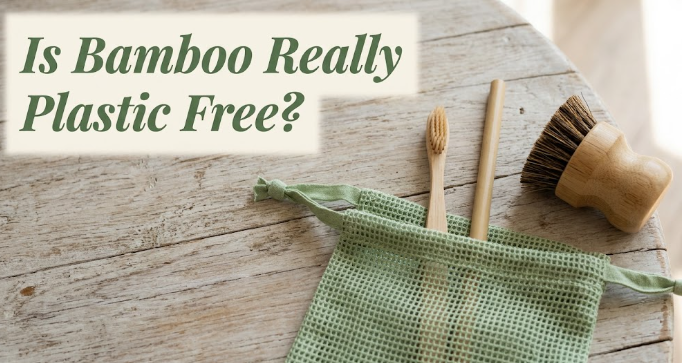
My first bamboo toothbrush lasted about four months before I noticed something odd sitting at the bottom of my compost bin. Little white tufts, unmoved, completely unbothered by six weeks of heat and turning. I’d bought the thing because the packaging said “eco-friendly” in a font that looked hand-lettered, and I assumed that meant the whole toothbrush would eventually disappear into soil. It didn’t. That was the point I started reading the fine print on bamboo products the way some people read nutrition labels, and honestly, it changed how I shop.
Bamboo has become shorthand for “plastic free” in a lot of packaging and marketing right now, and it’s not entirely wrong. But it’s not entirely right either, and the gap between those two things is where a lot of well-meaning shoppers get caught out.
1. Where the “Bamboo Equals Plastic Free” Idea Comes From
Bamboo is technically a grass, not a tree, and it grows absurdly fast. Some species can grow close to a meter in a single day under the right conditions. It needs no pesticides to thrive, regrows from its own root system after harvest, and requires far less water than cotton or hardwood. On the raw material side, the reputation is earned.
The trouble starts once bamboo leaves the field and enters a factory. Raw bamboo is stiff, splintery, and not especially useful in its natural state for a toothbrush handle or a mixing bowl. To make it soft enough, moldable enough, or durable enough for everyday products, manufacturers often blend it with resins, binders, or synthetic fibers. The word “bamboo” stays on the label because it’s still technically true and it sells better than “bamboo composite,” which is the more accurate term for a lot of what’s on shelves.
2. The Parts of Bamboo Products That Are Usually Still Plastic
Here’s where people usually go wrong, and I include past me in that group. They see the word bamboo, assume the entire object is plastic free, and skip checking the parts that actually touch their mouth or their food.
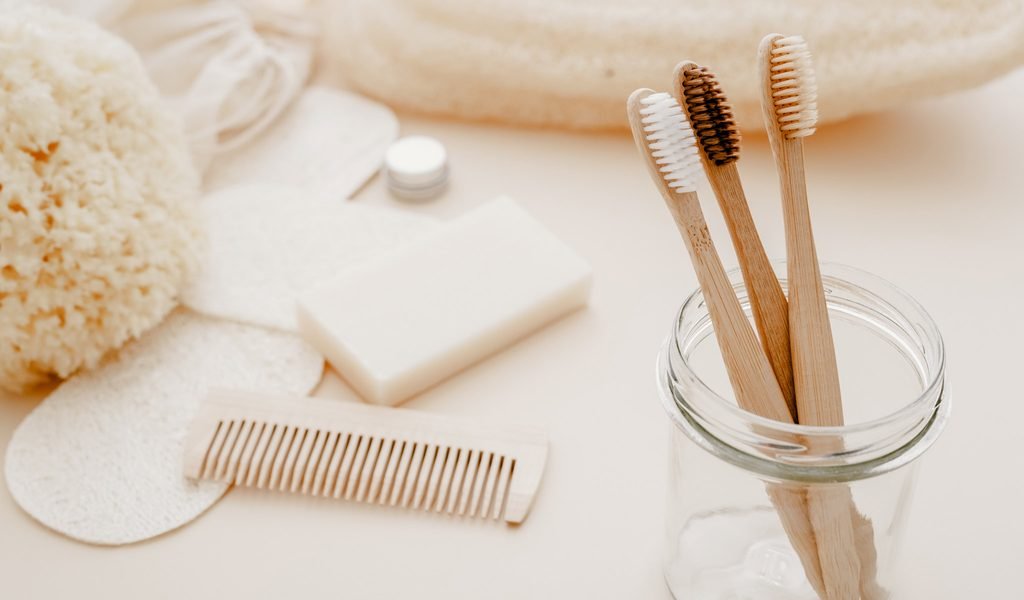
Take the bamboo toothbrush. The handle is genuinely bamboo, but the bristles are almost always nylon, because nothing else holds up to daily brushing without falling apart or growing bacteria. A few brands have started experimenting with castor-oil-derived bristles, and those are worth seeking out, but they’re still the exception rather than the rule.
Then there’s bamboo fiber dishware, the colorful cups and bowls that show up at markets and in gift shops. Most of these are actually a bamboo powder mixed with melamine resin, pressed into shape under heat. Melamine is a plastic. It’s food-grade in the sense that it’s approved for contact use, but it is not biodegradable, and some studies have raised concerns about formaldehyde leaching when this material is heated, which matters if you’re microwaving anything in one of these bowls. <br>
Quick reference: what’s actually plastic free
| Bamboo Product | Common Hidden Component | Truly Plastic-Free Version |
|---|---|---|
| Bamboo toothbrush | Nylon bristles | Look for castor-oil bristle brands, or compost only the handle after removing bristles |
| “Bamboo fiber” cups and bowls | Melamine resin binder | Solid, unlacquered carved bamboo bowls |
| Bamboo cutlery sets | Plastic clip, lacquer coating | Uncoated bamboo utensils, oiled with food-grade linseed or beeswax |
| Bamboo fabric clothing | Viscose/rayon chemical processing | Lyocell-process bamboo textiles (closed-loop, fewer chemical byproducts) |
| Bamboo phone cases | Plastic backing for durability | Solid bamboo cases, though these tend to be pricier and less impact-resistant |
3. How to Actually Check Before You Buy
I’ve started treating “bamboo” on a label the way I treat “natural” on a food package, meaning it tells me almost nothing on its own. What actually matters is what’s underneath the word.
A few things I look for now, and honestly this applies to more than bamboo once you get used to it, which is part of why I keep a running plastic-free shopping checklist for myself. First, whether the product lists a resin, melamine, or “composite” anywhere in the materials section, because that’s a strong sign it’s bamboo mixed with plastic rather than bamboo on its own. Second, whether there’s a compost certification like OK Compost Home, since that’s a claim companies can’t just print without backing it up. Third, I check whether the item feels suspiciously light, glossy, or perfectly uniform in color. Solid bamboo has grain, slight color variation, and a bit of weight to it. If it looks like it came out of an injection mold, it probably did.
This is honestly one of the more useful habits I picked up early in my plastic-free journey, back when I was still figuring out which swaps were worth the money and which ones were just better marketing. If you’re at that stage yourself, the beginner plastic-free living section over at Plastic Free Living has a longer walkthrough of which starter swaps actually hold up.
4. When Bamboo Genuinely Is the Real Deal
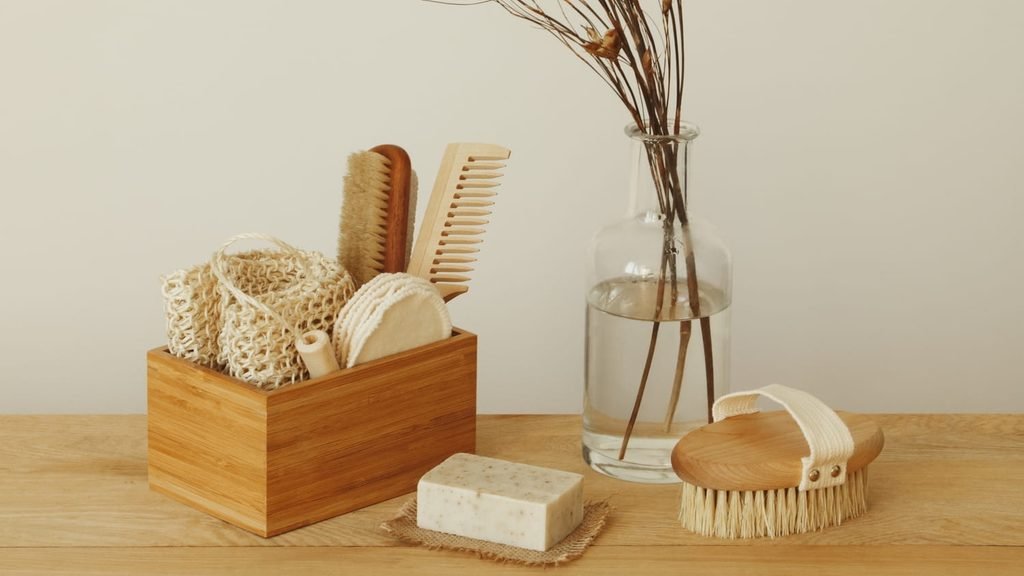
I don’t want this to read as bamboo is a scam, because it isn’t. Solid, unprocessed bamboo used the way it’s grown, meaning carved, cut, or steamed into shape without binders, is one of the most legitimately plastic-free materials available for everyday goods. Cutting boards made from strips of laminated bamboo held together with food-safe glue, rather than resin, are a genuinely good option. Bamboo straws that are just, well, hollow bamboo, with no coating, are compostable at the end of their life. Bamboo furniture and flooring, when it’s not treated with heavy plastic sealants, falls into this category too.
And solid bamboo does break down. I’ve buried offcuts from a cutting board in my garden bed and watched them soften and disappear over about eight months, which is roughly what you’d expect from a woody material of that thickness.
Where things get murkier is bamboo textiles. Bamboo viscose, sometimes just labeled “bamboo fabric,” is made using a chemical process that dissolves the plant into a pulp before spinning it into thread, and that process involves carbon disulfide, a chemical with real environmental and worker-safety concerns. It’s not plastic in the traditional sense, but calling it eco-friendly without mentioning the processing is doing the shopper a disservice. Lyocell processing, sometimes marketed as bamboo lyocell, is a cleaner closed-loop version of the same idea and worth the extra few dollars if you can find it.
5. A Note on Greenwashing, Because It’s Everywhere in This Category
I’ll be blunt about this part. Bamboo gets used as a greenwashing shortcut more than almost any other material I cover for Plastic Free Living, partly because the raw plant genuinely deserves a good reputation, and companies borrow that reputation for products that don’t earn it. A brand slapping a bamboo leaf icon on packaging that contains 40 percent plastic resin isn’t lying exactly, it’s just letting you assume the rest.
My rule of thumb after a decade of doing this: if a company won’t tell you the full material breakdown when you ask directly, that’s usually your answer.
If you’re restocking your kitchen or bathroom with fewer synthetic materials overall, it’s worth browsing what’s already reviewed under plastic-free home essentials before assuming bamboo is your default swap for everything.
Not every plastic-heavy product needs a bamboo replacement anyway. Sometimes the better swap is just using what you already own for longer, which doesn’t photograph as well for a shopping guide but does more for your actual waste output.
Frequently Asked Questions
Are bamboo toothbrush bristles compostable? No, in almost all cases. The bristles are nylon, which needs to be removed with pliers before you compost the handle. A small number of brands make castor-oil-based bristles that are more biodegradable, but they’re still uncommon and worth confirming before you buy.
Is bamboo fiber tableware actually safe to use? It’s generally considered food-safe for cold use, but heating it, especially in a microwave, can cause the melamine resin to leach compounds like formaldehyde. It’s best treated as durable dinnerware rather than something plastic free.
Can I compost a bamboo cutting board or utensil? Yes, if it’s solid bamboo without a plastic lacquer or heavy varnish. Oiled bamboo (food-grade mineral oil or beeswax finish) breaks down over time. Glossy, shellacked pieces take much longer and may not fully compost.
Is bamboo clothing better than polyester? It depends on the process. Bamboo viscose involves harsher chemical processing than people often assume, while bamboo lyocell is a cleaner, closed-loop alternative. Either way, it’s not the same as buying something made from actual plastic fiber, but it’s not automatically the eco-friendly slam dunk it’s marketed as.
How do I know if a “plastic-free” bamboo product is legit? Check the full materials list, not just the front label, and look for a genuine compost certification rather than the word “biodegradable” on its own, which isn’t a regulated claim in most places.
If you’re trying to figure out which of your everyday plastic swaps are worth the money and which ones just look good on a shelf, that’s basically the whole project behind Plastic Free Living, and the zero plastic waste archive is a good place to keep digging before you restock your kitchen.