Plastic Free Swaps Every Beginner Should Try First
The first time most people try to cut plastic out of their life, they clean out an entire kitchen cupboard in one afternoon and end up with a pile of half-used products they don’t know what to do with. That’s the wrong place to start. The swaps that actually stick are the small, boring ones you barely notice after the first week.
This guide is for the person standing in their kitchen wondering where to begin. Not the person who already owns six kinds of beeswax wrap.
1. Start With What You Throw Away Every Single Day
Before buying anything new, look at your bin for three days. Not your recycling, your actual trash. Whatever shows up more than once is your starting point.
For most beginners at plasticfreeliving.online, the pattern is almost always the same: cling film, produce bags, and single-use water bottles. These three items account for a huge share of the plastic that quietly moves through an average household, and none of them require a big financial outlay to fix.
- Cling film → beeswax wrap or a plate turned upside down over a bowl
- Produce bags → mesh bags you already own from delivery packaging, reused
- Water bottles → one reusable bottle, kept somewhere you’ll actually see it
You don’t need to solve all three in one week. Pick the one that annoys you most and fix it first. Momentum matters more than speed here.
2. Swap the Bathroom Before the Kitchen
People usually start in the kitchen because it’s the most visible room, but the bathroom is where plastic tends to pile up fastest and where the swaps are easiest to get right the first time.
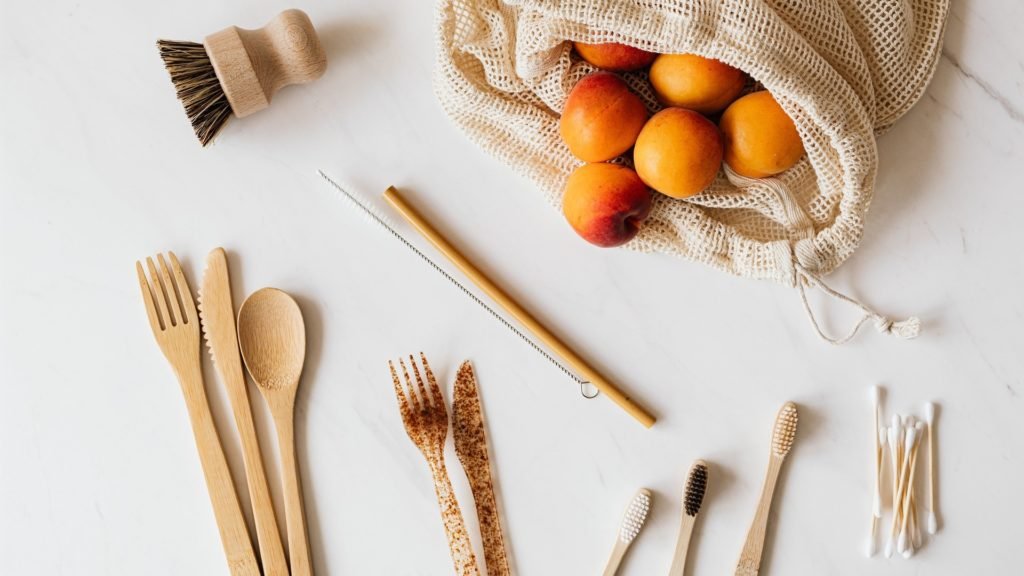
A bar of shampoo lasts roughly as long as two or three plastic bottles and takes up a fraction of the space. Bar soap does the same job as a pump bottle without the pump. A safety razor, once you get past the slightly intimidating learning curve, outlasts a drawer full of disposable cartridges and shaves closer besides.
Here’s where people usually go wrong: they buy a bar shampoo without checking whether it suits their hair type, get a bad first wash, and give up on the entire idea of plastic-free bathroom products. Hair takes two to three washes to adjust to a new formula. Judge it on wash four, not wash one.
| Product | Plastic Version | Low-Plastic Swap | Learning Curve |
|---|---|---|---|
| Shampoo | Bottle, refillable at best | Shampoo bar | Low, 2-3 washes to adjust |
| Razor | Disposable cartridge | Safety razor | Medium, a few nicks at first |
| Toothbrush | Plastic handle | Bamboo handle | None |
| Deodorant | Plastic stick | Cardboard tube or jar | Low |
| Cotton buds | Plastic stem | Paper stem or reusable silicone | None |
None of these require you to be especially handy or especially patient. They just require you to buy the replacement before the old one runs out, so you’re not tempted to grab whatever’s closest at the supermarket checkout.
3. Fix Your Shopping Habits, Not Just Your Shopping List
This is the part beginners skip, and it’s the part that actually reduces plastic the most. You can swap every product in your house and still bring home plastic every week if your shopping routine hasn’t changed.
A few habits worth building early, roughly in order of how much difference they make:
Bring your own bags, and keep one folded in your coat pocket, your car, and your work bag so you’re never caught without one. Buy loose produce instead of pre-packaged where the option exists; most large supermarkets now carry a loose version of at least some staples, even if it’s tucked in an odd corner of the produce section. Choose glass or cardboard packaging over plastic when the price difference is small, which it usually is for things like pasta sauce or oats.
And if there’s a bulk or refill store anywhere near you, even a small one, go in once just to see what they stock. A lot of people assume these stores are more expensive across the board. They’re often cheaper for staples like rice, lentils, and cleaning products, because you’re not paying for packaging at all.
If you want a deeper walkthrough of where to actually find these stores and how to shop them without overbuying, our zero waste shopping guide covers that in more detail.
4. Solve for the Whole Household, Not Just Yourself
If you live with other people, and especially if you have kids, plastic-free swaps that work for a single person living alone often fall apart the moment a second or third person is involved. Snack packaging is the obvious one. So is anything related to school lunches, which tend to generate a steady stream of small plastic waste that adds up faster than people expect.
A few things that make this easier without turning every school morning into a project:
Reusable snack bags or small containers that go straight from lunchbox to dishwasher without needing to be hand-washed, because that extra step is where good intentions usually die. Labeling containers if more than one kid is involved, so nothing gets left at school or mixed up. And accepting, honestly, that some weeks you’ll fall back on convenience packaging because that’s just how households with young kids actually run. That’s not failure. That’s just a Tuesday.
Our family-focused guide goes into more specific swaps for lunchboxes, snacks, and the particular chaos of school mornings, if that’s where you’re stuck.
5. Don’t Buy Your Way Into Zero Waste
This is worth saying plainly because it gets glossed over constantly: buying a full set of matching glass containers, a new stainless steel lunch kit, and a stack of unused tote bags is not a plastic-free swap. It’s just a different kind of consumption, and it often produces more waste than it saves, especially if the plastic containers you already own end up in landfill instead of being used until they wear out.
The most effective swap is almost always the plastic item you already own, used until it breaks, replaced with something better when it actually needs replacing. Not before.
If you’re starting from nothing, a reasonable order to work through looks something like this:
- Reusable water bottle and coffee cup, since these get used daily and pay for themselves fast
- Reusable shopping and produce bags, low cost, immediate impact
- One bathroom product swapped at a time, as the plastic version runs out
- Kitchen storage, replaced gradually rather than all at once
- Anything else, only once the first four feel automatic
That’s roughly the order most beginner guides on plasticfreeliving.online recommend, and it holds up because it front-loads the swaps that cost the least and save the most.
A Quiet Final Note
None of this needs to be perfect. The households that keep it up long term aren’t the ones who got everything right in month one. They’re the ones who picked two or three things, made them boring and automatic, and let the rest happen slowly. Start with what’s already annoying you. The bin, the shampoo bottle, the pile of produce bags under the sink. That’s usually enough to begin.
Frequently Asked Questions
Is it worth switching if I still buy some plastic-packaged food? Yes. Reducing plastic doesn’t require eliminating it entirely, and treating it as all-or-nothing is one of the fastest ways to burn out and give up in the first month. Partial changes made consistently outperform perfect changes made briefly.
Do plastic-free products actually cost more? Some do upfront, like a safety razor or a set of beeswax wraps, but they usually work out cheaper over a year because you’re replacing them far less often. Others, like loose produce or bulk-bin staples, are frequently cheaper than the packaged version from the start.
What’s the single easiest swap for someone who feels overwhelmed? A reusable water bottle. It requires no habit change beyond remembering to fill it, and it eliminates one of the most common single-use plastic purchases almost immediately.
How long does it take for a new habit like bringing your own bags to actually stick? Most people need somewhere between three and eight weeks before it stops feeling like an extra step and starts feeling automatic. Keeping a bag somewhere you can’t forget it, like a coat pocket, shortens that considerably.
Are compostable plastics a good alternative? Sometimes, but with a catch. Most compostable plastics need industrial composting facilities to break down properly, and they won’t do much in a regular household bin or backyard compost heap. Check locally before assuming a compostable label solves the problem for you.
For a broader starting point on where to focus first, plasticfreeliving.online’s beginner category has a running list of the swaps that tend to matter most in the first few months.