
9 Proven Zero Waste Plastic Free Living Tips That Actually Last
The first time I tried to live “zero waste,” I failed within two days. The trash bin still filled up. Plastic still appeared mysteriously in grocery bags. Receipts, wrappers, and packaging kept slipping into my life like uninvited guests. That failure turned out to be a gift, because it taught me something important: sustainable living is not about perfection. It is about permanence.
The habits that last are the ones that feel normal, affordable, and flexible. They blend quietly into daily routines until you barely notice them anymore. This article isn’t a list of trendy eco-hacks. It’s a collection of habits that survive busy schedules, tight budgets, family life, and real-world inconvenience.
Along the way, you’ll find checklists, mini challenges, reflection prompts, and practical tables you can actually use.
Let’s begin where every long-lasting habit begins: with mindset.
A quick mindset reset before the tips
The phrase “zero waste” sounds intimidating. It suggests an empty trash jar and a flawless lifestyle. In reality, the goal is progress, not purity. A better definition might be: reduce waste wherever realistically possible and replace disposable habits with reusable ones over time.
Instead of asking, “How do I eliminate all plastic?” try asking:
What plastic shows up repeatedly in my life?
What small change would remove the most waste with the least effort?
This shift from perfection to practicality makes the journey sustainable — not just environmentally, but emotionally.
Habit scorecard (print or screenshot)
Before we dive in, rate yourself honestly from 1–5 on these:
• I carry reusable shopping bags
• I avoid single-use water bottles
• I buy loose produce when possible
• I own reusable food containers
• I repair items before replacing them
• I think about packaging before purchasing
Total score:
0–10 → Beginner stage
11–20 → Transition stage
21–30 → Lifestyle stage
Keep your score. Revisit it in three months.
Tip 1 — Build a “daily carry kit” that replaces disposable habits
The most durable zero-waste habit is not remembering things — it’s removing the need to remember.
Instead of hoping you’ll remember reusable items every time, create a permanent kit that lives in your bag or car.
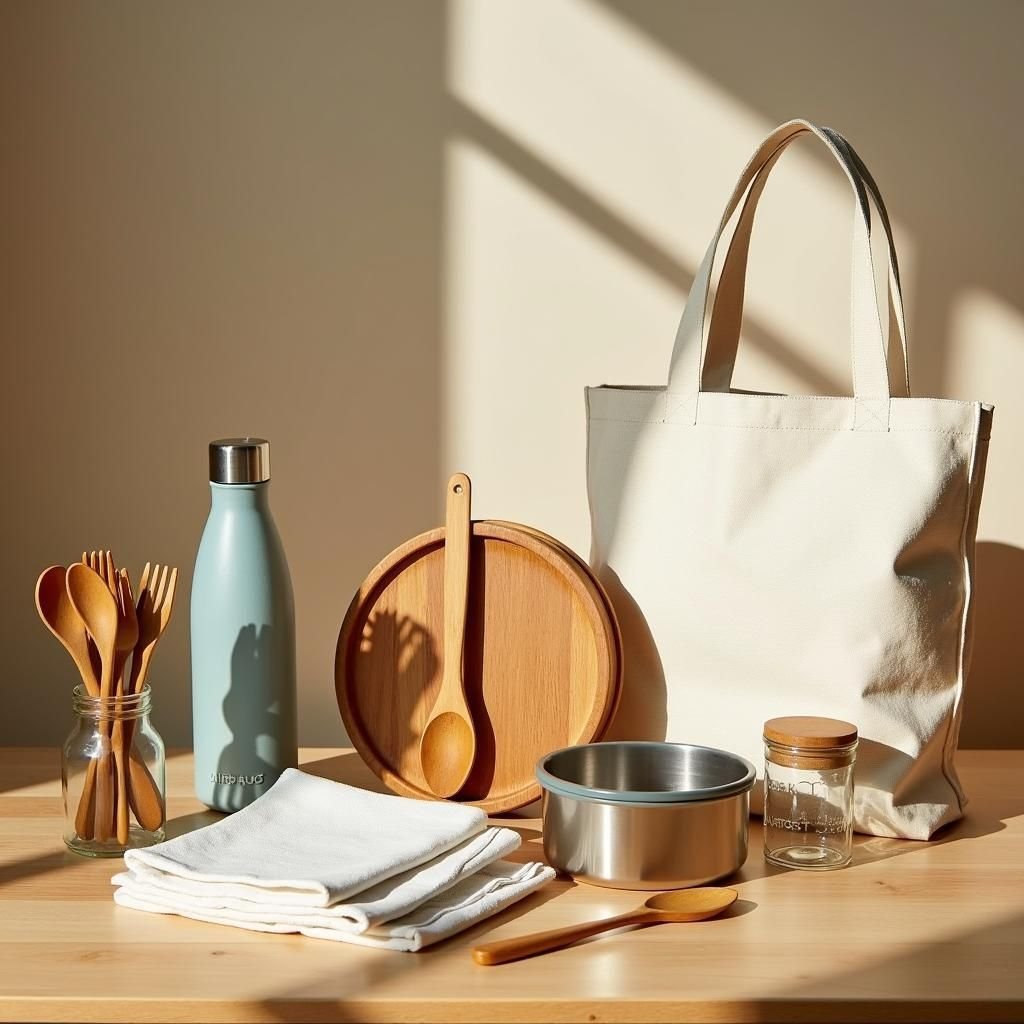
My personal carry kit includes:
• Stainless steel water bottle
• Foldable cloth shopping bag
• Compact cutlery set
• Reusable coffee cup
• Cloth napkin
• Small food container
This tiny kit eliminates dozens of plastic items weekly without extra effort.
Why this habit lasts
It works because it removes decision fatigue. Once the kit exists, you stop debating whether to accept plastic — you already have an alternative.
Mini challenge
For the next 7 days, note every disposable item you refuse thanks to your kit.
You’ll be surprised how quickly the numbers add up.
Estimated weekly plastic avoided with a carry kit
Disposable item | Average weekly use | Replaced by
Plastic bottles | 3–7 | Reusable bottle
Plastic bags | 5–10 | Cloth bags
Takeaway cutlery | 2–4 | Metal set
Coffee cups | 2–5 | Reusable mug
Snack wrappers | 3–6 | Container
Tip 2 — Change how you grocery shop (this is the biggest waste reducer)
Most household plastic enters through groceries. If you change how you shop, you automatically change your waste output.
The biggest shift is learning to shop slower and smarter.
A zero-waste grocery routine looks like this:
- Plan meals before shopping.
- Check what you already have.
- Buy loose produce first.
- Choose bulk or larger packaging.
- Avoid individually wrapped items.
Shopping becomes intentional instead of reactive.
Reusable grocery checklist
Bring these:
□ Produce bags
□ Glass jars (if buying bulk)
□ Cloth shopping bags
□ Meal plan list
Produce swap guide
Instead of | Choose
Bagged apples | Loose apples
Pre-cut vegetables | Whole vegetables
Plastic herb packs | Fresh bunch herbs
Snack packs | Bulk snacks
Yogurt cups | Large tub
Tip 3 — Create a “leftover system” to eliminate food waste
Food waste and plastic waste are deeply connected. When food spoils, it wastes packaging, money, and resources.
The solution is a weekly leftover ritual.
My Sunday routine:
• Gather all leftovers from fridge
• Turn them into one large meal (soup, stir-fry, pasta)
• Freeze extra portions
This turns forgotten food into planned meals.
Leftover transformation ideas
Leftover ingredient → New meal idea
Roasted vegetables → Soup or omelet
Cooked rice → Fried rice
Fruit → Smoothies or jam
Bread → Croutons or breadcrumbs
Chicken → Wraps or salads
Tip 4 — Replace paper and plastic in the kitchen first
The kitchen is the easiest room to transform because replacements are simple and durable.
Swap list that lasts years
Disposable item → Long-term replacement
Paper towels → Cloth rags
Plastic wrap → Beeswax wraps
Zip bags → Silicone bags
Sponges → Dishcloths or scrub brushes
Plastic containers → Glass containers
Why kitchen swaps stick
You use them daily. High-frequency habits become permanent faster than occasional ones.
30-day kitchen experiment
Week 1: Replace paper towels
Week 2: Replace plastic wrap
Week 3: Replace zip bags
Week 4: Replace sponges
By the end of a month, your kitchen waste drops dramatically.
Tip 5 — Learn the “repair before replace” mindset
This habit changes everything.
Modern culture encourages replacing broken items immediately. Zero-waste living flips that script.
Before replacing anything, ask:
Can it be repaired?
Can it be repurposed?
Can someone else use it?
Repair starter kit
Every home should have:
• Needle and thread
• Strong glue
• Basic screwdriver set
• Fabric patches
These tiny tools prevent hundreds of items from becoming trash.
Repair mindset worksheet
Next time something breaks, write:
Item:
Problem:
Repair attempt:
Outcome:
Money saved:
Tracking this builds motivation fast.
Tip 6 — Switch to refill and bulk products gradually
Bulk buying feels intimidating at first, but it becomes routine quickly.
Start with products you use most often:
• Rice
• Pasta
• Beans
• Flour
• Nuts
• Cleaning supplies
Bulk buying reduces packaging and saves money.
Bulk buying comparison
Product | Small packs monthly cost | Bulk cost | Plastic saved
Rice | High | Lower | Very high
Beans | High | Lower | High
Pasta | Medium | Lower | Medium
Nuts | High | Lower | High
Tip 7 — Make your bathroom low-waste (one swap at a time)
Bathrooms quietly produce huge plastic waste through bottles and disposables.
Start with the easiest swaps:
• Bar soap instead of liquid soap
• Shampoo bars instead of bottles
• Bamboo toothbrush
• Reusable razor
• Refillable deodorant
Bathroom swap checklist
□ Replace body wash
□ Replace shampoo
□ Replace razors
□ Replace cotton pads
Tip 8 — Adopt the “one in, one out” rule
This rule prevents clutter and waste.
Every time you bring a new item home, one item leaves.
This forces thoughtful consumption and reduces impulse buying.
Reflection prompt
Before buying something new, ask:
Do I already own something that serves this purpose?
This single question prevents countless purchases.
Tip 9 — Focus on habits, not identity
The most important tip comes last.
People quit zero-waste living when it becomes part of their identity rather than a set of habits. Identity creates pressure. Habits create consistency.
You don’t need to be a “zero waste person.”
You only need to practice zero-waste actions.
Monthly reflection template
This month I reduced waste by:
This habit was easiest:
This habit was hardest:
Next month I will try:
Why these habits actually last
They share four traits:
• Low effort
• High repetition
• Visible results
• Financial savings
When habits meet these four conditions, they stick for years.
A realistic weekly zero-waste routine example
Monday: Meal planning and grocery prep
Wednesday: Leftover meal night
Friday: Bulk shopping refill
Sunday: Fridge cleanout + prep
Simple, repeatable, realistic.
The long-term impact
Average household plastic reduction after 1 year of these habits:
• Grocery plastic ↓ 40–60%
• Kitchen waste ↓ 50%
• Bathroom waste ↓ 60–80%
• Overall trash ↓ 30–50%
Not perfect. But powerful.
Closing thoughts
Zero-waste living isn’t a destination. It’s a quiet shift in daily decisions. Small habits, repeated often, become lifestyle. Lifestyle becomes culture. And culture shapes the future.
Start small. Start imperfectly. Start today.
FAQs
- Is it expensive to start living zero waste?
It can actually save money over time. Reusable products replace repeated purchases, and bulk buying reduces cost per use. - Do I need to throw away plastic items I already own?
No. The most sustainable choice is to use what you already have until it wears out. - How long does it take to see results?
Most people notice reduced trash within 2–4 weeks after changing grocery and kitchen habits. - What if my area doesn’t have bulk stores?
Focus on reducing single-use items and choosing larger packaging. Perfect access isn’t required for progress. - Can families with kids live zero waste?
Yes. Start with lunchbox systems, reusable snacks, and fewer disposable products. - What is the easiest habit to start today?
Carry a reusable water bottle and shopping bag. These two changes eliminate a surprising amount of plastic quickly.