
When I first started thinking about plastic in my home, I wasn’t trying to save the planet in one dramatic sweep. I was just tired of the clutter. The half-empty bottles under the sink. The drawer stuffed with grocery bags. The mismatched food containers with missing lids.
What surprised me wasn’t just how much plastic I had — it was how different my home felt once I reduced it.
This isn’t a zero-waste manifesto. It’s a practical, lived-in account of five easy plastic-free living fixes that genuinely made my home feel calmer, cleaner, and oddly… newer. None of them required a lifestyle overhaul. Most cost little or nothing. And every single one made daily life simpler.
Along the way, I’ve included practical tables, comparisons, and simple charts to help you see what changed — not just emotionally, but functionally.
1. Replacing Plastic Cleaning Bottles with Refillable Glass + Concentrates
What I Changed
I stopped buying ready-made plastic cleaning sprays and switched to:
- Refillable glass spray bottles
- Cleaning concentrates or simple DIY mixes
- Bulk refills in aluminum or cardboard packaging
At first, this felt like a tiny aesthetic upgrade. But it turned into something much more practical.
Why It Made My Home Feel New
Plastic cleaning bottles accumulate fast. They fade, crack, leak, and visually clutter a space. Under my sink used to look chaotic. After switching to matching glass bottles, labeled simply, everything looked intentional.
It wasn’t about minimalism — it was about visibility and order.
There’s also a psychological shift. When your cleaning supplies look good, you’re more likely to use them.
Cleaning Supply Comparison Table
| Feature | Plastic Ready-Made Bottles | Refillable Glass + Concentrate |
|---|---|---|
| Longevity | 1–3 months per bottle | Years (just refill) |
| Visual clutter | High (varied packaging) | Low (uniform bottles) |
| Waste produced | High | Minimal |
| Cost over 1 year | Moderate to High | Lower |
| Under-sink appearance | Crowded | Organized |
Cost Breakdown Over 12 Months
| Item | Plastic Bottles | Refill System |
|---|---|---|
| All-purpose cleaner | $60 | $25 |
| Bathroom cleaner | $50 | $20 |
| Glass cleaner | $40 | $15 |
| Total | $150 | $60 |
Even with buying glass bottles upfront, the system paid for itself within months.
2. Swapping Plastic Food Storage for Glass + Stainless Steel
This one made the biggest difference visually.
I didn’t throw everything away. I waited until containers cracked or lids warped. Then I replaced them with:
- Glass containers with locking lids
- Stainless steel lunch boxes
- Mason jars for dry goods
The Unexpected Benefits
- No lingering smells
- No stained tomato sauce containers
- No hunting for matching lids
- Food lasted longer
Glass doesn’t absorb oils and odors. That alone made my fridge feel fresher.
Before vs After: Fridge Organization
| Category | Plastic Containers | Glass Containers |
|---|---|---|
| Visibility | Cloudy over time | Crystal clear |
| Stackability | Inconsistent | Uniform |
| Smell retention | Common | Rare |
| Heat tolerance | Limited | High |
| Lifespan | 1–2 years | 10+ years |
Simple Storage System Layout
I reorganized into zones:
- Top shelf: Leftovers (glass)
- Middle shelf: Produce in breathable bins
- Bottom shelf: Meal prep containers
- Door: Condiments (still some plastic — not perfect!)
It felt less like a storage problem and more like a reset.
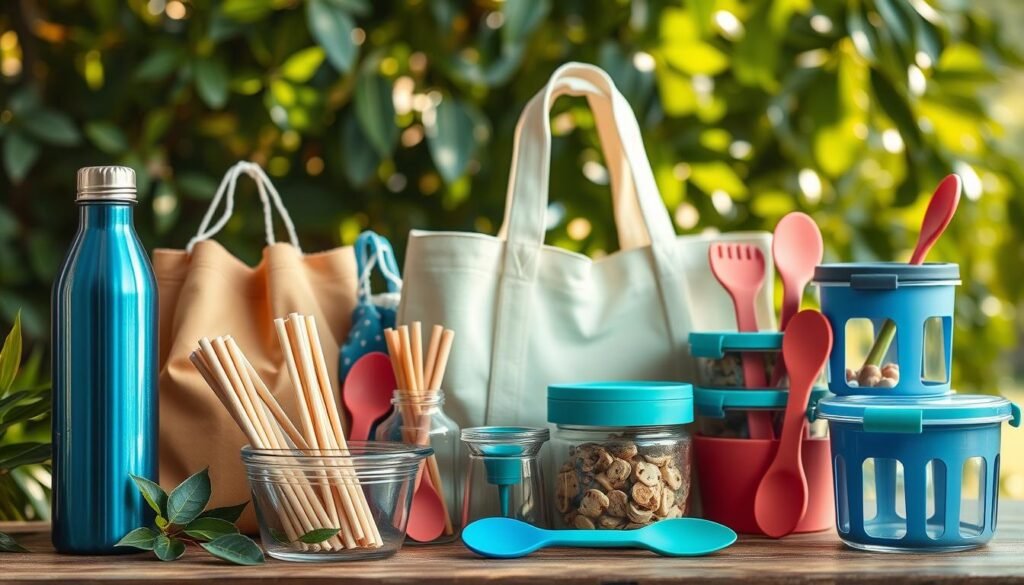
3. Switching from Plastic Grocery Bags to Reusable Systems
This sounds basic. But it changed my kitchen flow more than expected.
Instead of a bag full of bags, I now use:
- Foldable canvas totes
- Mesh produce bags
- A structured basket for weekly shopping
What Changed Emotionally
No more drawer jammed with crumpled plastic.
No more guilt when I forgot bags.
No more noisy rustling.
It simplified the ritual of shopping.
Grocery Bag Waste Comparison (Per Year)
| Item | Average Household Usage | Waste Volume |
|---|---|---|
| Plastic grocery bags | 300–500 | High |
| Reusable canvas bags | 5–10 | Minimal |
| Mesh produce bags | 6–12 | Minimal |
Estimated Environmental Impact Chart
Plastic bags take 10–20 years to break down. Reusable bags, when used consistently, reduce hundreds of pieces of single-use plastic annually.
Even if used only twice a month, reusable systems cut waste significantly.
4. Replacing Bathroom Plastic with Bar Alternatives
This was the most surprisingly transformative fix.
I switched from:
- Liquid soap → Bar soap
- Shampoo bottles → Shampoo bars
- Plastic loofahs → Natural fiber brushes
- Liquid body wash → Solid bars
Why the Bathroom Felt New
Bathrooms accumulate plastic silently. Every product sits in bright packaging, creating visual noise.
When I switched to neutral-toned bars stored in simple dishes:
- The counter looked calmer.
- The shower felt like a spa.
- Cleaning became easier.
Bathroom Plastic Reduction Table
| Product | Plastic Version | Plastic-Free Version |
|---|---|---|
| Hand soap | Pump bottle | Refillable glass or bar |
| Shampoo | Bottle | Solid bar |
| Body wash | Bottle | Soap bar |
| Razor | Disposable plastic | Safety razor (metal) |
| Loofah | Nylon | Natural fiber |
Cost Comparison Over 6 Months
| Product | Plastic Version | Bar Version |
|---|---|---|
| Shampoo | $48 | $36 |
| Body wash | $36 | $24 |
| Hand soap | $30 | $18 |
| Total | $114 | $78 |
Bars last longer because they’re concentrated. Less water. Less packaging. More product.
5. Eliminating Plastic in the Kitchen Sink Zone
This area shocked me the most.
Plastic dish brushes.
Plastic sponges.
Plastic soap bottles.
Plastic scrubbers.
I replaced them with:
- Wooden dish brush with replaceable head
- Compostable cellulose sponges
- Refillable soap dispenser
- Cotton dish cloths
Sink Area Before vs After
| Feature | Plastic Setup | Plastic-Free Setup |
|---|---|---|
| Durability | Low | Medium to High |
| Compostable | No | Mostly yes |
| Visual feel | Busy | Calm |
| Replacement frequency | High | Moderate |
Waste Generated in 1 Year (Sink Area)
| Item | Plastic Version | Plastic-Free Version |
|---|---|---|
| Sponges | 24 | 12 compostable |
| Brushes | 6 | 2 heads |
| Soap bottles | 12 | 2 refills |
| Total plastic waste | High | Near zero |
The sink area is used daily. Improving it improved how the entire kitchen felt.
Visual Impact: How Plastic Affects Perceived Clutter
I started noticing something subtle.
Plastic packaging is often:
- Brightly colored
- Glossy
- Labeled heavily
- Inconsistent in shape
Natural materials — glass, wood, metal — reflect light differently. They age better. They don’t scream for attention.
Here’s a simplified visual perception comparison:
| Material | Visual Noise | Aging Quality | Texture |
|---|---|---|---|
| Plastic | High | Degrades | Synthetic |
| Glass | Low | Stable | Smooth |
| Wood | Low | Improves | Warm |
| Metal | Low | Patinas | Solid |
It wasn’t just environmental. It was aesthetic psychology.
The Emotional Shift I Didn’t Expect
Reducing plastic didn’t make my home perfect.
But it made it intentional.
There’s something grounding about using objects meant to last. It changes your relationship to consumption. You repair instead of discard. You refill instead of rebuy.
The house felt quieter. Not audibly. Visually.
30-Day Plastic Reduction Snapshot
Here’s how one month of small swaps looked:
| Category | Plastic Items Eliminated | Estimated Waste Avoided |
|---|---|---|
| Cleaning | 5 bottles | 5 containers |
| Grocery | 40 bags | 40 bags |
| Bathroom | 6 bottles | 6 containers |
| Kitchen sink | 10 items | 10 pieces |
| Total | 61 items | Significant reduction |
That momentum builds.
Common Mistakes to Avoid
- Throwing everything away at once (creates waste)
- Buying expensive “eco” versions impulsively
- Expecting perfection
- Ignoring durability quality
- Forgetting storage planning
The goal isn’t purity. It’s progress.
Frequently Asked Questions
1. Is switching to plastic-free living expensive?
Not necessarily. Many swaps save money long term. The initial investment (like glass containers) may cost more upfront, but refill systems and solid products often reduce yearly spending.
2. Do plastic-free products work as well?
In most cases, yes. Shampoo bars, concentrated cleaners, and solid soaps are highly effective because they contain less filler and more active ingredients.
3. Should I throw away all my plastic items immediately?
No. Use what you already have. Replace items gradually as they wear out. Immediate disposal creates unnecessary waste.
4. What if I live in a small apartment?
Small spaces benefit even more. Reducing visual clutter from plastic packaging makes tight areas feel larger and more organized.
5. Are plastic-free products always better for the environment?
Usually, but not automatically. Consider durability, transport, and usage. The most sustainable item is often the one you already own.
6. What’s the easiest place to start?
Start with one high-use zone:
- The kitchen sink
- The bathroom counter
- Grocery shopping routine
Choose what feels manageable.