10 Key Plastic-Free Living Products I Swear by and Use Every Day
Every morning, I had a routine that I didn’t even realize was a routine. Plastic toothbrush. Plastic shampoo bottle. Plastic-wrapped soap. Plastic coffee pod. Before I’d even left the bathroom, I’d already touched a dozen pieces of plastic.
That was my wake-up call.
A plastic-free lifestyle certainly doesn’t happen overnight. It’s not about being perfect. It’s all about making small swaps that eventually add up to something big. I’ve been on this quest for a few years now, and experimented with countless products — some of them excellent, the majority of them awful.
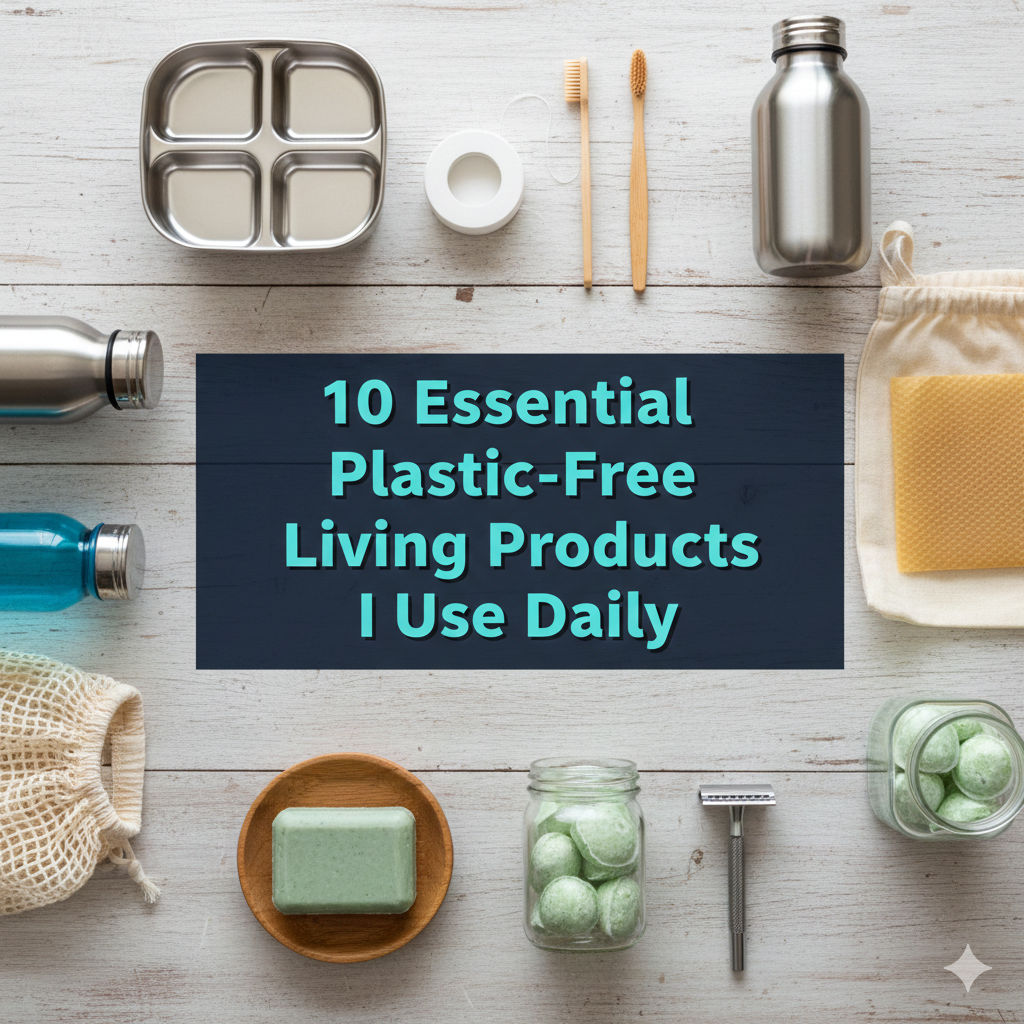
This is a rundown of my 10 favorite plastic-free living products that I use every day, why I love them, and what you need to know before running out to buy them.
Why Living Plastic-Free Is More Important Than You Think
Plastic is everywhere. More than 380 million metric tons of plastic are produced worldwide each year. Astonishingly, over 91% of plastic is not recycled. It ends up in landfills, the ocean and eventually our food and bodies.
The average person goes through 156 plastic bottles per year — just for water. Throw in shampoo, conditioner, cleaners and food packaging and the number scales quickly.
Plastic-free living isn’t a trend. It’s a response to an actual and growing problem.
The good news? It’s never been easier to switch to plastic-free products. In a lot of instances, these substitutes are also cheaper, healthier and work just as well — or better.
What “Plastic-Free” Really Means for Your Grocery Trip
Before we go any further, allow me to clear this up.
Plastic-free living does not mean zero plastic for eternity. It means cutting single-use plastic where you can, and replacing it with reusable, compostable or bio-sourced products.
That could mean picking a bamboo toothbrush instead of a plastic one. A shampoo bar over a bottle. A beeswax wrap instead of cling film.
Those daily decisions, when repeated regularly, add up to mean a lot.
My 10 Plastic-Free Living Favourites
1. Bamboo Toothbrush — The Most Painless of Swaps
This was the first plastic-free swap I ever made, and still one that I recommend to literally everyone.
A standard plastic toothbrush takes 400+ years to decompose. Billions are being thrown away every year. A bamboo toothbrush does the exact same thing — gets your teeth clean — but the handle is biodegradable.
What I use: A bamboo toothbrush with bristles infused with charcoal.
What to know: Most bamboo toothbrush bristles are still fashioned from nylon. Some brands are providing plant-based bristles, but they’re more difficult to come by. The real win here is still eliminating the plastic handle.
Tip: When you’ve used it up, snap off the bristles (dispose of these separately) and compost or reuse the handle.
2. Shampoo Bar — A Small Bar That Replaces a Large Bottle
Each shampoo bar is roughly equal to 2–3 bottles of liquid shampoo. That’s quite a bit of plastic on its way to being eliminated.
I was skeptical at first. I have thick curly hair and wasn’t sure a bar would work for me. But after some initial adjustment (which lasted around two weeks as my scalp adapted), I found my hair felt cleaner, less weighed down and more manageable.
What I use: A sulfate-free shampoo bar with argan oil and rosemary.
What to look for:
| Hair Type | Recommended Ingredients |
|---|---|
| Oily hair | Tea tree, peppermint |
| Dry/damaged | Argan oil, shea butter |
| Curly hair | Coconut milk, rosemary |
| Color-treated | Aloe vera, keratin |
Pro tip: Make sure to dry out your bar between uses. A wooden draining soap dish helps keep it going longer.
3. Reusable Beeswax Wraps — Say Goodbye to Plastic Cling Film
Plastic cling film is one of those products we barely even think about. We take a sheet, cover our leftovers and toss it out. And it can’t be recycled.
Beeswax wraps transformed my kitchen completely.
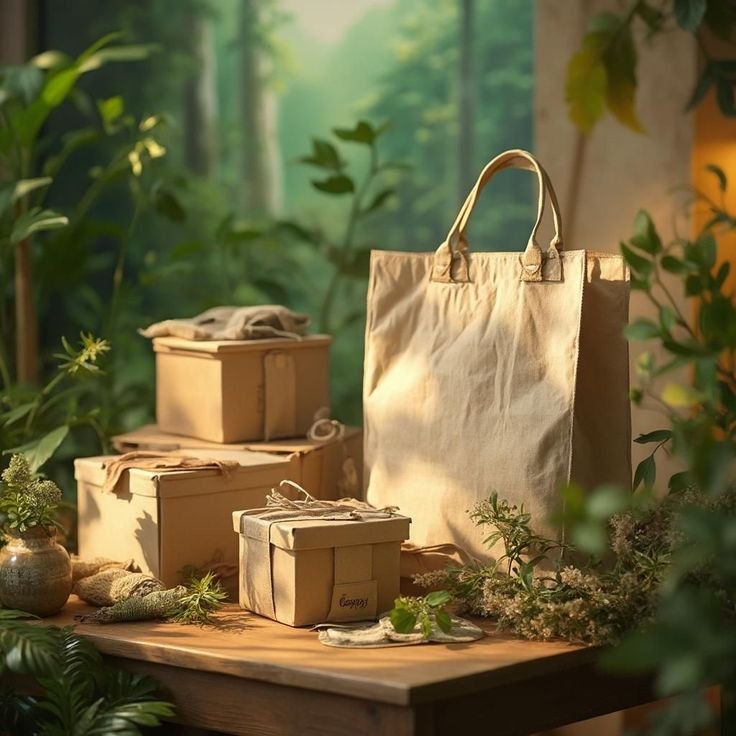
They’re constructed from cotton cloth coated in beeswax, jojoba oil and tree resin. The heat of your hands shapes them around food or bowls. And they hold their shape when they cool.
What I have: A small, medium and large set.
What they work for: Wrapping cheese, covering bowls, sandwich wrapping, cut fruit storage.
What they don’t work for: Raw meat or fish (for hygiene reasons). Use a container for those.
Longevity: A wrap will last for up to a year with care. Wash in cold water with a little soap and air dry, and they’re good to go.
4. Stainless Steel Water Bottle — The Product That Saves You Money
If there’s just one switch to make, it should be this one.
A decent stainless steel water bottle keeps drinks cold for up to 24 hours and hot for up to 12. I’ve had mine for three years. It has replaced hundreds of single-use plastic bottles.
Cost comparison over one year:
| Option | Average Annual Cost |
|---|---|
| Single-use plastic bottles (1/day) | $400–$600 |
| Stainless steel bottle (one-time) | $25–$45 |
| Savings | Up to $575 per year |
This is not only a plastic-free option. It’s a financially smart one.
What to look for: Double-wall insulation, a leak-proof lid, wide mouth for easy cleaning and a BPA-free assurance (though stainless steel is naturally BPA-free).
5. Bar Soap — The OG Plastic-Free Cleanser
Bar soap is thousands of years old. Then liquid soap in plastic pump bottles took over. Let’s bring bar soap back.
Liquid soaps are 90% water and need plastic packaging, plastic pumps and plastic caps. Bar soap? Almost zero waste, very concentrated and long-lasting.
What I use: A cold-process bar soap containing shea butter and oat extract — no synthetic fragrances, no plastic wrapper.
How long does it last? A quality bar soap used daily lasts 4–6 weeks. That’s equivalent to one or two plastic bottles per person each month.
For the whole family: Have one larger bar by the sink, and one smaller travel-size in a reusable tin for on-the-go use.
6. Compostable Dish Scrubber — Small Tool, Huge Impact
This one surprised me.
I had never really given much thought to the humble dish scrubber, until I discovered that each wash was causing mine to shed microplastics. Standard scrub pads and sponges are made from synthetic materials that degrade into small pieces of plastic, which go down the drain and into waterways.
Compostable scrubbers — made from loofah, wood pulp or coconut coir — do the same work without the plastic pollution.
What I have: A loofah dish scrubber combined with a wooden scrub brush for pots.
Lifespan: Approximately 4–6 weeks per scrubber before it heads directly to the compost bin.
Tip: To tackle stubborn grease on pans, add baking soda to the loofah. It works brilliantly and avoids harsh chemical cleaners too.
7. Reusable Produce Bags — The Solution to Eliminating Plastic Bags
Every trip to the grocery store used to mean grabbing 8–10 thin plastic bags for fruits and vegetables. Now I bring my own.
Reusable produce bags made from organic cotton mesh or recycled materials are lightweight, washable and sturdy enough for heavy potatoes and apples.
What I have: A pack of five mesh cotton bags in varying sizes.
The numbers:
The average family goes through about 1,500 plastic bags per year. Switching to reusable bags knocks almost all of that out.
Bonus: Mesh bags are breathable, which actually keeps produce fresher longer than sealed plastic bags.
Where to use them: Grocery stores, farmers markets, bulk food sections and even for storing herbs in the fridge.
8. Bamboo Reusable Cutlery Set — Never Grab a Plastic Fork Again
How many times have you grabbed a plastic fork at the food court, used it for five minutes and thrown it away?
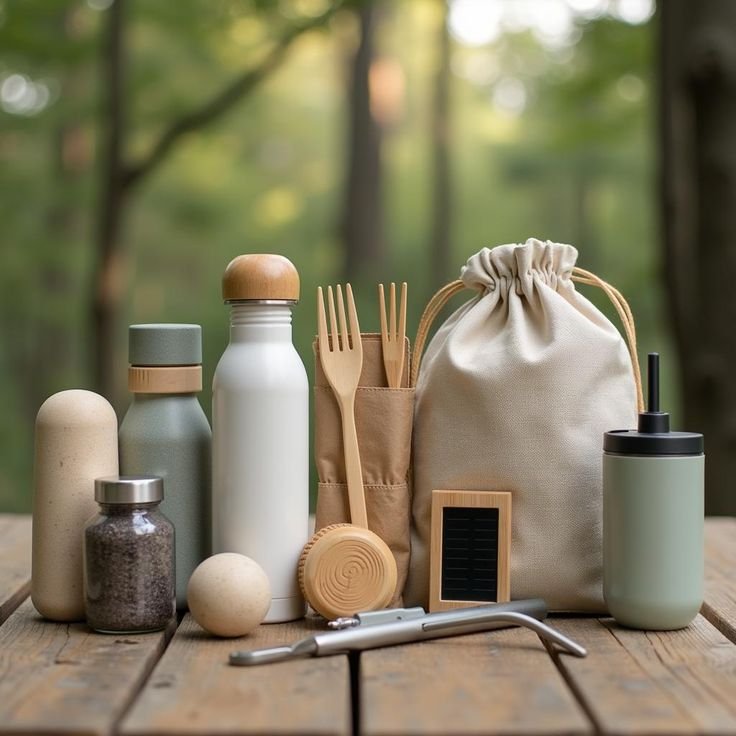
That’s where a portable bamboo or stainless steel cutlery set comes in. I always keep mine in my bag — fork, knife, spoon and a reusable straw — all in a small cotton pouch.
What I have: A bamboo cutlery set inside a cotton carrying case.
Why bamboo? It is naturally antibacterial, lightweight and biodegradable. It doesn’t hold onto odors like wood, and it’s more durable than you might think.
Care tip: Hand wash and air dry. Do not soak bamboo in water — it can warp over time.
Also great: If you want something more durable for long-term use, stainless steel travel cutlery sets are an excellent option.
9. Refillable Cleaning Concentrate — Tackle Plastic Bottles in the Kitchen and Bathroom
Cleaning products come in some of the biggest plastic bottles in the house. Spray bottles, mop solution bottles, dish soap bottles — all plastic, all single-use packaging.
Cleaning concentrates flip this model completely on its head. You purchase a small, typically glass- or paper-packaged concentrate, add water at home and continue to reuse the same spray bottle again and again.
What I use: A multi-surface cleaning concentrate tablet that dissolves in water in my own glass spray bottle.
One tablet = one full bottle of cleaner.
Annual savings comparison:
| Cleaning Method | Plastic Bottles Used/Year | Annual Cost |
|---|---|---|
| Standard spray bottles | 12–24 | $60–$120 |
| Concentrate tablets | 1 (glass bottle reused) | $20–$30 |
The cleaning power is just as effective, and many concentrates are non-toxic and biodegradable — making them safer for kids and pets too.
10. Solid Conditioner Bar — The Ideal Companion for the Shampoo Bar
I saved this one for last because it was the hardest one to get right.
Liquid conditioner is one of the biggest contributors to bathroom plastic waste. Bottles are thick, hard to recycle and run out quickly.
A solid conditioner bar replaces all of that. It’s concentrated, plastic-free and, surprisingly, very effective.
What I use: A solid conditioner bar with mango butter and hibiscus — works beautifully on dry ends and frizzy hair.
How to use it: Rub the bar directly on your ends (not roots), or melt a little in your palms first and apply. Rinse thoroughly.
Adjustment period: Just like with shampoo bars, give it 1–2 weeks. Your hair adjusts and the results are worth it.
How to Ease Into a Plastic-Free Life Without Overwhelming Yourself
Here is the advice I wish someone had offered me when I first got started.
Don’t try to swap everything at once. That’s expensive, stressful and unsustainable.
Instead, use what you have. When you run out of a plastic product, replace it with a plastic-free alternative. This approach is gradual, budget-friendly and much more likely to actually stick.
A simple starter roadmap:
- Month 1: Bamboo toothbrush + reusable water bottle
- Month 2: Shampoo bar + bar soap
- Month 3: Beeswax wraps + reusable produce bags
- Month 4: Bamboo cutlery + compostable dish scrubber
- Month 5: Solid conditioner bar + cleaning concentrate
By month 6, your day-to-day plastic use should look dramatically different — without any massive shift in lifestyle.
If you’re looking for more guidance, tips and product recommendations to support your journey, Plastic Free Living is a fantastic resource to bookmark right now.
The True Cost of Going Plastic-Free
The biggest myth about plastic-free products is that they are expensive. Let’s break that down honestly.
Some plastic-free products do have a higher upfront cost. A stainless steel bottle is more expensive than a single plastic bottle. But when you consider how long it lasts, it is always cheaper in the long run.
Quick cost breakdown:
| Product | Plastic Version (Annual) | Plastic-Free Version (Annual) |
|---|---|---|
| Water bottle | $200–$400 | $0 (after one-time buy) |
| Shampoo/Conditioner | $60–$100 | $30–$50 |
| Cleaning supplies | $80–$120 | $25–$40 |
| Kitchen wraps/bags | $20–$40 | $15–$25 (reusable) |
| Total estimate | $360–$660 | $70–$115 |
The plastic-free option wins financially — and environmentally.
Environmental Impact: What These 10 Swaps Really Achieve
Here’s a back-of-the-envelope look at what these 10 daily swaps can prevent over one year for just one person:
- 156+ plastic bottles eliminated (water alone)
- 12–24 cleaning spray bottles avoided
- 1,500 plastic produce bags not used
- 365 plastic toothbrushes replaced (over a lifetime)
- Dozens of shampoo and conditioner bottles kept out of landfills
Multiply that by a family of four, and the impact multiplies.
Now imagine millions of people making these same swaps. That’s the math that matters. According to National Geographic’s coverage of the global plastic pollution crisis, plastic pollution is one of the most urgent environmental challenges of our time — and individual choices genuinely add up.
FAQs About Plastic-Free Living Products
Q: Are plastic-free products as effective as regular ones? Yes, in most cases. There’s frequently a brief adjustment period (especially with hair care), but most plastic-free alternatives prove to work just as well — and sometimes better — than their plastic counterparts.
Q: Where can I buy these products? Many of these products can be found on Amazon, in health food stores, zero-waste shops and on brand websites. When you can, look for certifications like USDA Organic, B Corp and Fair Trade.
Q: Is plastic-free living expensive? They tend to be a little higher upfront for some items, though most plastic-free products save you money in the long run — they’re durable and replace products you’d repurchase again and again.
Q: What if it’s too costly for me to change everything at once? Start with one product. The bamboo toothbrush and reusable water bottle are both low cost and high impact. Small steps still count.
Q: Are these products safe for kids? The majority of plastic-free products are actually safer for kids because they don’t contain BPA, synthetic fragrances or harsh chemicals. Always check ingredient labels for allergens.
Q: How do I dispose of these products responsibly? Most plastic-free products are compostable, recyclable or reusable for years. Check the manufacturer’s instructions. Some brands also offer take-back programs.
Q: Do shampoo bars work on all hair types? Shampoo bars exist for every type of hair. You may have to sample a few before finding the right one, but they work for straight, curly, oily and color-treated hair.
Wrapping It All Up
Plastic-free living does not require perfection. It’s asking you to be intentional.
The 10 products in this article are ones that truly changed the way I live — not radically, but measurably. Each swap was small. Together, they have removed thousands of pieces of plastic from my life and from the waste stream.
You don’t have to be a zero-waste superstar. All you need is a bamboo toothbrush, a reusable bottle and the willingness to take one small step at a time.
Start with one product today. See how it feels. Then take the next step when you’re ready.
The world doesn’t need a handful of people doing plastic-free living perfectly. It needs millions of people doing it imperfectly — and that’s well within reach.