
8 (Really) Secret Plastic-Free Living Storage Tricks That Work
You open a kitchen drawer. Plastic bags. Plastic containers. Plastic wrap. It’s everywhere.
Most folks are trying to use less plastic. But they don’t know where to begin — particularly when it comes to storage. So much about getting organized, in fact, involves food — keeping it fresh, maintaining a clutter-free home and all the while not reaching for the plastic bin or ziplock bag.
The good news? It’s completely doable. And it doesn’t involve a full-scale home makeover.
Keeping a plastic-free living storage system is probably one of the most impactful swaps that you can make. Each plastic container you swap out in favor of something natural means one less piece of material going into the landfill — and into your food.
These 8 tricks are practical, affordable — and they work in real homes. Whether you’re just starting out or want to up your zero-waste game, there’s surely something here for you.
💡 Looking for more plastic-free inspiration? Visit Plastic Free Living — your go-to resource for practical tips, product swaps, and real-life guides to living with less plastic every day.
Why Storage Is So Important in a Plastic-Free Home
Plastic in most households resides in storage. Think about it — food storage bags, plastic wrap, Tupperware, the bins in which we store clothing and other items in closets and basements, plastic hangers and drawer organizers. The list goes on.
Change your storage habits and you get ripple effects. You can stop buying plastic storage products, and thus stop contributing to the demand that keeps producing them. You also quit putting food into containers that may leach harmful chemicals into what you eat.
And there’s more than just the planet at stake in plastic-free living storage. It’s a health choice too.
Trick #1: Get Friendly With Glass Jars
Why Glass Works Better Than You Think
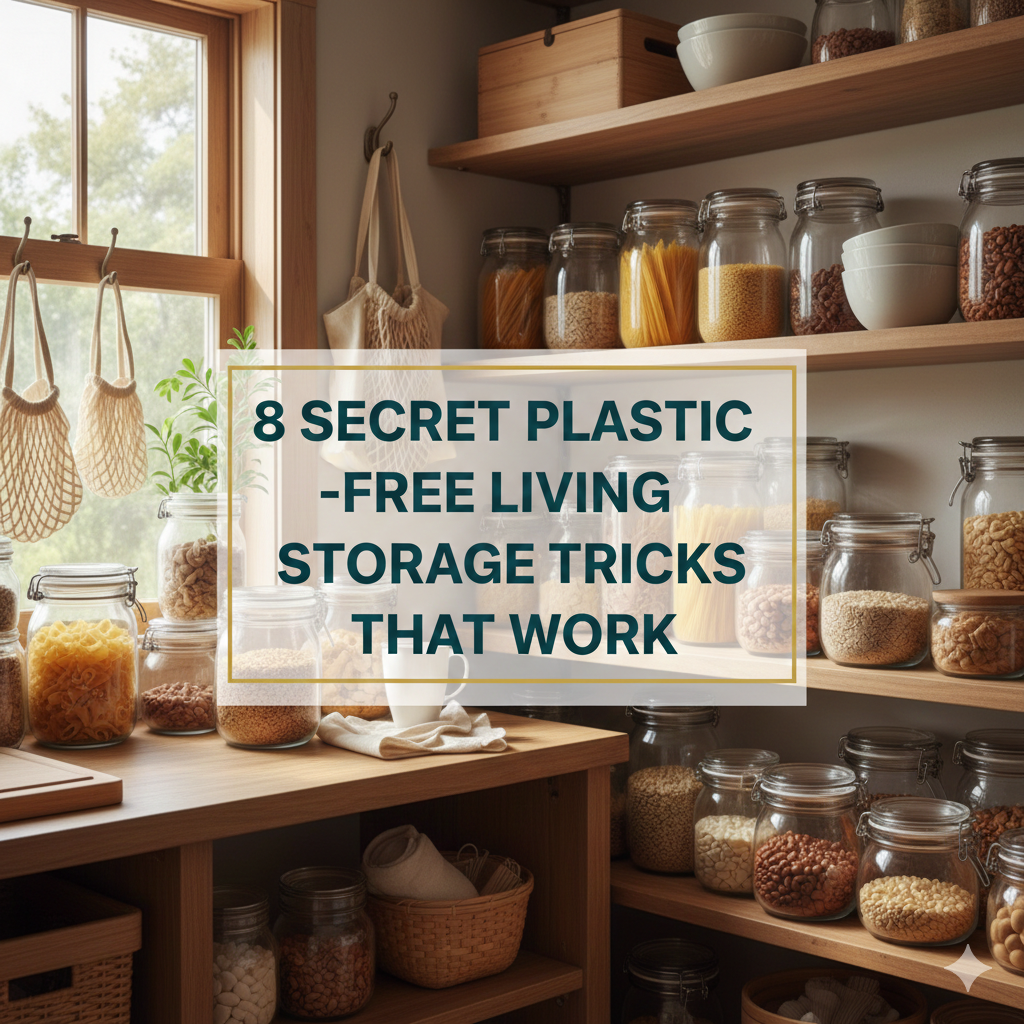
Glass jars are literally the only storage tool you need in a kitchen with no plastic. They are airtight, nontoxic and easy to clean, and they last for decades if you treat them right.
Mason jars, pasta sauce jars, pickle jars — make yourself save them all. They also function well for dry goods — rice, oats, lentils and flour. They’re good for liquids — homemade sauces, soups and juices. They also function in the freezer if you allow room at the top for liquids to expand.
How to Collect Jars for (Nearly) Free
You don’t have to start with fancy jars. Begin by upcycling what you already take home from the grocery store. Every time you purchase salsa, jam, pasta sauce or pickles, you’re really buying a free storage jar.
Rinse them out, take the labels off with a little warm water and baking soda, and you have yourself a free container.
When you have a good selection, label them with chalk labels or masking tape. Line them up on a shelf, or in a pantry, and your kitchen looks cleaner — and works better.
Pro tip: Wide-mouth jars are easier to fill and wash than narrow-mouth. If you are buying new, go wide-mouth every time.
Trick #2: There Will Be No More Cling Film With Beeswax Wraps
The Problem With Plastic Wrap
Cling film is among the most difficult of plastics to recycle. It usually can’t be recycled at all. It winds up in landfills or is carried off into waterways. Yet the average family burns through roll after roll each year.
Beeswax wraps are the fix.
How Beeswax Wraps Actually Work
Beeswax wraps are sheets of cotton covered with beeswax, tree resin and jojoba oil. The heat of your hands shapes them over bowls, fruits, cheese and cut vegetables. They keep their shape when they cool, sealing themselves up.
They’re washable, reusable, and compostable when they reach the end of their service life. A single wrap has a lifespan of about one year with regular use.
Use them to:
- Cover bowls in the fridge
- Wrap sandwiches and snacks
- Keep cut fruit fresh
- Store cheese (beeswax allows it to breathe, unlike plastic)
Note for vegans: Plant-based wax wraps using candelilla wax work exactly the same and contain no animal products at all.
Trick #3: Cloth Bags Fill the Void Left by Plastic Bags
More Than Just a Shopping Bag
Reusable shopping bags are something most people understand. But cloth bags are so much more than groceries.
In a plastic-free storage world, cloth bags take care of:
- Bulk dry goods from the store (bring your own bag, fill it, weigh it)
- Bread storage (breathable fabric keeps bread from going soggy)
- Produce in the fridge (mesh bags keep vegetables crisp)
- Snacks on the go
- Kids’ toys and small items
- Toiletry organization when traveling
Choosing the Right Fabric
Not all cloth bags are equal. Here’s a quick breakdown:
| Fabric Type | Best For | Breathability | Washable |
|---|---|---|---|
| Muslin | Dry goods, bread | High | Yes |
| Mesh | Produce, bulk | Very High | Yes |
| Canvas | Heavy items, shopping | Low | Yes |
| Linen | Herbs, delicate produce | High | Yes |
Muslin and linen are particularly good in the kitchen. They’re light, washable, and food-safe.
Trick #4: Stainless Steel Always Pays for Itself
Why Stainless Steel Deserves Its Place
Stainless steel containers cost more to buy than plastic at the outset. But here’s the math: the lifetime of a plastic container is maybe 2–3 years before it warps, stains or cracks. A stainless steel container lasts at least 10–20 years, often more.
When you consider the cost over time, stainless steel is actually more cost-efficient.
It’s also safer. High-quality stainless steel (look for 18/8 or 304-grade) will not leach chemicals, take on odors, or become permanently discolored by tomato sauce and turmeric.
Where Stainless Steel Shines in Storage
- Lunchboxes and food prep containers: Ideal for packing anything. Many have leak-resistant lids.
- Bulk bin storage: Great for nuts, seeds, dried fruit or coffee.
- Fridge storage: Keeps food fresh and stacks neatly.
- Kids’ snack containers: Sturdy enough to withstand the rigors of being thrown in and out of a bag.
What to look for when buying: If you can, avoid containers with plastic lids. Some brands now have bamboo or stainless steel lids that seal just as effectively.
Trick #5: Wooden and Bamboo Tools Instead of Plastic Organizers
Rethinking Your Drawers and Shelves
Go to any home goods store and you’ll find plastic drawer organizers, plastic shelf risers, plastic hooks, and plastic baskets. They’re cheap and everywhere.
But they crack, yellow with time and turn into junk.
The Natural Alternative That Lasts Longer
Wood and bamboo organizers are more durable, look nicer and are biodegradable at the end of their life. They work just as well in:
- Kitchen drawers (bamboo cutlery organizers)
- Bathroom shelves (wooden soap dishes, bamboo trays)
- Closets (wooden shelf dividers)
- Kids’ rooms (wooden toy bins and crates)
Bamboo is an insanely fast-growing plant — reaching full size in 3–5 years, as opposed to several decades for hardwood trees. That makes it one of the most renewable materials on earth.
Look for organizers at thrift stores and secondhand shops before you buy new. Wooden items age beautifully and are easy to clean.
Trick #6: Put the Freezer to Work Smarter With Plastic-Free Techniques
Most People Freeze Wrong
Freezing is one of the more effective food waste reduction methods. But almost everyone uses plastic freezer bags to do it. Those bags usually get used once and thrown away.
Here’s how to freeze food without any plastic.
Plastic-Free Freezing Options That Are Actually Worth It
Glass jars: Wide-mouth mason jars freeze nicely. Fill only to around 80% because the contents will expand. They are good for soups, stocks, sauces and smoothie packs.
Stainless steel containers: Freezer temperatures are no match for food-grade stainless steel. Great for batch-cooked meals.
Silicone bags and molds: Food-grade silicone is a much better choice than plastic. It’s BPA- and phthalate-free, and can go from freezer to oven to the dishwasher.
Parchment paper wrapping: For things such as fish fillets, chicken pieces or baked goods, wrap them snugly in unbleached parchment paper and tie with twine. It’s surprisingly good for short-term freezing.
| Method | Works For | Lasts In Freezer | Reusable |
|---|---|---|---|
| Glass jars | Soups, sauces, grains | 3–6 months | Yes |
| Stainless steel | Meals, leftovers | 3–6 months | Yes |
| Silicone bags | Fruit, meat, snacks | Up to 12 months | Yes |
| Parchment wrap | Fish, baked goods | 1–3 months | No |
Trick #7: Upcycle What You Have Before Purchasing Anything New
The Most Eco-Friendly Option Is What You Already Own
This is the trick most people fail to use.
Before purchasing any new plastic-free storage product — glass jars, stainless tins, bamboo boxes — look at what you already have. You may have more usable containers lurking in cabinets than you think.
Creative Repurposing Ideas That Work
Tin cans: Cleaned soup and tomato cans work well as pencil holders, utensil organizers or small-item containers for the craft area.
Cardboard boxes: Shoeboxes function as drawer organizers. Sturdy shipping boxes are transformed into shelf dividers. Line them with fabric scraps for a polished look.
Old ceramic mugs: A chipped or cracked mug has no place in your cupboard, but it works well as a pen cup, scissor holder, paintbrush carrier or cotton swab organizer on the bathroom shelf.
Wicker baskets: If you have any hiding away in closets or under beds, they’re ready-made natural storage containers. Use them for blankets, produce, magazines or bathroom supplies.
Glass bottles: Wine bottles and olive oil bottles can become decorative storage for dried pasta, cooking utensils or even used as a water carafe on the table.
Repurposing costs nothing. It reduces waste immediately. And it keeps things out of the trash before they’ve really lived out their useful life.
🌿 For even more creative repurposing and swap ideas, the Zero Waste Home blog by Bea Johnson is packed with real-life plastic-free living strategies worth bookmarking.
Trick #8: Label Everything — The Simple System That Keeps It Going
Why Being Organized Makes Plastic-Free Living Possible
Here’s the thing about plastic-free storage: it’s easier to keep up with when everything is clearly organized and labeled.
Without labels, all glass jars of white powder look the same. Is that salt? Sugar? Baking soda? Confusion breeds frustration, and frustration cycles back to plastic packaging because at least you can see what’s inside.
Good labeling fixes this instantly.
Easy, Plastic-Free Labeling Methods
Chalk labels: Reusable and erasable. Write on them with chalk, wipe off when needed, relabel. Works on glass, stainless steel and wooden boxes.
Masking tape + marker: The no-fuss choice. Costs almost nothing. Peel off and replace as necessary.
Embossed metal tags: For a more permanent, decorative look — great for long-term pantry storage.
Paint pens on glass: Write directly on jars. Removes with rubbing alcohol when you want to change the label.
A good labeling system also includes expiration dates or “packed on” dates. This helps cut down on food waste by keeping track of what needs to be used first.
Pulling It All Together: A Plastic-Free Storage Action Plan
You don’t have to do all eight tricks at once. That is the mistake many people make — trying to overhaul everything in a single weekend, feeling overwhelmed and abandoning it all.
Instead, try this approach:
Month 1: Concentrate on the kitchen. Start saving glass jars. Pick up one set of beeswax wraps. Replace cling film first — it’s the easiest swap.
Month 2: Tackle freezer storage. Switch to glass jars and silicone bags for anything you freeze regularly.
Month 3: Move to dry goods storage. Keep your jar collection stocked with bulk-bought rice, oats, pasta, nuts and spices.
Month 4: Organize the rest of your home — bathroom, closets, kids’ rooms — using bamboo organizers, cloth bags and repurposed containers.
You’ll have built up over four months a fully functioning, stress-free plastic-free storage system.
How Plastic-Free Storage Saves You Money Over Time
Cost is one thing people worry about. Yes, a set of stainless steel containers costs more than a pack of plastic bags. But zoom out for the long-term view.
| Item | Plastic Option | Cost/Year | Plastic-Free Option | Cost Over 10 Years |
|---|---|---|---|---|
| Food wrap | Cling film (2 rolls/month) | ~$24/year | Beeswax wraps (3 wraps) | ~$30 once |
| Food bags | Ziplock bags (1 box/month) | ~$60/year | Silicone bags (4 bags) | ~$40 once |
| Food containers | Plastic Tupperware | ~$30/year (replacement) | Stainless steel set | ~$50 once |
| Pantry storage | Plastic bins | ~$20/year (replacement) | Glass jars (saved/bought) | ~$20 once |
The savings stack up fast. Within 18–24 months of switching, most people pay less for storage.
FAQs About Plastic-Free Living Storage
Q: Is it safe to put glass in the freezer? A: Yes, with the right jars and the correct process. Use wide-mouth mason jars, fill only to 80% so there’s room for expansion, and let hot foods cool prior to freezing. The primary cause of breakage is thermal shock — very hot glass placed into very cold conditions.
Q: Can beeswax wraps be used for meat and fish? A: No — beeswax wraps are not suitable for raw meat or fish. For those, use glass or stainless steel containers with lids. Beeswax wraps are fine for produce, bread, cheese and covering food that has already been cooked.
Q: How do I store liquids without plastic lids? A: Glass jars with metal lids are great. You can also use swing-top glass bottles for sauces and oils. And a small plate over a bowl works well for items in the refrigerator.
Q: Bulk buying — are you allowed to bring your own containers to stores? A: Quite a few do, including co-ops, natural food stores and zero-waste shops. Call first or look up their policy online. Bring cloth bags or glass jars, have them weighed (tared) before filling and you’re all set.
Q: Is silicone truly plastic-free? A: Silicone is actually a synthetic polymer and not plastic. It’s made from silicon (from sand) and oxygen. It’s free from BPA and phthalates, and far more durable than plastic. Many people in the zero-waste community consider it an acceptable transitional material, even if it isn’t 100% natural.
Q: How can I keep cloth bags clean? A: Wash muslin and linen bags in hot water with a natural detergent. A simple rinse after each use is typically enough for produce mesh bags. Make sure they are completely dry before using them to store food again.
Q: Is there a way to pack kids’ snacks without using plastic? A: Absolutely. Stainless steel snack tins, small glass jars with lids or cloth snack bags all work well for kids. They are solidly constructed, safe and easy for children to open.
Conclusion: Small Swaps, Big Impact
Plastic-free living storage is all about progress, not perfection.
Every time you fill up a glass jar rather than reaching for a plastic bag is a win. Every beeswax wrap that replaces cling film counts. Every bamboo organizer that outlasts three plastic ones is a step in the right direction.
The tricks in this article are not difficult. They don’t take a lot of money or time. You just need to shift a little how you think about what comes into your home — and what you use to store the stuff you already have.
Begin with one trick this week. Just one. Build from there. Before long, plastic-free storage becomes second nature, and you’ll wonder why you ever stored things any other way.