6 Strong Plastic-Free Living Principles for Minimalist Fans
Picture your kitchen counter. Now picture every plastic bag, wrapper, bottle, and container you have thrown away this week — all piled up in one corner. Overwhelming, right?
The average person tosses almost 156 plastic bottles annually. Throw in bags, straws, food packaging, and personal care products — and the figure soars. Plastic has infiltrated our homes, our plates, and our daily routines without us even noticing.
But here’s the thing: You don’t need a zero-waste certification — or an Instagram grid that is perfectly curated — to make a real difference. Minimalists have discovered an easier way to live, one that naturally eliminates plastic without added stress or complications.
Living a plastic-free life is not as difficult as you think, especially if you adopt a minimalist state of mind. You buy less. You choose better. You cease replacing what you don’t have to.
This article guides you through six potent rules that successful minimalists leverage to remove plastic from their lives — not necessarily in one fell swoop, but slowly and with lasting effects. Whether you’re just getting started or hoping to delve deeper, these rules will provide a workable foundation.
Why Minimalism and The Plastic-Free Life Are a Match Made in Heaven
Minimalism is about holding on only to what adds value to your life. Living plastic-free is about removing products that are harmful to the planet. When you sit them together, something clicks.
The vast majority of plastic waste comes from single-use, disposable products. These stand in diametrical opposition to what minimalists hold dear. A minimalist does not want 10 versions of the same item. They don’t want something that needs to be replaced all the time. They want things that endure, things they can use to a concrete end — and tidy back up.
That mindset makes it easier to find plastic-free swaps. You’re not adding more stuff — you’re choosing better stuff. And often, less of it.
The Trouble With Plastic No One Talks About Enough
Plastic doesn’t disappear. It breaks down into smaller and smaller pieces, called microplastics, that wind up in the oceans and soil — even your bloodstream. A study in 2022 found microplastics present in human lungs and heart tissue.
It’s not just a matter of the environment. It’s also a personal health issue.
Minimalists are often intentional about what they let into their space. When you understand plastic for what it is — subpar stuff that creates long-term complications — moving beyond it starts to feel less like sacrifice, and more like common sense.
Rule 1: Audit Before You Act
Before you buy anything “eco-friendly,” stop and take a good look around your home.
This is the first minimalist rule and, by far, the most important. A plastic audit is when you go room by room and take an honest look at where plastic appears in your life — bathroom, kitchen, bedroom, laundry area, or even your car.
How to Conduct a Simple Plastic Audit
You don’t have to be dramatic about it. Just grab a notebook or open your phone’s notes app and take a walk through your home. List every plastic item you see. Focus on single-use items first — things like:
- Plastic zip-lock bags
- Shampoo and body wash bottles
- Plastic wrap and cling film
- Disposable razors
- Plastic toothbrushes
- Single-serve coffee pods
- Plastic grocery bags
When you have your list, divide it into two columns: things I use once and things I use over and over again. The starting point is the disposable column. That’s your action plan.
The point of the audit is not guilt. It’s clarity. You cannot address what you haven’t seen.
Why Minimalists Need This Rule
Minimalists aren’t fans of waste — and that includes wasted effort. By doing the audit first, you don’t buy 12 eco-products you never actually use. You learn that perhaps 4 or 5 deliberate swaps will fix around 80% of your plastic problem at home.
That’s the minimalist way: precise, intentional, and efficient.
Rule 2: Replenish as You Finish, Not All at Once
One of the most common mistakes people make when going plastic-free is thinking they have to throw everything away and buy all-new sustainable replacements on day one.
This wastes money. It squanders the energy that went into creating the item you’re casting aside. And frankly, it’s not very minimalist.
The “Use It Up First” Mindset
The second rule is simple — when something runs out, replace it with a plastic-free version. Not before.
Use up all the shampoo in your plastic bottle. Then switch to a shampoo bar. Polish off that plastic wrap. Then purchase a set of beeswax wraps or silicone lids. Consuming what you have before moving on is not laziness — it’s responsible.
This method also buys you time to research. You don’t have to make every swap in a panic. You have weeks, or even months, to find the right alternative before you actually need it.
A Realistic Swap Timeline
| Item | When to Swap | Plastic-Free Alternative |
|---|---|---|
| Shampoo bottle | When it’s empty | Shampoo bar or refillable bottle |
| Plastic toothbrush | Every 3 months | Bamboo toothbrush |
| Dish soap bottle | When it’s empty | Soap bar or refill station |
| Plastic food bags | Once they’ve been used | Silicone bags or glass containers |
| Plastic razor | Once dull | Safety razor with a metal handle |
| Cling wrap | When a roll finishes | Beeswax wraps or silicone stretch lids |
| Water bottle | If it gets damaged | Stainless steel or glass bottle |
This kind of timeline makes the challenge of plastic-free living feel far more achievable than daunting.
Rule 3: Buy Once, Buy Well
Minimalists have a catchphrase: buy less, but buy better. This is the heart of plastic-free living.
Cheap plastic things are designed to be thrown away. A plastic food container cracks after six months. A plastic spatula melts or warps. A plastic water bottle becomes scratched and grimy. So you buy another one. And another. It’s a cycle that keeps driving demand for plastic.
Investing in Durable, Plastic-Free Alternatives
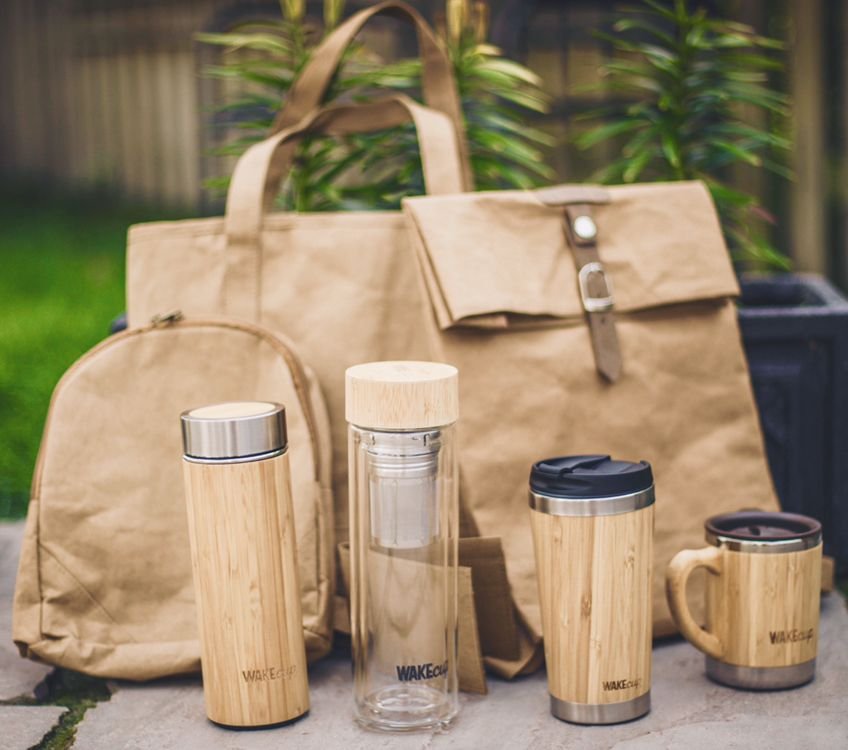
You put a stop to the cycle when you invest in a quality substitute once. A good cast iron pan can last a lifetime. A stainless steel water bottle can last more than 10 years without replacement. A good glass storage set won’t crack or leach chemicals into your meals.
Yes, the initial price is frequently higher. But when you do the math over five or 10 years, you nearly always come out ahead.
Here’s a quick comparison:
| Item | Plastic Version Cost (5 years) | Quality Alternative Cost (5 years) |
|---|---|---|
| Water bottle | $25–$50 (multiple replacements) | $35 (one stainless bottle) |
| Food storage | $40–$60 (replaced containers) | $50 (glass set, once) |
| Razor | $80–$100 (disposable cartridges) | $30–$40 (safety razor + blades) |
| Dish scrubbers | $15–$20 (plastic ones) | $12 (natural fiber, lasts longer) |
The numbers speak clearly. Buy once and buy well — it saves money and plastic.
What to Look for When Shopping for Plastic-Free Products
When you swap, try to choose materials like stainless steel, glass, cast iron, bamboo, wood, natural rubber, or organic cotton. Steer clear of products that are “eco-looking” but still contain plastic components — like bamboo toothbrushes with nylon bristles, or compostable packaging that requires industrial composting.
Check ingredient labels on personal care products. Look for glass or metal packaging. Find out if a brand offers refills.
Rule 4: Get Your Kitchen Skills Down First
For most households, the kitchen is the single largest source of single-use plastic. Packaging, bags, wraps, bottles, pods — it accumulates quickly. But it’s also where the most game-changing swaps take place.
Learning to live plastic-free in the kitchen does not mean making every meal from scratch all of the time. It’s about making better choices around how you store, shop, and prep food.
Shop With Less Packaging in Mind
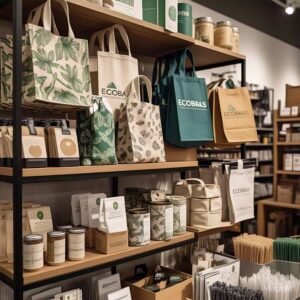
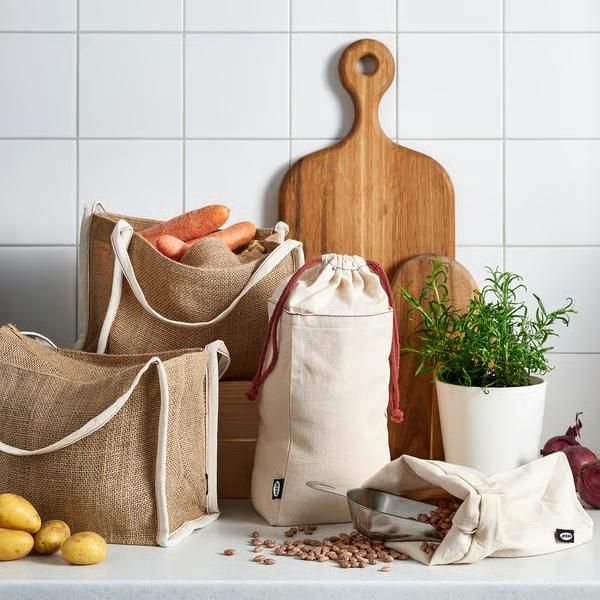
Start at the store. Bring reusable cloth tote bags for groceries and small mesh produce bags for fruits and vegetables. These are among the simplest swaps you can make.
Buy in bulk when possible. Many grocery stores today have bulk sections where you can fill your own containers with grains, pasta, nuts, and spices. Bring a jar, fill it up, weigh it, then add it to your cart. No packaging required.
Choose loose produce over pre-packaged. One loose apple equals zero plastic waste. A bag of six apples wrapped in plastic creates plenty.
Plastic-Free Food Storage That Actually Works
| Storage Need | Plastic Option | Plastic-Free Option |
|---|---|---|
| Leftovers | Plastic containers | Glass jars with lids |
| Sandwiches | Zip-lock bags | Beeswax wraps or cloth sandwich bags |
| Berries/small fruit | Plastic clamshells | Breathable mesh produce bags |
| Bread | Plastic bread bag | Cloth bread bag or beeswax wrap |
| Liquids | Plastic bottles | Glass mason jars |
| Cheese | Plastic wrap | Wax paper or cheese paper |
Mason jars are some of the most useful things you can have in a minimalist plastic-free kitchen. They store dry goods, leftovers, smoothies, and sauces. They go in the dishwasher. They last for years. One product, endless uses — very minimalist.
The Coffee and Tea Situation
Single-use coffee pods are one of the most wasteful plastic habits. Billions are produced each year, and most can’t be recycled. Switch to a reusable pod, a French press, or a pour-over setup. All three are simple, inexpensive, and produce zero plastic waste.
For tea, loose-leaf tea with a stainless steel strainer beats plastic-wrapped tea bags — which in many cases even contain and release microplastics through the paper — every time.
Rule 5: Reimagine the Bathroom From the Ground Up
Following the kitchen, the bathroom is the second largest contributor to plastic waste in your home. Consider it: shampoo, conditioner, body wash, face wash, lotion, toothpaste, shaving cream, and deodorant. With few exceptions, almost every product comes in a plastic bottle or container.
The good news: nearly all of it has a plastic-free alternative, and most of those work just as well — if not better.
If you’re looking for a comprehensive guide to getting started, Plastic Free Living is a great resource packed with practical tips, product recommendations, and beginner-friendly advice for every room in your home.
The Solid Bar Revolution
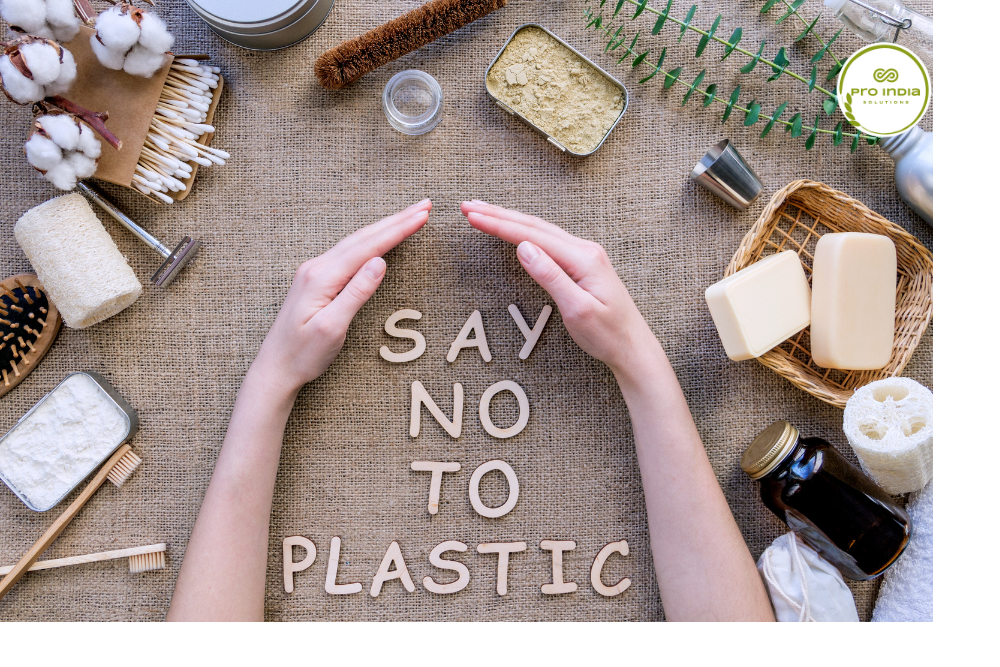
Shampoo bars, conditioner bars, face cleanser bars, and body wash bars are increasingly popular — for good reason. They are concentrated, so they last two to three times longer than their liquid counterparts. They come in paper or cardboard packaging. And they travel easily without liquid restrictions.
One shampoo bar can replace two or three plastic bottles. That’s a significant cut without major lifestyle changes.
Bathroom Swaps Worth Making
| Product | Plastic Packaging | Plastic-Free Alternative |
|---|---|---|
| Shampoo | Plastic bottle | Shampoo bar |
| Conditioner | Plastic bottle | Conditioner bar or DIY rinse |
| Body wash | Plastic bottle | Bar soap |
| Toothpaste | Plastic tube | Toothpaste tablets or glass jar paste |
| Toothbrush | Plastic handle | Bamboo handle toothbrush |
| Razor | Plastic disposable | Metal safety razor |
| Deodorant | Plastic stick | Cardboard tube or glass jar deodorant |
| Cotton pads | Plastic bag | Reusable cloth rounds |
| Dental floss | Plastic container | Silk or bamboo floss in glass dispenser |
A Note on Greenwashing in the Bathroom Aisle
Many products are plastered with claims of being “natural,” “clean,” or “sustainable” but are still housed in plastic. Do not be fooled by green labels. Look at the actual packaging. See if the brand offers a refill program. Find out if the ingredients are really clean or just marketed to seem that way.
Minimalists don’t fall for marketing. They look at the facts.
Rule 6: Build Systems, Not Willpower
This is the rule that distinguishes people who succeed at plastic-free living from those who burn out after two weeks.
Resting your hope on willpower to remember your grocery bag, your water bottle, or your produce bags is just exhausting. And eventually, you’ll forget. Then you’ll feel guilty. Then you’ll give up.
The minimalist approach is different. Build simple systems that make plastic-free choices automatic — so you don’t even have to think about them.
How to Create a Plastic-Free System at Home
Keep bags by the door. Not in the car, not in the closet — by the door. You pick up your keys and there they are, the bags. You take them. Done.
Leave a water bottle on your desk or kitchen counter. Out of sight is out of mind. If you can see your stainless steel bottle, you’ll reach for it every time.
Set up a shopping kit and keep it at the ready. A small tote with your mesh produce bags, a couple of glass jars for bulk shopping, and your reusable bags. When you’re heading out, grab the kit. No scrambling, no forgetting.
Start a “run-out list” on your refrigerator. When you notice a plastic product is running low, write down what the plastic-free swap will be. When it runs out, you’ll already know what to buy next.
The 5-Minute Reset Habit
Each Sunday, spend five minutes resetting your plastic-free systems. Wash your mesh bags. Refill your glass jars. Make sure your shopping kit is well-stocked. This small habit keeps everything running effortlessly.
Minimalists know that systems remove decision fatigue. When you don’t have to decide, you don’t fail.
Take Your System Outside the Home
Plastic-free living doesn’t end at your front door. Here’s how to build a few simple on-the-go habits:
Keep a small kit in your bag or car — a reusable water bottle, a bamboo or metal straw, a set of travel cutlery, and a small cloth bag. With these four items, you can refuse plastic cutlery, plastic straws, and plastic bags almost anywhere you go.
When dining out, request no straw, refuse the plastic bag, and bring your own containers for leftovers. These small gestures result in thousands of pieces of plastic saved over a year.
Real Impact: What These 6 Rules Can Actually Do
On a personal level, it’s easy to feel that individual choices don’t matter. But here’s what consistently following these six rules could do over time.
| Action | Plastic Saved Per Year (Estimated) |
|---|---|
| Using a reusable bag | 500+ plastic bags |
| Switching to a safety razor | 150+ disposable razors |
| Using shampoo bars | 6–10 plastic bottles |
| Having a reusable water bottle | 156 plastic bottles |
| Switching to bar soap | 5–8 plastic bottles |
| Bulk shopping with jars | 30–50 plastic containers |
| Reusable produce bags | 100+ plastic produce bags |
Estimated plastic items avoided annually: 950–1,000+
That’s one person. One household. Multiply that by millions of minimalists making the same choices and the impact becomes vast.
According to National Geographic, more than 380 million metric tons of plastic are produced every year — and individual lifestyle choices remain one of the most accessible ways to chip away at that number.
Your Questions Answered — About Going Plastic-Free
Q: Is plastic-free living expensive? It can have higher upfront costs, though over the long run it almost always saves money. You purchase less, replace less frequently, and invest in items made to last. After their first year of plastic-free living, most people report spending less.
Q: Is it possible to go totally plastic-free? Completely? That’s very hard to do in today’s world. Plastic is everywhere — from medical equipment and technology to countless hidden products. This isn’t about achieving perfection — it’s about reducing. Focus on progress, not perfection.
Q: What are some good first swaps for beginners? Begin with a reusable water bottle, a cloth shopping bag, and a bamboo toothbrush. These three changes are easy, affordable, and have an immediate impact.
Q: Are shampoo bars actually suitable for all hair types? There’s usually a shampoo bar that works for you, but there can be an adjustment period (between 1 and 3 weeks) while your scalp stabilizes. Look for bars tailored to your hair type and be patient.
Q: What do I do in plastic-heavy situations like travel or dining out? Build a mini on-the-go kit with a reusable bottle, metal straw, and pocket-sized cutlery. When at a restaurant, request no straw and no bag. You may not be able to avoid all plastic, but you can cut back significantly.
Q: What about plastic in food packaging at the grocery store? Shop at bulk sections, choose loose produce, and buy from brands that use glass or cardboard. Not every store carries these options — do what you can with what you have. Even small reductions matter.
Q: Are bamboo products really sustainable? Bamboo grows quickly without pesticides and is biodegradable, making it significantly better than plastic. However, make sure products don’t use plastic glues or coatings, which would lower their eco-credentials.
One Rule to Start Your Plastic-Free Journey
Plastic-free living is not about being perfect. It’s about being deliberate — which is exactly what minimalists are already wired to do.
Start with the audit. Know what you’re working with. Then replace things as they run out, opt for quality over quantity, tackle the kitchen and bathroom, and build systems that make plastic-free choices easy.
These six rules succeed because they work with your life, not against it. They don’t demand that you transform everything overnight. They ask you to be more intentional with every choice you make — and over time, those choices add up to something truly powerful.
You don’t need more eco-products. You need a better relationship with what you already have, and a clear plan for what comes next.
Start today. Pick one rule. Apply it this week. Then build from there.
The planet doesn’t need a few people living perfectly plastic-free lives. It needs millions of people living slightly more intentional ones. And that starts with you.