4 Ultimate Starter Tips for Beginners Going Plastic-Free
You open your kitchen cabinet and plastic comes tumbling out. Bags, bottles, containers, wraps — there’s no end of it.
Sound familiar?
The vast majority of people would like to live more sustainably. But the prospect of going plastic-free seems daunting. Where do you even start? Do you throw it all out at once? Do you have to go broke buying fancy eco products?
The answer is no — and that’s the good news.
Plastic-free living is not about being perfect. The way to win is through small, intelligent swaps that accumulate over time. One reusable bag at a time. One metal straw at a time. One mindful decision at a time.
This guide breaks it all down into 4 simple, beginner-friendly tips. By the finish, you’ll know exactly what to do, where to begin and how to keep going — without getting stressed.
Let’s dive in.
Why Living Plastic-Free Is More Important Than Ever
But before we reveal some tips, why does that even matter?
The world creates more than 400 million tonnes of plastic each year. More than half of it is single-use — used once, then thrown away. And the scary thing is, most of it doesn’t just vanish. It degrades into infinitesimal particles, known as microplastics, that can wind up in oceans, soil and even our bodies.
Research studies have found microplastics in human blood, lungs and breast milk. That is not a far-off environmental problem. That’s personal.
The good news? You have power here. Every swap you make sends a message with your wallet and your habits. And when millions of people do something small, it becomes enormous.
Tip 1 — Begin With the “Dirty Dozen” Plastics in Your Home
What Are the Dirty Dozen?
Not all plastic is equal. Some items are so heavily used and discarded so quickly that cutting them out makes an immediate difference.
Here are the plastic items most beginners should aim to tackle early:
| Item | Average Daily Use | Easy Swap |
|---|---|---|
| Plastic water bottles | 1–3 per person | Stainless steel or glass bottle |
| Plastic grocery bags | 5–10 per trip | Reusable cotton tote bags |
| Plastic straws | 1–3 a day | Metal, bamboo, or silicone straws |
| Cling wrap / plastic wrap | Multiple uses | Beeswax wraps or silicone lids |
| Plastic coffee cups / lids | 1–2 a day | Reusable travel mug |
| Plastic cutlery | Occasional | Bamboo or metal utensil set |
| Plastic produce bags | Every grocery trip | Mesh reusable produce bags |
| Shampoo and conditioner bottles | Weekly | Shampoo bars |
| Plastic zip lock bags | Daily | Silicone reusable bags |
| Disposable razors | Weekly | Safety razor |
| Plastic toothbrush | Every 3 months | Bamboo toothbrush |
| Plastic food containers | Daily | Glass or stainless container |
Do a Plastic Audit at Home
Make a quick audit before you buy anything new.
Tour your home with a notebook. Work room by room — the kitchen, bathroom, bedroom, office. List every plastic item you regularly use. Then mark the ones you use and throw away often.
Those are your starting points.
This audit takes about 20–30 minutes. But it provides a clear picture of where your plastic really comes from. Most beginners are surprised. The bathroom alone often contains 10–15 single-use plastic items.
The “Use It Up, Then Swap” Rule
Here’s a great money- and waste-saving tip: don’t get rid of all your plastic items just to buy eco-friendly versions.
That defeats the purpose.
Rather, just use what you have until it’s gone or worn out. Then swap it out for a sustainable option. In this way, you’re not generating extra waste by throwing out usable items too early. You’re making the switch naturally, one product at a time.
This approach is also gentler on your wallet. Going plastic-free doesn’t have to break the bank if you pace it out over time.
Tip 2 — Rethink Your Kitchen (One Swap at a Time)
Why the Kitchen Is Ground Zero
The kitchen is the epicenter of household plastic. Just think about it — packaging on everything, plastic containers everywhere, cling wrap, plastic bags, disposable bottles.
Tackling the kitchen first gives you the biggest wins, fastest.
But don’t attempt to overhaul everything at once. Choose one area and nail it before moving on to the next.
Start With How You Store Food
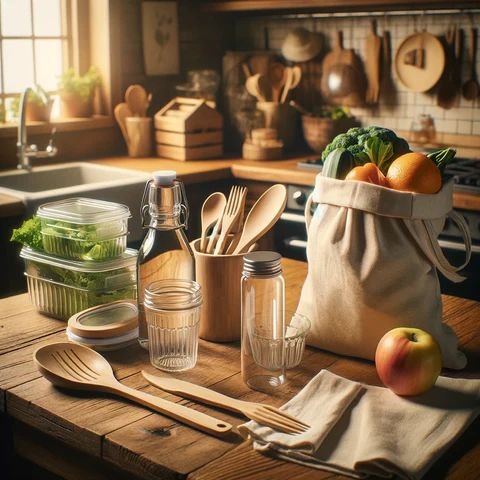
Plastic cling wrap is among the simplest of swaps. And it’s one that makes you feel great every time you reach for the alternative.
Beeswax wraps are a favourite. They’re made of cotton coated in beeswax along with tree resin and jojoba oil. You press them over bowls and around food using the warmth of your hands. They mold and stick naturally. Rinse them in cool water and they’re good for up to a year.
Silicone stretch lids are also a wonderful alternative. They are available in various sizes and can be placed over bowls, cans or cut fruit. Reusable, flexible and easy to clean.
Glass containers with airtight lids are ideal for leftovers and meal prep. Yes, they’re heavier than plastic. But they don’t leach chemicals into your food, they last for years and they look great.
The Grocery Shopping Overhaul
Every grocery trip is a plastic trap — if you aren’t prepared.
Here’s how to shop smarter:
Bring reusable bags. Keep a few in your car or tucked beside the front door so you never leave home without one. Cotton tote bags, mesh bags or even an old backpack all work great.
Use produce bags. Those thin plastic bags in the produce section? Swap them out for lightweight mesh bags. You can see through them, they’re washable and they hold up for years.
Buy in bulk when possible. A lot of health food stores and co-ops allow you to bring your own containers for grains, nuts, pasta and spices. You pay by weight, skip the packaging and save money.
Choose loose produce over pre-packaged. Apples in a plastic bag vs. apples you pick yourself — always choose the loose option when available.
Rethinking Drinks at Home
Single-use plastic bottles are one of the biggest offenders worldwide.
At home, the simplest solution is a water filter. A good countertop or pitcher filter ensures you’ll always have clean, filtered water without the need to purchase bottled water. Pair it with a reusable stainless steel or glass bottle for on-the-go.
For coffee fans: replace your plastic pod machine with a French press, pour-over or Moka pot. No pods, no plastic filters and incredible coffee.
For tea fans: loose leaf tea with a stainless steel infuser beats plastic-wrapped tea bags every time. In fact, many conventional tea bags are made with plastic to help them hold their shape — something most people aren’t aware of. According to research published by Science Direct, steeping a single plastic tea bag at brewing temperature releases billions of microplastic particles into your cup.
Tip 3 — Make Your Bathroom Plastic-Free (Without the Overwhelm)
The Bathroom Plastic Problem
Step into any bathroom and start counting the plastic bottles. Shampoo, conditioner, body wash, face wash, lotion, toothpaste tube, mouthwash bottle, razor, cotton swab container…
It adds up fast. The average person uses about 11 personal care products a day. Most come in plastic packaging.
The bathroom is a treasure trove of opportunities for plastic-free swaps. And many of them are actually more affordable in the long run.
Hair Care Without Plastic
Shampoo bars have come a long way. They used to be harsh and could leave hair feeling waxy. Today’s options are formulated for every hair type — dry, oily, curly, color-treated.
One bar is equivalent to 2–3 bottles of liquid shampoo. They’re compact, travel-friendly and typically packaged in paper or cardboard. For best results, look for bars free from sulfates and silicones.
Conditioner bars work the same way. Rub the bar between your palms, then work it through your ends. It takes a little getting used to, but once you’ve got it, you won’t go back.
Solid hair masks and hair oils in glass bottles round out a fully plastic-free hair routine.
Skin Care and Body Care Swaps
| Product | Plastic Version | Plastic-Free Swap |
|---|---|---|
| Body wash | Plastic pump bottle | Bar soap (paper wrapped) |
| Face wash | Plastic squeeze tube | Solid face cleanser bar |
| Moisturizer | Plastic jar or pump | Glass jar moisturizer |
| Deodorant | Plastic stick or spray | Deodorant in cardboard tube or glass jar |
| Cotton rounds | Disposable cotton pads | Reusable cloth rounds |
| Razors | Disposable plastic razor | Safety razor (metal) |
| Toothbrush | Plastic toothbrush | Bamboo toothbrush |
| Toothpaste | Plastic tube | Toothpaste tablets or glass jar tooth powder |
The Safety Razor Game Changer
Switching to a safety razor is one of the best plastic-free swaps you can make in the bathroom — for several reasons.
A quality stainless steel safety razor costs $20–$40 upfront. But replacement blades come to $10–$15 for 100 blades. That’s pennies per blade compared to multi-dollar disposable cartridges.
The razor itself lasts a lifetime with proper care. And the blades are fully recyclable metal. No plastic. Zero.
Yes, there’s a learning curve. But once you dial in the angle (about 30 degrees), shaving becomes smoother and cheaper than ever.
Period Products and Plastic
This is worth mentioning because conventional period products contain a surprising amount of plastic.
Menstrual cups are reusable silicone cups that last up to 10 years. They hold more fluid than tampons, are comfortable once you learn insertion and produce zero waste.
Period underwear is another option — absorbent, washable and completely plastic-free.
Organic cotton pads and tampons in paper packaging are a good middle ground if you’re not quite ready for reusable options yet.
Tip 4 — Build Habits That Make Plastic-Free Living Automatic
Why Habits Beat Willpower Every Time
Here’s the truth: motivation fades. Willpower runs out.
If plastic-free living depends on you remembering and making a Herculean effort every single day, it won’t last.
But habits? Habits run on autopilot. Once a behavior becomes automatic — like buckling your seatbelt or brushing your teeth — you don’t have to think about it.
The goal is to make plastic-free choices habitual. And that takes a bit of strategy.
The “Never Leave Home Without It” Kit
One of the best habits you can build is carrying a reusable kit with you everywhere.
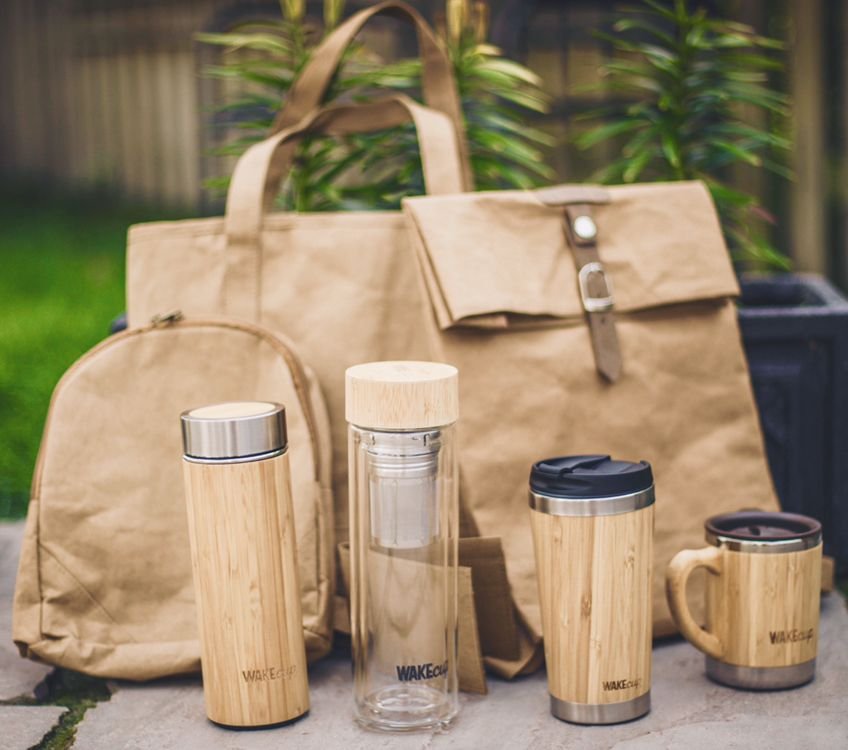
Here’s what a simple plastic-free kit might include:
- Reusable water bottle — stainless steel or glass
- Reusable coffee cup or travel mug — for café stops
- Bamboo or metal cutlery set — for takeout situations
- Cloth napkin — replaces paper napkins
- Reusable straw — metal or silicone
- Tote bag — compact enough to fold into a pocket or purse
- Small container — for unexpected leftovers or snacks
Pack this kit and keep it by the door. After a week or two, grabbing it before you leave becomes as automatic as grabbing your keys.
Habit Stacking for Plastic-Free Wins
Habit stacking means linking a new habit to an existing one. It’s one of the most reliable ways to make new behaviors stick.
Here are some examples:
- When you brew your morning coffee → use the French press instead of pods
- When you pack your lunch → use a beeswax wrap instead of cling wrap
- When you shower → reach for the shampoo bar on the left shelf
- When you brush your teeth → use the bamboo toothbrush hanging on the left hook
- When you leave the house → grab the tote bag hanging by the door
The key is specificity. Connect the new habit to an existing routine and a specific location cue. This eliminates the need to decide — it simply happens.
Join a Community (It Makes a Huge Difference)
Going plastic-free alone is harder than doing it with support.
Online communities like Reddit’s r/ZeroWaste, Instagram accounts focused on sustainable living, and local environmental groups can be incredibly motivating. You’ll find tips, product recommendations, encouragement and a sense of shared purpose. For even more inspiration and beginner-friendly guidance, Plastic Free Living is a great resource packed with practical advice for every stage of your plastic-free journey.
You don’t have to agree with everything in every community. Take what works for you and leave the rest.
Even just one or two friends making similar changes alongside you can keep motivation high and make the journey a lot more enjoyable.
Track Your Progress (Even Simply)
Progress tracking doesn’t have to be complicated.
Try keeping a simple note on your phone of plastic swaps you’ve made. Every time you use your reusable bottle instead of buying a plastic one, that’s a win. Every time you bring your own bags, another win.
Over months, these wins stack up. And seeing your list grow is genuinely motivating.
Some people like to photograph their “plastic-free wins” or keep a monthly tally of bottles avoided. Find whatever works for your personality.
A Quick Progress Roadmap for Beginners
Here’s a simple week-by-week plan to get started without feeling overwhelmed:
| Week | Focus Area | Actions to Take |
|---|---|---|
| Week 1 | Kitchen drinks | Get a reusable water bottle and coffee mug |
| Week 2 | Grocery shopping | Buy reusable tote bags and produce mesh bags |
| Week 3 | Food storage | Replace cling wrap with beeswax wraps or silicone lids |
| Week 4 | Bathroom basics | Switch to a bamboo toothbrush and bar soap |
| Week 5 | Hair care | Try a shampoo bar |
| Week 6 | On-the-go kit | Assemble your reusable carry kit |
| Week 7+ | Continue swapping | Use-it-up-then-swap for remaining items |
This timeline is a guide, not a rule. Adjust the pace up or down depending on your comfort and budget.
FAQs About Plastic-Free Living for Beginners
Q: Is plastic-free living expensive? Not necessarily. In fact, many swaps save money in the long run. A safety razor, reusable bottle and shampoo bar may cost more upfront, but will save you significantly over their disposable alternatives in the long term. Start with free swaps first — refusing straws, bringing your own bags, buying loose produce.
Q: Do I have to go 100% plastic-free to make a difference? Absolutely not. Even cutting your plastic use by 30–50% can make a serious difference. Progress over perfection is the mantra here. Every swap matters, and no one expects overnight transformation.
Q: What if my family isn’t on board? Start with yourself. Lead by example quietly rather than lecturing. When family members observe your changes working smoothly, many become curious. Focus on changes that don’t disrupt shared routines first.
Q: Do plastic-free products actually work as well as conventional ones? Most of the time, yes. Shampoo bars, safety razors, beeswax wraps and glass containers all perform excellently when you choose quality products. There may be a short adjustment period — particularly with hair care — but most people find they prefer the alternatives.
Q: What about plastic in food packaging at the supermarket? This one is tricky because it’s not always within your control. Focus on what you can control: bring your own bags, choose loose produce, buy in bulk where available, and pick products in glass, paper or metal packaging over plastic where there’s a choice. Don’t stress about what you can’t avoid yet.
Q: Is bamboo always the best eco-friendly alternative? It’s a great renewable resource, but bamboo isn’t the ideal choice for every product. Stainless steel tends to be more durable and is fully recyclable. Glass is non-toxic and endlessly recyclable. Research each product category separately rather than assuming bamboo is always best.
Q: How do I handle plastic-free living when traveling? Your reusable kit is your best friend on the road. Pack your water bottle, cutlery and travel-sized solid toiletries. Research zero-waste stores at your destination. And cut yourself some slack — travel is one of the tougher environments for staying plastic-free.
Wrapping It All Up
Plastic-free living is not about being perfect. It’s about being intentional.
You’ve now got four strong, actionable starting points: targeting the most common plastic offenders in your own home; rethinking your kitchen habits; making smart swaps in the bathroom; and building routines that make it all automatic.
The world doesn’t need a handful of people doing plastic-free living perfectly. It needs millions of people doing it imperfectly — but consistently.
It all begins with one swap. Maybe it’s picking up a reusable bottle tomorrow morning. Maybe it’s grabbing a bamboo toothbrush this week. Maybe it’s finally doing that plastic audit you’ve been putting off.