11 Simple Plastic-Free Swaps for a Zero-Waste Kitchen
Plastic is not just all about our kitchens. It encases our food, contains our leftovers, lines our shelves and frames our trash cans. The portion of it that gets used once, then discarded. And after you’ve tossed it, it’s not gone — once depleted, it remains in landfills for a couple of hundred years or else migrates to sea.
The good news? You don’t need to remodel your whole kitchen overnight. Small, smart substitutions can make a big difference. But if you’re new to zero waste and want to ease in or take your journey to the next level, these 11 plastic-free living swaps are simple, affordable and actually work.
Let’s dig in.
Here’s Why Your Kitchen Is the Best Place to Start Going Plastic-Free
Consider how much plastic you consume on a typical day of cooking. Plastic wrap. Zip-lock bags. Plastic bottles. Disposable cups. Crinkly bags of packaged snacks that can’t even be recycled.
The kitchen is one of the top contributors of single-use plastic in most households. At least 8 million metric tons of plastic enter the ocean every year, according to the Ellen MacArthur Foundation, much of it attributable to food packaging and kitchen waste.
The good news is that the kitchen is among the easiest places to shift. There are already plenty of plastic-free solutions on the market, they are cost-effective and in many cases perform better than what you’re replacing.
What Plastic-Free Living Actually Means
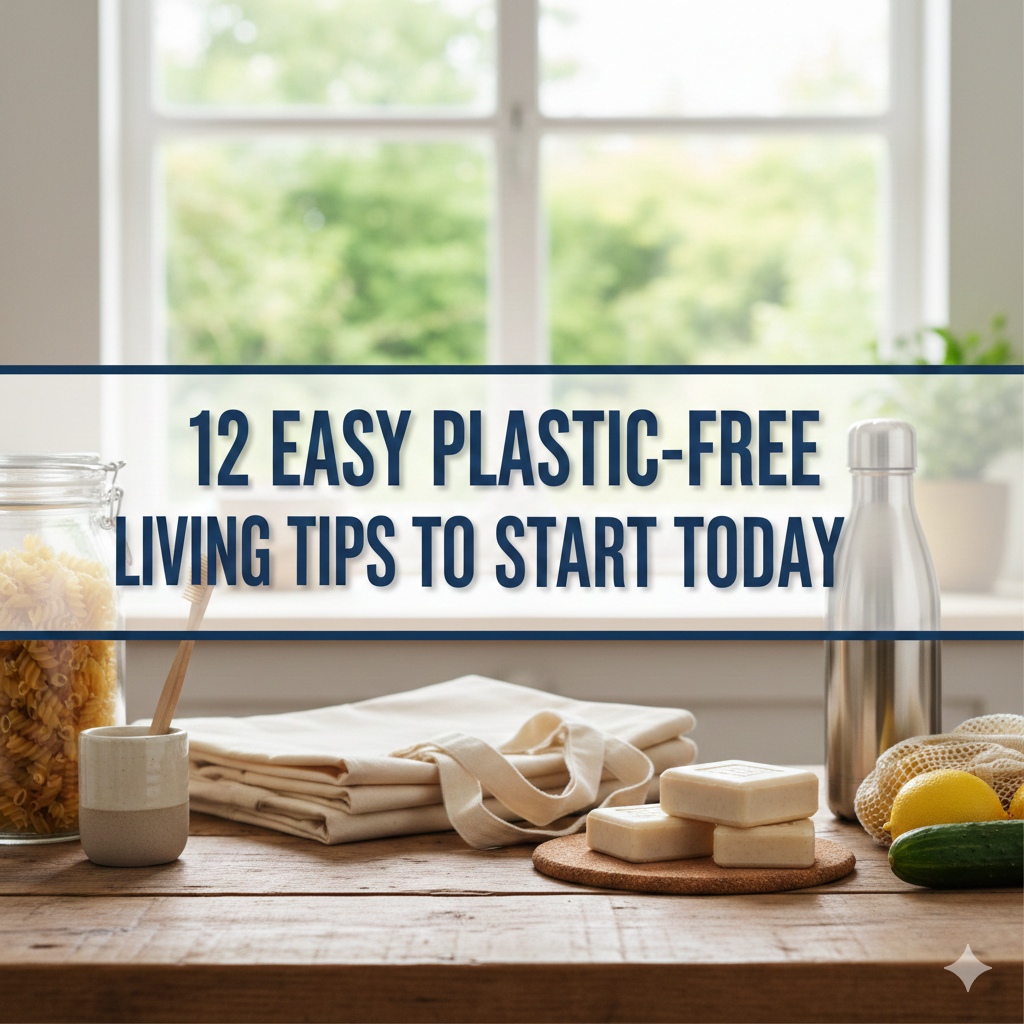
Living plastic-free doesn’t mean you have to live in a bubble or never touch another piece of plastic again. It means being intentional. It means selecting products that last longer, come in sustainable packaging and cause no damage to the planet when they’re no longer useful.
Creating a zero-waste kitchen is not about being perfect. It’s about doing better more of the time.
Start with one swap. Build from there. That’s it.
11 Swaps That Will Make Over Your Kitchen
Swap #1: Replace Plastic Wrap with Beeswax Wraps
Plastic cling wrap is one of the most annoying kitchen contraptions known to womankind. It clings to itself when you don’t want it to, rips at the most inopportune time and isn’t even recyclable.
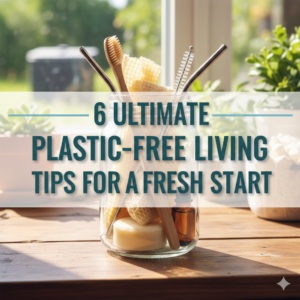
Beeswax wraps are the ultimate alternative. They are made of cotton fabric that has been coated with beeswax, tree resin and jojoba oil. You press them over bowls or around food with the heat from your fingers, and they keep their form.
Why they work:
- They can be used for up to a year with proper care
- Naturally antibacterial
- Compostable at end of life
- Come in cool patterns and sizes
Simply wash them in cool water with mild soap and air dry. Don’t use them on raw meat or in the microwave.
If you are not into beeswax (perhaps you are vegan), seek out plant-based wax wraps made with soy or candelilla wax. They work just as well.
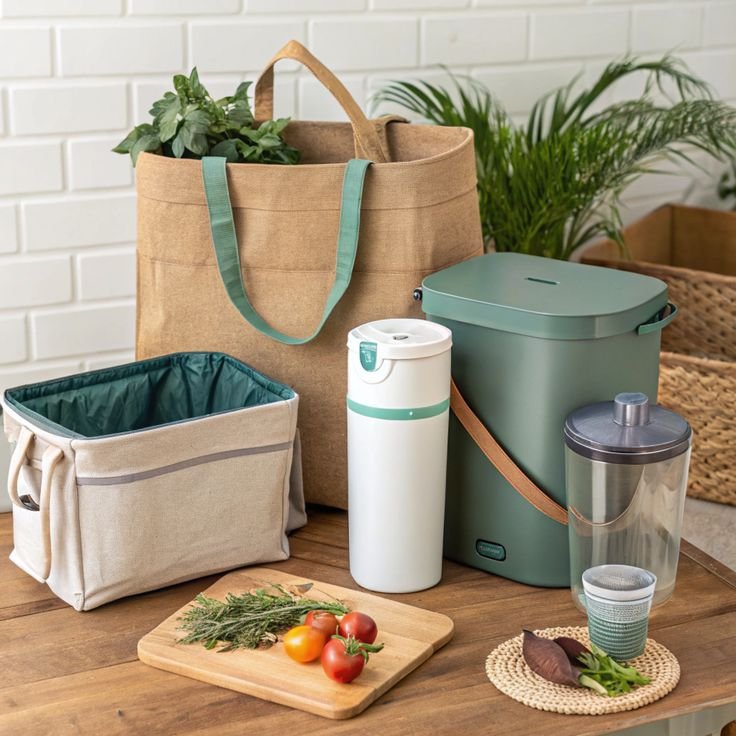
Swap #2: Ditch Plastic for Glass or Stainless Steel Food Containers
Plastic Tupperware may appear harmless, but over time it scratches, stains and can leach chemicals into your food — especially when heated.
Glass containers with silicone or bamboo lids are a great replacement. They’re oven-safe, microwave-safe and, best of all, they last for years. You can see exactly what’s inside without needing to open them, which also helps you reduce food waste.
Stainless steel containers are another excellent choice, especially for everyday on-the-go meals and kids’ lunches. They’re lightweight, durable and nearly indestructible.
| Container Type | Durability | Microwave Safe | Eco-Friendly |
|---|---|---|---|
| Plastic (standard) | Low | Sometimes | Low |
| Glass with silicone lid | High | Yes | High |
| Stainless steel | Very High | No | High |
| Silicone containers | High | Yes | Medium-High |
Swap #3: Pair Your Reusable Produce Bags — Curtailing Plastic Bags
Each time you buy apples, broccoli or mushrooms at the store, you reach for those thin plastic produce bags on a roll. For five minutes, and then they’re discarded.
The easy fix is reusable mesh produce bags. They’re typically made from organic cotton, or a blend of natural and recycled fibers. They’re washable, breathable (a boon when it comes to keeping produce fresh longer) and they fold up small enough to fit in your pocket.
Keep a pile of them by your front door, or in your shopping tote, so you never forget to bring some along.
Pro tip: Use different sizes. For garlic and small fruit, tiny mesh bags get the job done. The bigger ones work pretty well for leafy greens, peppers and bigger vegetables.
Swap #4: Jump on the Compostable or Bamboo Trash Bag Train
You still need a trash bag for all the stuff that goes in your actual garbage. The vast majority of trash bags are made of plastic, but some have become available that are certified compostable.
Compostable trash bags are constructed from starch derived from plants. They decompose in industrial composting facilities and, in some instances, backyard compost piles. For everyday kitchen trash, they do just fine in the durability department as a regular trash bag.
Bamboo trash bags are also starting to appear that use some proportion of bamboo fiber and plant-based materials. They’re tougher than you’d expect.
Just look at the certification label before purchasing. To ensure they’re truly compostable, look for certifications such as those from BPI (Biodegradable Products Institute) or EN 13432.
Swap #5: Use a Refillable Dish Soap Dispenser
Many dish soaps are packaged in throwaway plastic bottles that end up in the trash every couple of weeks. Over a year, that’s a lot of plastic.
There are two easy fixes here.
Option 1: Dish soap bars. They look like typical bar soap but are designed to cut through grease and clean dishes. They last longer than liquid soap, generally come in paper or cardboard packaging and work well.
Option 2: Concentrated dish soap tablets or refill pouches. Today, a lot of brands sell ultra-concentrated tablets that dissolve in water. You refill your current bottle, rather than buying a new one. Less plastic, less weight in shipping, less waste.
Either way, you’re making a great swap you hardly even have to think about after the first week.
Swap #6: Replace Plastic Sponges With Natural Options
Here’s something few of us consider: kitchen sponges are made of plastic. They’re also one of the germiest things in your home. And when they break down, all of those small plastic fibers wash down the drain and into waterways.
The natural alternatives have gotten really good. Here are your best options:
Loofah sponges: Made from the fruit of a gourd plant, loofahs are 100% natural, compostable and surprisingly good at removing grease.
Sisal or coconut-fiber scrubbers: Handy for pots and pans. They won’t scratch nonstick surfaces and hold up well to regular use.
Sponges made from cellulose wood pulp: They are plant-based and compostable. They soak up water and clean well.
Cotton or linen dishcloths: Old-fashioned but effective. Toss in the wash every few days and reuse indefinitely.
Swap #7: Replace Plastic Air Fresheners with Beeswax or Soy Candles
Fine, this one is a curveball — but the vast majority of kitchen air fresheners are made with plastic casings and synthetic fragrances.
Swap out for a natural beeswax or soy candle, or simmer a pot of citrus peels and herbs on the stove, to get that fresh scent in without plastic waste.
Another zero-waste method to keep the air in your kitchen smelling clean is with diffusers made from glass or clay that you fill with essential oils.
Swap #8: Make the Switch to a Reusable Water Bottle and Abandon Plastic Jugs
Shopping for bottled water, or worse, giant plastic jugs of water for the kitchen — that is one wasteful habit. This is completely solved by a good stainless steel or glass bottle in combination with a water filter.
A countertop water filter, pitcher-style or under-sink filter ensures your tap water is clean and tastes great. No more plastic bottles, no more schlepping heavy jugs, and at very little cost week after week.
| Option | Annual Cost (est.) | Plastic Waste |
|---|---|---|
| Single-use plastic bottles | $400–$600 | High |
| Large plastic water jugs | $200–$350 | Medium-High |
| Pitcher filter + reusable bottle | $60–$100 | Very Low |
| Under-sink filter | $150–$300 (one-time) | Nearly Zero |
The savings are worth the swap alone — and we haven’t even discussed what it does for the environment.
Swap #9: Buy in Bulk, Bring Your Own Containers
Packaged items are one of the main culprits of kitchen plastic. Just about everything at the supermarket arrives encased in plastic — even staples like rice, pasta, nuts and coffee.
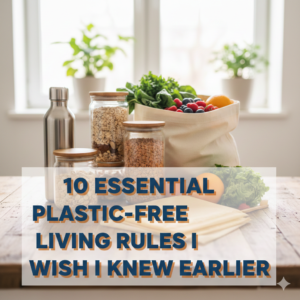
Bulk sections help change that. You bring in small glass jars or cloth bags, fill them up, weigh everything at the register and take home zero packaging.
Not all stores have bulk sections, but they’re more common than you might guess. Co-ops, natural food stores and even some bigger grocery chains have bulk bins of dry goods, and sometimes oils, liquid soap and cleaning products.
What to shop in bulk:
- Grains (rice, oats, quinoa)
- Nuts and seeds
- Dried fruit
- Spices
- Flours and sugars
- Coffee and tea
- Legumes and lentils
Label your jars at home with masking tape and a marker. It’s a brilliant system and it works beautifully.
Swap #10: Switch to Cloth Napkins and Paper Towel Substitutes
Paper towels are a quirky in-between — they’re not really plastic, but they come heavily packaged in plastic and contribute to substantial tree and resource waste.
Transitioning to cloth napkins and reusable unpaper towels is one of the simplest improvements you can make. You hardly notice the difference when you use them each day, but in a year’s time, you can save dozens of rolls and all that packaging.
Unpaper towels are generally small squares of cotton or bamboo with snaps so they roll up just like a regular paper towel roll. Throw them in the wash with your regular laundry. Done.
For cloth napkins, you don’t have to purchase anything fancy. Cut old cotton t-shirts or bedsheets into squares. Hem the edges if you like, or don’t. They work either way.
A set of 20–30 unpaper towels is sufficient for most households to become entirely paper-towel-free.
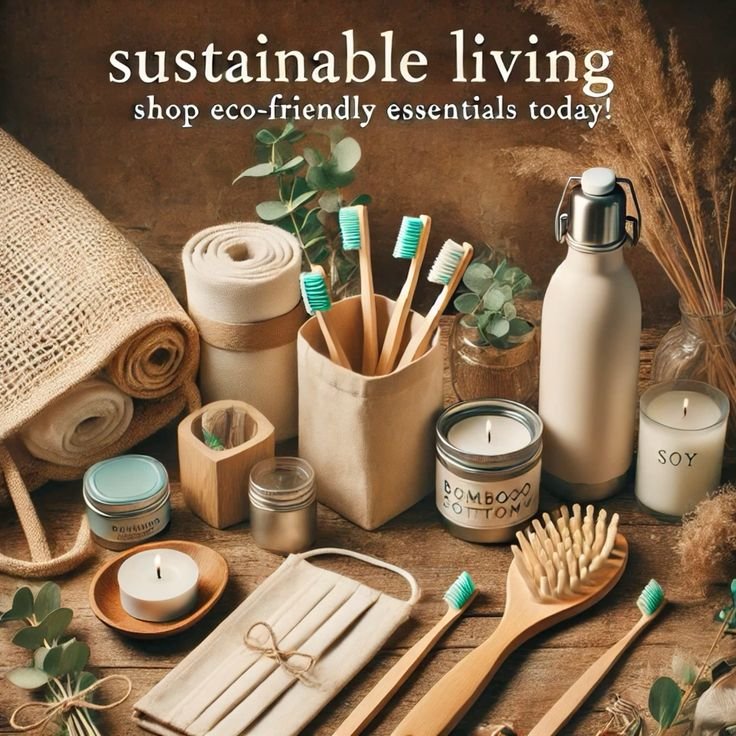
Swap #11: Choose Wood, Bamboo or Stainless Utensils Over Plastic
Look in your utensil drawer. How many plastic spatulas, slotted spoons and ladles are in there? Plastic utensils scratch cookware, melt near heat and ultimately wind up in landfills.
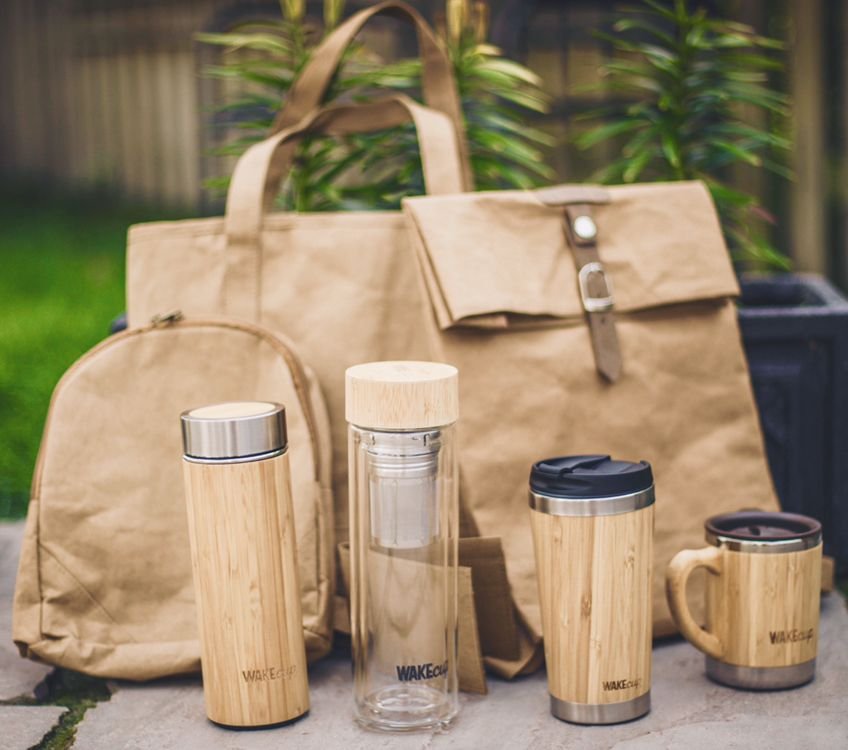
For everyday cooking, wooden and bamboo utensils are the gold standard. They’re easy on your pots and pans, naturally antibacterial and pretty to look at in the kitchen.
Stainless steel utensils are also great — especially for higher-heat cooking. They are virtually indestructible and can last for decades.
The next time your plastic utensils are worn out, swap one at a time with natural ones. No need to toss everything at once.
How to Build a Plastic-Free Kitchen — Without Spending a Fortune
Avoiding plastic doesn’t have to be costly. In fact, in the long run, most swaps save money because you’re purchasing things that last instead of constantly rebuying disposables.
Here’s a budget-friendly approach:
Month 1: Work on beeswax wraps and reusable produce bags. Total cost: under $20.
Month 2: Trade plastic sponges for natural ones and replace dish soap with a bar or tablet. Total cost: under $15.
Month 3: Begin adding a few glass containers one by one as your old plastic ones wear out. Price range varies, but there are some great sets between $25 and $40.
Month 4 and beyond: Hit up bulk shopping, cloth napkins and a water filter. These pay for themselves quickly.
There’s no rush. Each swap you make is a win.
Quick-Check: All 11 Swaps at a Glance
| Swap | Replace This | With This |
|---|---|---|
| 1 | Plastic cling wrap | Beeswax wraps |
| 2 | Plastic containers | Glass or stainless steel |
| 3 | Plastic produce bags | Reusable mesh bags |
| 4 | Plastic trash bags | Compostable alternatives |
| 5 | Dish soap bottles | Refill tablets, soap bars or castile soap in glass bottle |
| 6 | Synthetic sponges | Loofah, cellulose sponge or cotton cloths |
| 7 | Plastic air fresheners | Non-toxic candle or essential oil diffuser |
| 8 | Plastic bottles / jugs | Water filter + reusable water bottle |
| 9 | Packaged dry goods | Buying in bulk with your own containers |
| 10 | Paper towels | Cloth unpaper towels |
| 11 | Plastic utensils | Wooden, bamboo or stainless steel |
If you’re looking for even more inspiration, tips and product recommendations to help you along the way, Plastic Free Living is a fantastic resource to bookmark and explore.
The Ripple Effect of Plastic-Free Living
Something interesting happens when you make these swaps. You start noticing plastic everywhere. You start reading labels. You begin asking questions at the store. And slowly but surely, you become a more conscious consumer — not only in the kitchen, but far beyond.
Such is the ripple effect of plastic-free living.
Your choices also communicate something to companies. The more people who buy bamboo utensils and refillable soap, the more likely businesses are to notice. Market demand determines what products are made and how they’re packaged.
One kitchen at a time, things change.
Common Questions About Plastic-Free Living in the Kitchen
Q: Is living plastic-free really worth it if big companies are causing most of the pollution?
Yes, and here’s why. Individual choices create market demand. As soon as consumers stop buying single-use plastic, brands change their formulations. Your choices are not a drop in the ocean — they are a part of the wave that is starting to push the ocean to change. And plastic-free swaps are often cheaper too, which is a personal win regardless of what corporations do.
Q: Are beeswax wraps actually sanitary?
Yes. Beeswax has natural antibacterial properties. By washing beeswax wraps in cool water after each use and leaving them to air dry, they remain clean and safe. Just don’t use them on raw meat to avoid cross-contamination.
Q: What if there’s no bulk section near me?
Try your local co-op, health food store or even Asian grocery markets — many carry bulk dry goods. You can also order things like grains, nuts and spices in bulk online to save on packaging. A few brands now offer packaging-free or very minimal-packaging mail-order options.
Q: Can I really compost bags that say they are compostable at home?
Most certified compostable bags are intended for industrial composting facilities where temperatures are higher. Some will disintegrate eventually in a hot backyard compost pile, but it takes longer. Refer to the product label for details. Even when they do end up in a landfill, certified compostable bags are less harmful than conventional plastic.
Q: How can I store food without using plastic wrap?
Beeswax wraps, silicone stretch lids and glass containers with tight-fitting lids have proved to be very effective. For cut vegetables like avocado or lemon, press the cut side against a small plate or bowl and store in the refrigerator. You can also wrap items like cheese in wax paper or parchment paper.
Q: How long do beeswax wraps last?
With proper care — cool water washing, air drying and avoiding raw meat and microwave use — beeswax wraps last at least 12 months. A good set will last two years for some people.
Q: Is bamboo always eco-friendly?
Bamboo is one of the fastest-growing plants in the world and does not require pesticides or special care while growing. But it makes a difference how it is processed and where it’s shipped from. Seek out products made of certified organic bamboo and look for claims about responsible manufacturing to ensure you make the most eco-friendly choice.
Wrapping It All Up
Living plastic-free in the kitchen isn’t about doing everything perfectly from day one. It’s about doing something — one swap at a time — until your kitchen reflects the type of world you choose to live in.
Begin with beeswax wraps or a reusable water bottle. Next time you shop, add mesh produce bags. Trade in your sponge for a loofah when it gets old. These small changes add up quickly.
Every plastic object you don’t use is one less piece sitting in a landfill or floating at sea. That’s not nothing. That’s real impact.