10 Things to Bring With You: The Plastic-Free Edition
You grab your phone. You grab your keys. But are you grabbing the correct things to keep plastic out of your day?
Single-use plastic is everywhere. Coffee cups. Straws. Shopping bags. Water bottles. Many of us throw such things out without a second thought. But here’s the fact: Americans discard about 35 million tons of plastic a year — and only 5 percent is recycled.
The good news? You don’t need a total lifestyle overhaul to have an impact. You just gotta have the right tools in your bag.
In this guide, 10 indispensable plastic-free living tools that are convenient to have on hand, straightforward to use and robust enough to shave off your plastic footprint on the daily.
Why What You Have on You Every Day Actually Matters
Think about a typical Tuesday. You stop for coffee. You reach for a sandwich encased in plastic. You grab groceries, use the store bags. You take a sip of water from a bottle you grabbed in the checkout line.
That’s upwards of 5 to 10 pieces of single-use plastic before noon.
Now multiply it by 365 days and 8 billion people. Now you see why plastic pollution has become one of the great environmental crises of our time.
Bringing in reusable, plastic-free concepts addresses this issue at the source. You’re not sitting around waiting for corporations or governments to solve your problem. You’re the one repairing it, a day at a time.
And the best part? Once these things are habits, you no longer think about them. They just get to be who you are.
The Top 10 Plastic-Free Living Essentials
1. Stainless Steel Water Bottle
The greatest offender is plastic water bottles, so let’s begin with them.
More than 1 million plastic bottles are bought every minute across the globe. Many of those are discarded into landfills, or in oceans. They take up to 450 years to decompose — and that’s when they become little microplastics that end up in our food and water.
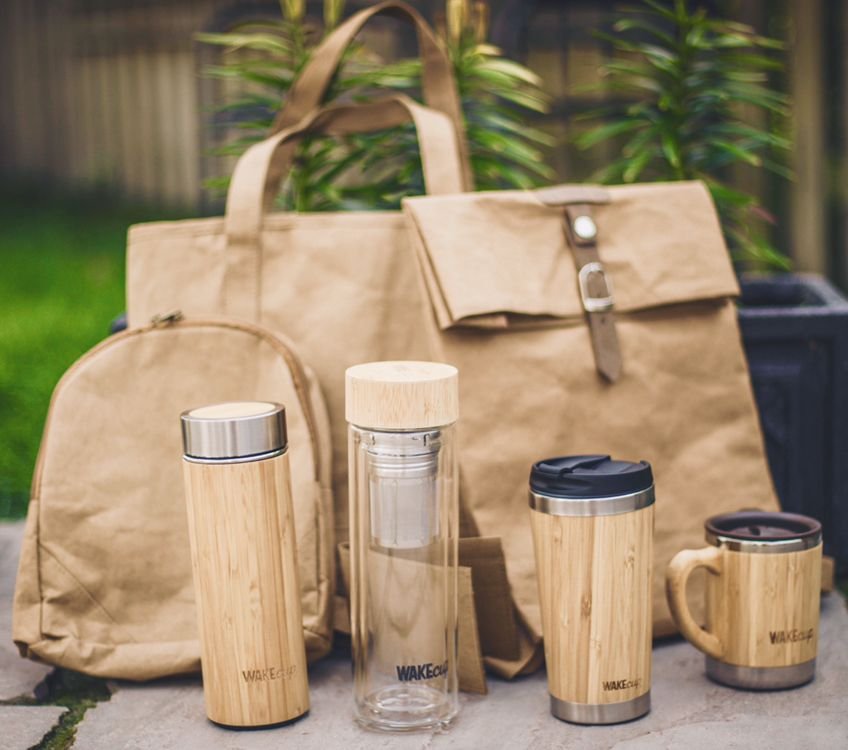
A stainless steel water bottle solves this, completely. It will keep iced drinks cold for up to 24 hours and hot drinks hot for up to 12 hours. It doesn’t leach chemicals into your water. It can last years, and sometimes decades.
What to look for:
- Double-wall insulation
- BPA-free lid and seal
- At least 18 oz capacity
- Big mouth for ice and cleaning
Brands such as Hydro Flask, Klean Kanteen and Simple Modern offer good options at a range of price points. They’re even available under $20 at most retailers.
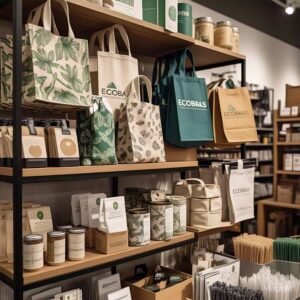
2. Reusable Shopping Bag You’ll Actually Remember to Use
We all have that overflowing drawer filled with reusable bags we never remember to bring. The trick is to find one that folds up small enough to live in your pocket or purse.
Opt for a packable tote — the kind that folds into its own pouch and clips onto your keychain or your bag. These are sometimes made from recycled polyester or organic cotton. They’re lightweight and strong, and take up hardly any space.
Why it matters: One reusable bag can eliminate 700 plastic bags in its lifetime. That’s not a typo.
Plastic bags are probably the worst of plastic pollutants. They’re so lightweight that they blow and float just about everywhere — into trees, storm drains, rivers and oceans, where they are often mistaken for food by sea turtles and fish.
3. Reusable Coffee Cup or Travel Mug
If you buy coffee on the run just a couple of times a week, this one’s a game changer.
Disposable coffee cups appear to be made of cardboard, so you might think they are easy to recycle. But most are lined with a thin layer of plastic that makes them nearly impossible to recycle. Billions of them end up in landfills annually.
A reusable travel mug or cup fixes this instantly. Many coffee shops — including Starbucks and Dunkin — even give a small discount when you bring your own cup.
Best Materials to Look For
| Material | Pros | Cons |
|---|---|---|
| Stainless Steel | Long lasting, great insulation | Heavier |
| Borosilicate Glass | No transfer of taste, eco-friendly | Fragile |
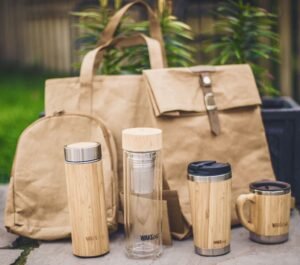
| Bamboo-based | Lightweight, organic material | Not as durable |
| Ceramic | Great tasting coffee, fashionable | Doesn’t travel well |
For everyday carry, stainless steel is the clear choice for its durability. For the home or office, glass or ceramic is great.
4. Bamboo or Stainless Steel Straw
This one’s small but mighty.
The U.S. throws away roughly 500 million plastic straws every day. These small pieces of plastic are too tiny to sort at recycling facilities, so the vast majority make their way into landfills — or the ocean.
A reusable straw occupies virtually no space and costs next to nothing. Most of them include a small cleaning brush and a tiny carrying pouch.
Your best options:
- Bamboo straws — natural, biodegradable, lightweight
- Stainless steel straws — strong, reusable and easy to clean
- Silicone straws — flexible and kid-friendly
Stash one in your bag and you won’t have to take a plastic straw ever again.
5. Beeswax or Plant-Based Food Wraps
This one surprises people. Most never realize how much plastic wrap they use until they run out of it.
Plastic cling wrap is used for seconds and then binned. It cannot be recycled in many places. It is made of PVC or polyethylene, both of which emit harmful chemicals during manufacture.
Beeswax wraps are a natural, reusable alternative. They are made from cotton fabric coated in beeswax, tree resin and jojoba oil. The heat of your hands forms them around food or bowls. They’re washable and can be reused for up to a year.
Plant-based versions, made with candelilla wax, perform just as well for vegans.
What you can wrap:
- Cheese
- Cut fruits and vegetables
- Sandwiches and snacks
- Bowls and containers
Most daily requirements are met with a set of 3–4 wraps in varying sizes. Starter kits are available from many brands for between $15 and $20.
6. Reusable Cutlery Set
Ever order takeout and pick up a plastic fork that snaps as soon as you try to use it? You’re not alone.
Disposable plastic cutlery is one of the top 10 items found in global beach cleanups. These pieces are just as unrecyclable as straws.
A small reusable cutlery set — typically a fork, spoon, knife, chopsticks and a tiny straw — all fits into a slim carrying case not bigger than a pencil case. You just slip it into your bag and you’re good.
Materials Comparison
| Material | Weight | Durability | Eco Rating |
|---|---|---|---|
| Bamboo | Very light | Moderate | ⭐⭐⭐⭐⭐ |
| Stainless Steel | Medium | Excellent | ⭐⭐⭐⭐ |
| Recycled Plastic | Light | Good | ⭐⭐⭐ |
| Wood | Light | Moderate | ⭐⭐⭐⭐ |
Bamboo and stainless steel are the leaders for plastic-free living. They’re dishwasher safe, long-lasting and free from any chemicals leaching into your food.
7. Solid Shampoo Bar and Soap Bar
This one is for your bag or travel kit — and it’s a bigger deal than it may sound.
Nearly all liquid shampoos and body washes are sold in plastic containers. On average, we use 11 personal care products a day, and most of them are packaged in single-use plastic.
That’s where solid shampoo bars and soap bars come in — the old-school remedy that just works. There’s little to no packaging that comes with them — often just paper or cardboard. They’re concentrated: a single bar outlasts as many as 2–3 bottles of liquid product.
Travel bonus: They’re TSA-friendly. No liquid concerns to worry about.
What to look for:
- Sulfate-free formulas
- Natural or organic ingredients
- Plastic-free packaging
- Brands such as Ethique, HiBar and Lush
To keep them dry between uses, store them in a small tin or a bamboo soap dish.
8. Reusable Produce Bags
Even today, most grocery stores still distribute thin plastic bags in the produce section. They get used for a few minutes and then tossed aside forever.
It’s an easy fix. Reusable mesh or muslin produce bags are lightweight enough that they don’t affect the weight of your produce at checkout, and you can wash and reuse them hundreds of times.
An 8–10 bag set will cover almost everything you would buy at a grocery store. Some even come in various sizes for different kinds of produce.
Pro tip: Use them for bulk bins too — nuts, grains, dried fruit — and you’ll skip even more plastic packaging.
These bags are generally made from:
- Organic cotton mesh — breathable and strong
- Recycled polyester mesh — lightweight and fast-drying
- Natural muslin — good for delicate produce
9. Zero-Waste Lip Balm or Deodorant in a Plastic-Free Container
Most people completely overlook this one.
Chapstick tubes and deodorant sticks are plastic, and good luck recycling them — the small size combined with mixed materials makes it nearly impossible. Millions of those tubes get thrown out by Americans each year.
The zero-waste alternatives? They are just as effective — sometimes more so.
Lip balm options:
- Lip balm in a small metal tin
- Compostable cardboard push-up tubes
- DIY beeswax balm
Deodorant options:
- Deodorant in a glass jar, applied with fingers
- Cardboard push-up deodorant sticks
- Deodorant bars (same idea as shampoo bars)
Brands like Package Free Shop, Wild and Native now offer plastic-free deodorants that actually work. Many are also aluminum-free and made with natural ingredients.
10. Bento-Style Reusable Lunch Box or Food Container
The final item on this list is one of the most impactful.
Pre-packaged snacks and lunches create huge amounts of plastic waste. It all adds up fast — sandwich bags, plastic wrap, single-use containers.
A bento-style stainless steel or glass food container with separate compartments solves this completely. You can pack a full lunch — main course, snacks, fruit — without any plastic at all.
What makes a good one:
- Leak-proof lid
- Stainless steel or glass interior (no plastic touching food)
- Multiple compartments
- Dishwasher safe
Brands like LunchBots, ECOlunchbox and Bentgo make excellent options. Stainless steel bento boxes are particularly popular for kids and adults alike.
A Step-by-Step Guide to Building Your Plastic-Free Kit
You don’t need to do everything at once. That’s not the point.
Start with what you use most. If you drink coffee daily, start with the travel mug. If you shop twice a week, start with the bags. Add one item each month and before you know it, in 12 months, you’ll have a complete plastic-free toolkit that feels second nature.
Here’s a simple starter roadmap:
| Month | Item to Add |
|---|---|
| Month 1 | Stainless steel water bottle |
| Month 2 | Reusable shopping bags |
| Month 3 | Travel mug or coffee cup |
| Month 4 | Reusable straw + cutlery set |
| Month 5 | Beeswax wraps + produce bags |
| Month 6 | Solid shampoo bar + zero-waste deodorant |
| Month 7 | Bento-style lunch box |
| Month 8 | Zero-waste lip balm |
Slow and steady builds a true habit. Rushing leads to overwhelm and eco-kits abandoned, gathering dust in a kitchen cabinet.
Real Talk: Does It Really Matter What One Person Does?
It can seem like your reusable straw doesn’t make a difference when huge corporations are dumping plastic into the ocean by the ton.
But here’s the thing: personal action and systemic change are not mortal enemies. They fuel each other.
When customers aren’t asking for plastic straws, companies don’t provide them. As more shoppers bring their own bags, stores rethink their packaging. Business decisions are driven by consumer behavior — always have been, always will be.
Your choices send a signal. And when millions of people are sending the same signal, the market moves.
Plus, there’s the personal side. Being plastic-free encourages you to think more about what you purchase, what you consume and what you toss aside. That mindfulness tends to be contagious — to your family, friends and community.
If you’re looking for more tips, product reviews and guides to help you get started, Plastic Free Living is a great resource packed with practical advice for every stage of your plastic-free journey.
For a broader look at the scale of the problem, UNEP’s report on single-use plastics is a solid, eye-opening read.
FAQs About Plastic-Free Living Items
Q: Are plastic-free products more expensive? The large majority of reusable items cost more upfront but are cheaper over time. A $25 water bottle saves you the equivalent of hundreds of dollars a year in disposable bottles. The math strongly favors reusables.
Q: Where to buy plastic-free living items? Online stores like Package Free Shop, EarthHero and Zero Waste Store are dedicated to these products. Amazon also carries many options. Local health food stores and co-ops are also an excellent place to look for items without packaging.
Q: What if I leave my reusable items at home? It happens. Don’t beat yourself up. The aim is progress, not perfection. Keep backup items at your desk, in your car or in a locker so you always have a fallback.
Q: Are bamboo products really eco-friendly? Bamboo grows at an incredible rate and doesn’t require pesticides or much water, making it one of the most sustainable materials around. Just be sure that the product is certified organic and that the company uses responsible sourcing practices.
Q: Can I use these for kids too? Absolutely. Many plastic-free brands design specifically for children — silicone straws, vibrant bento boxes, non-toxic soap bars. Getting kids on the right track early with these habits is one of the most important things a parent can do.
Q: How do I clean reusable items properly? Most can go in the dishwasher. Stainless steel, glass and bamboo items simply need warm soapy water. Beeswax wraps can only be washed using cold water, as heat will melt the wax. Always allow things to dry completely before storing so they won’t mold.
Q: Is plastic-free the same as zero waste? Not exactly. Plastic-free is specifically focused on eliminating plastic. Zero waste is a broader goal that encompasses the reduction of all types of waste. Living plastic-free is a wonderful way to begin working toward a zero-waste lifestyle.
The Bottom Line
Living plastic-free is not about being perfect. It’s about being intentional.
Every time you fill up a reusable water bottle, that means one fewer plastic bottle existed. Every time you use a beeswax wrap is a sheet of cling film that didn’t end up in a landfill. Each solid shampoo bar is a plastic bottle that never had to exist.
These 10 must-have plastic-free living items are a starting point — not the end. Carry them with you. Use them proudly. Talk about them when folks inquire. Because change spreads person to person, bag to bag, bottle to bottle.
The world doesn’t need a few people doing this perfectly. It requires millions of people doing so imperfectly, repeatedly and with heart.